


Angola

caxixi

Brazil, Cuba, Angola, Mozambique, Ghana, Nigeria, Benin a small woven flat-bottomed basket shaker filled with seeds or beads, used in capoeira, samba, and contemporary world music.
marimba

Guatemala, Mexico, El Salvador, Angola, United States, Japan a pitched percussion instrument with a chromatic arrangement of wooden bars suspended over tuned resonators, used in Guatemalan festivals and holidays, Mexican "Parque de la Marimba" performances, classical concertos, contemporary percussion ensembles, contemporary solo performances, pop/rock music, jazz ensembles, and traditional folk music.

berimbau
Brazil, Angola a single-stringed musical bow with a resonator, used in martial arts-inspired music and folk dance (Capoeira).

ngoma
Democratic Republic of Congo, Uganda, Zambia, Tanzania, South Africa, Zimbabwe, Kenya, Rwanda, Burundi, Gabon, Angola a barrel-shaped drum carved from a single log and covered with a cowhide head, used in communal communication, Sangoma healing rituals, Zulu and Xhosa folk music, and traditional dance accompaniment.
Benin

agogô

Brazil, Nigeria, Benin, Togo a percussion instrument with two or more conical metal bells of different sizes connected by a U-shaped handle, which is struck with a wooden stick, used in samba, capoeira, and Candomblé religious practices.
ashiko

Nigeria, Ghana, Togo, Benin, Haiti a tapered hand drum with a rope-tuned animal skin head, use in dance music, community celebrations, folk music, and as a "talking drum" to mimic speech..

batá
Nigeria, Cuba, Puerto Rico, Togo, Benin a set of three double-headed, hourglass-shaped drums made of carved wood and covered with tensioned hide, used for polyrhythmic patterns essential for calling and communicating with the Orishas (deities) in Yoruba religious ceremonies and associated music.
ekwe

Nigeria, Benin, Cameroon, Equatorial Guinea a wooden slit drum carved from a hollowed-out log with one or two rectangular openings, used in long-distance communication, announcing community events, and traditional dance and ceremonies.
gankogui

Ghana, Togo, Benin a hand-forged iron double bell played with a wooden stick that serves as the essential rhythmic timekeeper, providing the foundational "timeline" for complex polyrhythmic percussion ensembles and traditional dance.

kakaki
Nigeria, Niger, Chad, Benin, Ghana, Burkina Faso a long metal trumpet, often reaching up to four meters in length, used in often reaching up to four meters in length, royal fanfares, ceremonial processions, and signaling the presence of traditional rulers.
talking drum

Nigeria, Ghana, Benin, Senegal, Mali, Burkina Faso, Gambia an hourglass-shaped, double-headed drum with tension cords running between the two heads the player to squeezes with their arm to change the drum's pitch and mimic the tonality of West African languages, used in griot storytelling and traditional ceremonial music.
Botswana


Ditlhaka
Botswana a traditional ensemble of tuned panpipes made from varying lengths of river reed, played in a circular, hocketing style where each performer contributes a single note to a complex polyphonic melody, used for celebratory communal dances and royal ceremonies.

Segaba
Botswana, South Africa, Namibia a single-stringed, bowed "overtone violin" with a wooden staff with a metal-can resonator, used for personal entertainment, cattle-herding signals, and the accompaniment of oral storytelling
Burkina Faso

balafon
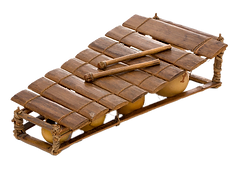
Mali, Guinea, Burkina Faso, Gambia, Côte d'Ivoire, Ghana, Cameroon, Senegal, Chad, Gabon a gourd-resonated xylophone with wooden keys suspended over calabash gourds, used as a central instrument for griots (hereditary storytellers) in traditional West African folk music and ceremonies.

bolon
Mali, Guinea, Gambia a plucked harp-lute with a large calabash gourd resonator and a curved wooden neck, used in hunter’s music, historical storytelling, and Mandinka folk ensembles.
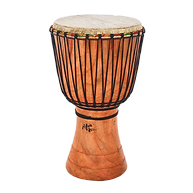
djembe
Guinea, Mali, Senegal, Côte d'Ivoire, Burkina faso, Worldwide (Popular Music), French Guiana a rope-tuned, goblet-shaped drum carved from a single piece of hardwood and topped with a rawhide skin, used in social dances, ceremonies, and communal gatherings, contemporary world fusion genres.
dundunba

Guinea, Mali, Senegal, Ivory Coast, Burkina Faso a large, cylindrical drum made from a hollowed log and covered with cowhide, used as the "king" of the three-drum bass ensemble in traditional West African rhythms and celebratory dances.

goge
Nigeria, Niger, Burkina Faso, Ghana a bowed, single-string fiddle with a round resonator made from a gourd covered in animal skin, used in praise songs, ritual music, and dance celebrations.
gyil

Ghana, Burkina Faso, Ivory Coast, Mali a large frame xylophone with wooden slats suspended over calabash gourds, used in funerals, social dances, and complex rhythmic storytelling.
kakaki
Nigeria, Niger, Chad, Benin, Ghana, Burkina Faso a long metal trumpet, often reaching up to four meters in length, used in often reaching up to four meters in length, royal fanfares, ceremonial processions, and signaling the presence of traditional rulers.
kashaka

Ghana, Senegal, Mali, Burkina Faso two small, hollow gourds filled with seeds or pebbles and connected by a short string, where one gourd is held in the palm while the other is swung around the hand on its string, used in polyrhythmic folk performances and contemporary world music.

kologo
Ghana, Burkina Faso a two-stringed lute with a gourd resonator and a skin-covered face, used by bards for storytelling, social commentary, and genres like afro-pop and Kolongo Power.
ngoni

Mali, Burkina Faso, Guinea, Senegal, Gambia, Ivory Coast a harp-lute hybrid made from a hollowed wooden body or a calabash gourd covered in dried animal skin, Jali griots (hereditary historians and praise singers), donso (hunter societies) for ceremonial rituals, and contemporary West African "Wassoulou" music
talking drum
Nigeria, Ghana, Benin, Senegal, Mali, Burkina Faso, Gambia an hourglass-shaped, double-headed drum with tension cords running between the two heads the player to squeezes with their arm to change the drum's pitch and mimic the tonality of West African languages, used in griot storytelling and traditional ceremonial music.

tbilat
Algeria, Mali, Niger, Libya, Burkina Faso a pair of small, hourglass-shaped hand drums, used in Tuareg folk music and social dances.

kora
Gambia, Senegal, Mali, Guinea, Guinea-Bissau, Ivory Coast a complex twenty-one stringed harp-lute hybrid with a large gourd resonator cut in half and covered with cow skin, wooden handposts for stability, and a high bridge, used in the Jali tradition (hereditary musicians, historians, and praise-singers who maintain the oral records of West African empires), and contemporary world music.
Burundi

inanga

Burundi, Rwanda, Uganda, Democratic Republic of Congo a large, trough-shaped zither with a single continuous string wound through notches across a hollowed wooden board, used in storytelling and folk singing.
ngoma
Democratic Republic of Congo, Uganda, Zambia, Tanzania, South Africa, Zimbabwe, Kenya, Rwanda, Burundi, Gabon, Angola a barrel-shaped drum carved from a single log and covered with a cowhide head, used in communal communication, Sangoma healing rituals, Zulu and Xhosa folk music, and traditional dance accompaniment.
Cameroon

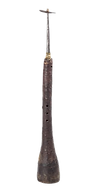
algaita
Nigeria, Cameroon, Sudan, Niger, Chad a double-reed wind instrument with a conical bore and flared bell, used for ceremonial events, praise singing in royal courts, and providing the lead melody for traditional dance music.
balafon
Mali, Guinea, Burkina Faso, Gambia, Côte d'Ivoire, Ghana, Cameroon, Senegal, Chad, Gabon a gourd-resonated xylophone with wooden keys suspended over calabash gourds, used as a central instrument for griots (hereditary storytellers) in traditional West African folk music and ceremonies.
ekwe
Nigeria, Benin, Cameroon, Equatorial Guinea a wooden slit drum carved from a hollowed-out log with one or two rectangular openings, used in long-distance communication, announcing community events, and traditional dance and ceremonies.
Mvet

Equatorial Guinea, Gabon, Cameroon a stick-zither with three to five gourd resonators and strings made of vegetable fiber or metal, used by specialized poet-musicians for storytelling and oral history.
Cape Verde


cavaquinho
Portugal, Brazil, Cape Verde a small four-stringed plucked lute and direct ancestor of the ukulele, used in samba, choro, and various Portuguese folk traditions.
Ferrinho

Cape Verde a percussion instrument with a notched metal bar that is scraped with a smaller metal rod or "knife", used in high-energy dance music known as Funaná.
Central African Republic

likembe

Democratic Republic of the Congo, Uganda, Central Africa Republic a handheld thumb piano with tuned metal tongues fixed to a wooden resonator box, used for storytelling, ritual ceremonies, and communal social gatherings.
Chad

algaita
Nigeria, Cameroon, Sudan, Niger, Chad a double-reed wind instrument with a conical bore and flared bell, used for ceremonial events, praise singing in royal courts, and providing the lead melody for traditional dance music.
kakaki
Nigeria, Niger, Chad, Benin, Ghana, Burkina Faso a long metal trumpet, often reaching up to four meters in length, used in often reaching up to four meters in length, royal fanfares, ceremonial processions, and signaling the presence of traditional rulers.
Côte d'Ivoire

balafon
Mali, Guinea, Burkina Faso, Gambia, Côte d'Ivoire, Ghana, Cameroon, Senegal, Chad, Gabon a gourd-resonated xylophone with wooden keys suspended over calabash gourds, used as a central instrument for griots (hereditary storytellers) in traditional West African folk music and ceremonies.
djembe
Guinea, Mali, Senegal, Côte d'Ivoire, Burkina faso, Worldwide (Popular Music), French Guiana a rope-tuned, goblet-shaped drum carved from a single piece of hardwood and topped with a rawhide skin, used in social dances, ceremonies, and communal gatherings, contemporary world fusion genres.
dundunba
Guinea, Mali, Senegal, Ivory Coast, Burkina Faso a large, cylindrical drum made from a hollowed log and covered with cowhide, used as the "king" of the three-drum bass ensemble in traditional West African rhythms and celebratory dances.
gyil
Ghana, Burkina Faso, Ivory Coast, Mali a large frame xylophone with wooden slats suspended over calabash gourds, used in funerals, social dances, and complex rhythmic storytelling.

karignan
Mali, Guinea, Senegal, Ivory Coast a handheld metal scraper with a notched rod and a sliding ring that produces a sharp, rhythmic rasping sound, used in hunters' music and the songs of the Griot (storyteller).
kora
Gambia, Senegal, Mali, Guinea, Guinea-Bissau, Ivory Coast a complex twenty-one stringed harp-lute hybrid with a large gourd resonator cut in half and covered with cow skin, wooden handposts for stability, and a high bridge, used in the Jali tradition (hereditary musicians, historians, and praise-singers who maintain the oral records of West African empires), and contemporary world music.
ngoni
Mali, Burkina Faso, Guinea, Senegal, Gambia, Ivory Coast a harp-lute hybrid made from a hollowed wooden body or a calabash gourd covered in dried animal skin, Jali griots (hereditary historians and praise singers), donso (hunter societies) for ceremonial rituals, and contemporary West African "Wassoulou" music
Democratic Republic of the Congo

inanga
Burundi, Rwanda, Uganda, Democratic Republic of Congo a large, trough-shaped zither with a single continuous string wound through notches across a hollowed wooden board, used in storytelling and folk singing.
kalimba

Zimbabwe, Mozambique, Malawi, Zambia, Democratic Republic of the Congo, Tanzania a handheld thumb piano with metal tines attached to a wooden soundbox, used in folk, acoustic pop, and meditative music.
likembe
Democratic Republic of the Congo, Uganda, Central Africa Republic a handheld thumb piano with tuned metal tongues fixed to a wooden resonator box, used for storytelling, ritual ceremonies, and communal social gatherings.
ngoma
Democratic Republic of Congo, Uganda, Zambia, Tanzania, South Africa, Zimbabwe, Kenya, Rwanda, Burundi, Gabon, Angola a barrel-shaped drum carved from a single log and covered with a cowhide head, used in communal communication, Sangoma healing rituals, Zulu and Xhosa folk music, and traditional dance accompaniment.
Djibouti

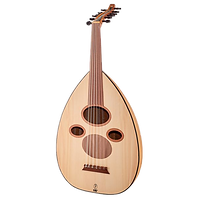
oud
Iraq, Iran, Palestine, Syria, Lebanon, Egypt, Morocco, Turkey, Armenia, Bahrain, Djibouti a short-necked, pear-shaped lute with a large vaulted back and eleven or thirteen strings, used in classical Arabic music, Ottoman classical music, folk ensembles, and cinematic scores.
kirar

Ethiopia, Eritrea, Djibouti a five- or six-stringed bowl-shaped lyre with a with a triangular string frame, and wooden resonator covered with a stretched animal hide, used in traditional songs, epic storytelling, and contemporary East African pop and jazz.
Equatorial Guinea

ekwe
Nigeria, Benin, Cameroon, Equatorial Guinea a wooden slit drum carved from a hollowed-out log with one or two rectangular openings, used in long-distance communication, announcing community events, and traditional dance and ceremonies.
Mvet
Equatorial Guinea, Gabon, Cameroon a stick-zither with three to five gourd resonators and strings made of vegetable fiber or metal, used by specialized poet-musicians for storytelling and oral history.
Eritrea

kirar
Ethiopia, Eritrea, Djibouti a five- or six-stringed bowl-shaped lyre with a with a triangular string frame, and wooden resonator covered with a stretched animal hide, used in traditional songs, epic storytelling, and contemporary East African pop and jazz.

masenqo
Ethiopia, Eritrea a single-stringed bowed lute with a diamond-shaped resonator, used for storytelling by Azmari (traditional Ethiopian minstrels), praise singing, "Azmari Bet" (traditional music club), and Ethiopian wedding celebrations.
Eswatini

Makhoyane
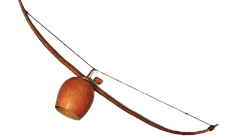
Eswatini, South Africa, Mozambique a tall, gourd-resonated braced musical bow that produces a rhythmic, drone-like accompaniment for narrative songs concerning courtship, history, and social life.
Ethiopia

begena
Ethiopia a large, ten-stringed lyre, used in spiritual meditation, prayer, and religious hymns.
kirar
Ethiopia, Eritrea, Djibouti a five- or six-stringed bowl-shaped lyre with a with a triangular string frame, and wooden resonator covered with a stretched animal hide, used in traditional songs, epic storytelling, and contemporary East African pop and jazz.
masenqo
Ethiopia, Eritrea a single-stringed bowed lute with a diamond-shaped resonator, used for storytelling by Azmari (traditional Ethiopian minstrels), praise singing, "Azmari Bet" (traditional music club), and Ethiopian wedding celebrations.
sistrum

Egypt (Ancient Egypt), Greece (Ancient Greece), Ethiopia, Sudan a U-shaped metal rattle with movable crossbars and jingling discs that, used in religious ceremonies and temple rituals.

wot panpipe
Ethiopia a simple, five-note, single-row flute made from bamboo, used in folk dances and music of the Cushitic people.
Gabon

Moungongo
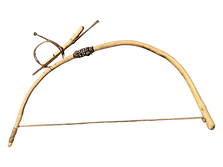
Gabon a mouth-bow instrument with a flexible wooden branch tensioned by a plant-fiber string that is struck with a thin stick while the player uses their mouth as a variable resonator, used in spiritual initiations and healing rituals.
Mvet
Equatorial Guinea, Gabon, Cameroon a stick-zither with three to five gourd resonators and strings made of vegetable fiber or metal, used by specialized poet-musicians for storytelling and oral history.
ngoma
Democratic Republic of Congo, Uganda, Zambia, Tanzania, South Africa, Zimbabwe, Kenya, Rwanda, Burundi, Gabon, Angola a barrel-shaped drum carved from a single log and covered with a cowhide head, used in communal communication, Sangoma healing rituals, Zulu and Xhosa folk music, and traditional dance accompaniment.
balafon
Mali, Guinea, Burkina Faso, Gambia, Côte d'Ivoire, Ghana, Cameroon, Senegal, Chad, Gabon a gourd-resonated xylophone with wooden keys suspended over calabash gourds, used as a central instrument for griots (hereditary storytellers) in traditional West African folk music and ceremonies.
Ghana

ashiko
Nigeria, Ghana, Togo, Benin, Haiti a tapered hand drum with a rope-tuned animal skin head, use in dance music, community celebrations, folk music, and as a "talking drum" to mimic speech..
balafon
Mali, Guinea, Burkina Faso, Gambia, Côte d'Ivoire, Ghana, Cameroon, Senegal, Chad, Gabon a gourd-resonated xylophone with wooden keys suspended over calabash gourds, used as a central instrument for griots (hereditary storytellers) in traditional West African folk music and ceremonies.
caxixi
Brazil, Cuba, Angola, Mozambique, Ghana, Nigeria, Benin a small woven flat-bottomed basket shaker filled with seeds or beads, used in capoeira, samba, and contemporary world music.
gankogui
Ghana, Togo, Benin a hand-forged iron double bell played with a wooden stick that serves as the essential rhythmic timekeeper, providing the foundational "timeline" for complex polyrhythmic percussion ensembles and traditional dance.
goge
Nigeria, Niger, Burkina Faso, Ghana a bowed, single-string fiddle with a round resonator made from a gourd covered in animal skin, used in praise songs, ritual music, and dance celebrations.
gome

Ghana, Sierra Leone a large, square-framed drum that the musician sits on while playing with both hands and feet to manipulate the pitch, used in Ghanaian highlife music and celebratory social dances.
gyil
Ghana, Burkina Faso, Ivory Coast, Mali a large frame xylophone with wooden slats suspended over calabash gourds, used in funerals, social dances, and complex rhythmic storytelling.
kakaki
Nigeria, Niger, Chad, Benin, Ghana, Burkina Faso a long metal trumpet, often reaching up to four meters in length, used in often reaching up to four meters in length, royal fanfares, ceremonial processions, and signaling the presence of traditional rulers.
kashaka
Ghana, Senegal, Mali, Burkina Faso two small, hollow gourds filled with seeds or pebbles and connected by a short string, where one gourd is held in the palm while the other is swung around the hand on its string, used in polyrhythmic folk performances and contemporary world music.
kologo
Ghana, Burkina Faso a two-stringed lute with a gourd resonator and a skin-covered face, used by bards for storytelling, social commentary, and genres like afro-pop and Kolongo Power.
kpanlogo drum
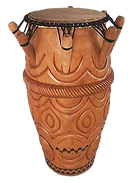
Ghana a peg-tuned hand drum with a tapered wooden body carved from a single piece of wood and a skin head, used in Kpanlogo dance (a "youth" genre blending Ga rhythms with highlife and rock-and-roll influences), and West African percussion ensembles.
krin

Guinea, Mali, Gambia, Senegal, Ghana a hollowed-out log drum with one or more slits that produces multiple distinct pitches when struck with sticks, used in long-distance communication, West African "ballet" performances, village festivities, secret society rituals, and percussion ensembles.
shekere
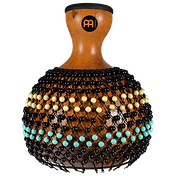
Nigeria, Ghana, Cuba, Brazil, Senegal, Mali a percussion instrument made from a dried, hollowed-out gourd covered in a woven net of beads, shells, or seeds functioning as both a shaker and a drum, used in traditional, Afrobeat, and ceremonial music.
talking drum
Nigeria, Ghana, Benin, Senegal, Mali, Burkina Faso, Gambia an hourglass-shaped, double-headed drum with tension cords running between the two heads the player to squeezes with their arm to change the drum's pitch and mimic the tonality of West African languages, used in griot storytelling and traditional ceremonial music.
Guinea

balafon
Mali, Guinea, Burkina Faso, Gambia, Côte d'Ivoire, Ghana, Cameroon, Senegal, Chad, Gabon a gourd-resonated xylophone with wooden keys suspended over calabash gourds, used as a central instrument for griots (hereditary storytellers) in traditional West African folk music and ceremonies.
bolon
Mali, Guinea, Gambia a plucked harp-lute with a large calabash gourd resonator and a curved wooden neck, used in hunter’s music, historical storytelling, and Mandinka folk ensembles.
djembe
Guinea, Mali, Senegal, Côte d'Ivoire, Burkina faso, Worldwide (Popular Music), French Guiana a rope-tuned, goblet-shaped drum carved from a single piece of hardwood and topped with a rawhide skin, used in social dances, ceremonies, and communal gatherings, contemporary world fusion genres.
dundunba
Guinea, Mali, Senegal, Ivory Coast, Burkina Faso a large, cylindrical drum made from a hollowed log and covered with cowhide, used as the "king" of the three-drum bass ensemble in traditional West African rhythms and celebratory dances.
fula flute
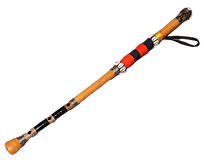
Guinea, Senegal, Mali, Nigeria, Gambia a transverse overtone flute made from a conical tambin vine, characterized by the player's simultaneous singing and shouting into the instrument, used in traditional folk music and West African "ballet" orchestras.
karignan
Mali, Guinea, Senegal, Ivory Coast a handheld metal scraper with a notched rod and a sliding ring that produces a sharp, rhythmic rasping sound, used in hunters' music and the songs of the Griot (storyteller).
kora
Gambia, Senegal, Mali, Guinea, Guinea-Bissau, Ivory Coast a complex twenty-one stringed harp-lute hybrid with a large gourd resonator cut in half and covered with cow skin, wooden handposts for stability, and a high bridge, used in the Jali tradition (hereditary musicians, historians, and praise-singers who maintain the oral records of West African empires), and contemporary world music.
krin
Guinea, Mali, Gambia, Senegal, Ghana a hollowed-out log drum with one or more slits that produces multiple distinct pitches when struck with sticks, used in long-distance communication, West African "ballet" performances, village festivities, secret society rituals, and percussion ensembles.
ngoni
Mali, Burkina Faso, Guinea, Senegal, Gambia, Ivory Coast a harp-lute hybrid made from a hollowed wooden body or a calabash gourd covered in dried animal skin, Jali griots (hereditary historians and praise singers), donso (hunter societies) for ceremonial rituals, and contemporary West African "Wassoulou" music
Guinea-Bissau


akonting
Senegal, Gambia, Guinea-Bissau a three-stringed lute with a skin-headed gourd body and one short drone string, used in rhythmic and melodic accompaniment for Jola folk songs and communal/social relaxation. Ancestor instrument of the American banjo.

bougarabou
Senegal, Gambia, Guinea-Bissau a set of goblet-shaped drums with a single cowhide head, played with the hands, used in communal dancing, festive celebrations, and healing rituals.
kora
Gambia, Senegal, Mali, Guinea, Guinea-Bissau, Ivory Coast a complex twenty-one stringed harp-lute hybrid with a large gourd resonator cut in half and covered with cow skin, wooden handposts for stability, and a high bridge, used in the Jali tradition (hereditary musicians, historians, and praise-singers who maintain the oral records of West African empires), and contemporary world music.
Kenya

kayamba

Kenya, Tanzania, Malawi. Mauritius a flat, rectangular shaker made from reed or bamboo tubes filled with seeds that produces a sharp, rhythmic "ocean-wave" sound when tilted or shaken, used in traditional folk songs, spiritual healing ceremonies, and dance ceremonies.

litungu
Kenya, Uganda, Tanzania a large, bowl-shaped lyre with seven or eight strings stretched across a skin-covered resonator, often with loose metal rings or bottle caps near the bridge to add a percussive "sizzle", used by musician-historians (The "Omulitungu") who sings about clan lineage and social events during festivals and weddings.
ngoma
Democratic Republic of Congo, Uganda, Zambia, Tanzania, South Africa, Zimbabwe, Kenya, Rwanda, Burundi, Gabon, Angola a barrel-shaped drum carved from a single log and covered with a cowhide head, used in communal communication, Sangoma healing rituals, Zulu and Xhosa folk music, and traditional dance accompaniment.
obokano

Kenya a large eight-stringed bass bowl lyre with a skin-covered resonator, used in traditional storytelling, epic songs, and communal celebrations.

orutu
Kenya, Tanzania a single-stringed fiddle with a cylindrical resonator covered in goatskin, used in traditional storytelling, social ceremonies, and Benga music.
Lesotho

Lesiba

Lesotho, South Africa an unbraced string-wind hybrid instrument consisting of a wooden staff and a single tensioned string attached to a flattened bird-quill resonator, played by blowing across the quill to make the string vibrate, used in cattle-herding signals and meditative personal performance.
Liberia


Kongoma
Sierra Leone, Liberia, Guinea a large, wooden lamellophone with a box resonator and three to five metal tines that are plucked with the fingers, used in social folk songs and traditional dances.
kora
Gambia, Senegal, Mali, Guinea, Guinea-Bissau, Ivory Coast a complex twenty-one stringed harp-lute hybrid with a large gourd resonator cut in half and covered with cow skin, wooden handposts for stability, and a high bridge, used in the Jali tradition (hereditary musicians, historians, and praise-singers who maintain the oral records of West African empires), and contemporary world music.
shekere
Nigeria, Ghana, Cuba, Brazil, Senegal, Mali a percussion instrument made from a dried, hollowed-out gourd covered in a woven net of beads, shells, or seeds functioning as both a shaker and a drum, used in traditional, Afrobeat, and ceremonial music.
Madagascar

marovany

Madagascar a box-shaped plucked zither with two sets of metal strings stretched over a hollow wooden resonator, used in ritual trance ceremonies (The "Tromba" Ceremony), spiritual healing, and traditional dance accompaniment.

valiha
Madagascar a tube zither with strings stretched lengthwise over a large bamboo tube resonator, played by plucking the strings with the fingers, used in traditional music and storytelling of Madagascar.
Malawi

kalimba
Zimbabwe, Mozambique, Malawi, Zambia, Democratic Republic of the Congo, Tanzania a handheld thumb piano with metal tines attached to a wooden soundbox, used in folk, acoustic pop, and meditative music.
kayamba
Kenya, Tanzania, Malawi. Mauritius a flat, rectangular shaker made from reed or bamboo tubes filled with seeds that produces a sharp, rhythmic "ocean-wave" sound when tilted or shaken, used in traditional folk songs, spiritual healing ceremonies, and dance ceremonies.
mbira

Zimbabwe, Mozambique, Malawi, Zambia a sophisticated plucked thumb piano with 22 to 28 tuned metal keys fixed to a wooden soundboard, and shells, beads, or bottle caps attached to the soundboard or the "deze", used in Shona spiritual ceremonies (Bira ceremony) and social storytelling.
Mali

balafon
Mali, Guinea, Burkina Faso, Gambia, Côte d'Ivoire, Ghana, Cameroon, Senegal, Chad, Gabon a gourd-resonated xylophone with wooden keys suspended over calabash gourds, used as a central instrument for griots (hereditary storytellers) in traditional West African folk music and ceremonies.
bolon
Mali, Guinea, Gambia a plucked harp-lute with a large calabash gourd resonator and a curved wooden neck, used in hunter’s music, historical storytelling, and Mandinka folk ensembles.
djembe
Guinea, Mali, Senegal, Côte d'Ivoire, Burkina faso, Worldwide (Popular Music), French Guiana a rope-tuned, goblet-shaped drum carved from a single piece of hardwood and topped with a rawhide skin, used in social dances, ceremonies, and communal gatherings, contemporary world fusion genres.
dundunba
Guinea, Mali, Senegal, Ivory Coast, Burkina Faso a large, cylindrical drum made from a hollowed log and covered with cowhide, used as the "king" of the three-drum bass ensemble in traditional West African rhythms and celebratory dances.
fula flute
Guinea, Senegal, Mali, Nigeria, Gambia a transverse overtone flute made from a conical tambin vine, characterized by the player's simultaneous singing and shouting into the instrument, used in traditional folk music and West African "ballet" orchestras.
gyil
Ghana, Burkina Faso, Ivory Coast, Mali a large frame xylophone with wooden slats suspended over calabash gourds, used in funerals, social dances, and complex rhythmic storytelling.
imzad

Algeria, Mali, Niger a single-stringed bowed fiddle made from a halved calabash gourd and a leather soundboard, used in poetic songs and storytelling in desert social gatherings.
karignan
Mali, Guinea, Senegal, Ivory Coast a handheld metal scraper with a notched rod and a sliding ring that produces a sharp, rhythmic rasping sound, used in hunters' music and the songs of the Griot (storyteller).
kashaka
Ghana, Senegal, Mali, Burkina Faso two small, hollow gourds filled with seeds or pebbles and connected by a short string, where one gourd is held in the palm while the other is swung around the hand on its string, used in polyrhythmic folk performances and contemporary world music.
kora
Gambia, Senegal, Mali, Guinea, Guinea-Bissau, Ivory Coast a complex twenty-one stringed harp-lute hybrid with a large gourd resonator cut in half and covered with cow skin, wooden handposts for stability, and a high bridge, used in the Jali tradition (hereditary musicians, historians, and praise-singers who maintain the oral records of West African empires), and contemporary world music.
krin
Guinea, Mali, Gambia, Senegal, Ghana a hollowed-out log drum with one or more slits that produces multiple distinct pitches when struck with sticks, used in long-distance communication, West African "ballet" performances, village festivities, secret society rituals, and percussion ensembles.
ngoma
Democratic Republic of Congo, Uganda, Zambia, Tanzania, South Africa, Zimbabwe, Kenya, Rwanda, Burundi, Gabon, Angola a barrel-shaped drum carved from a single log and covered with a cowhide head, used in communal communication, Sangoma healing rituals, Zulu and Xhosa folk music, and traditional dance accompaniment.
shekere
Nigeria, Ghana, Cuba, Brazil, Senegal, Mali a percussion instrument made from a dried, hollowed-out gourd covered in a woven net of beads, shells, or seeds functioning as both a shaker and a drum, used in traditional, Afrobeat, and ceremonial music.
talking drum
Nigeria, Ghana, Benin, Senegal, Mali, Burkina Faso, Gambia an hourglass-shaped, double-headed drum with tension cords running between the two heads the player to squeezes with their arm to change the drum's pitch and mimic the tonality of West African languages, used in griot storytelling and traditional ceremonial music.
tbilat
Algeria, Mali, Niger, Libya, Burkina Faso a pair of small, hourglass-shaped hand drums, used in Tuareg folk music and social dances.
tidinit

Mauritania, Mali, Algeria a small, four-stringed, plucked lute with a skin soundboard and a rectangular wooden body, used by griots (professional musicians/storytellers), in vocal narratives, and praise singing in West African folk music.
xalam

Senagal, Gambia, Mali, Mauritania a five-stringed plucked lute with a skin-covered wooden body and a fretted neck, used by griot praise singers, to accompany epic narratives, praise songs, and folk dances.
Mauritius

kayamba
Kenya, Tanzania, Malawi. Mauritius a flat, rectangular shaker made from reed or bamboo tubes filled with seeds that produces a sharp, rhythmic "ocean-wave" sound when tilted or shaken, used in traditional folk songs, spiritual healing ceremonies, and dance ceremonies.
Ravanne

Mauritius a large, circular frame drum with a wooden hoop and a single goatskin head, used in Sega music, the national genre of Mauritius.
mayotte


Gaboussi
Mayotte, Comoros, Madagascar a short-necked, plucked lute carved from a single block of wood with a goatskin soundboard and four to six strings, used in mgodro dances and sacred rumbo ceremonies.
Mozambique

caxixi
Brazil, Cuba, Angola, Mozambique, Ghana, Nigeria, Benin a small woven flat-bottomed basket shaker filled with seeds or beads, used in capoeira, samba, and contemporary world music.
hosho

Zimbabwe, Mozambique, South Africa a pair of hollowed-out gourd filled with small seeds or pebble, used in complex polyphonic thumb-piano music, Shona music, and communal healing ceremonies.
kalimba
Zimbabwe, Mozambique, Malawi, Zambia, Democratic Republic of the Congo, Tanzania a handheld thumb piano with metal tines attached to a wooden soundbox, used in folk, acoustic pop, and meditative music.
mbira
Zimbabwe, Mozambique, Malawi, Zambia a sophisticated plucked thumb piano with 22 to 28 tuned metal keys fixed to a wooden soundboard, and shells, beads, or bottle caps attached to the soundboard or the "deze", used in Shona spiritual ceremonies (Bira ceremony) and social storytelling.
timbila

Mozambique a large type of xylophone-style instrument with 15 to 22 wooden slats (keys) suspended over calibrated gourd resonators, played by two to four musicians, used in traditional Chopi dances and ceremonies.
Namibia

ngoma
Democratic Republic of Congo, Uganda, Zambia, Tanzania, South Africa, Zimbabwe, Kenya, Rwanda, Burundi, Gabon, Angola a barrel-shaped drum carved from a single log and covered with a cowhide head, used in communal communication, Sangoma healing rituals, Zulu and Xhosa folk music, and traditional dance accompaniment.
Niger

algaita
Nigeria, Cameroon, Sudan, Niger, Chad a double-reed wind instrument with a conical bore and flared bell, used for ceremonial events, praise singing in royal courts, and providing the lead melody for traditional dance music.
goge
Nigeria, Niger, Burkina Faso, Ghana a bowed, single-string fiddle with a round resonator made from a gourd covered in animal skin, used in praise songs, ritual music, and dance celebrations.
imzad
Algeria, Mali, Niger a single-stringed bowed fiddle made from a halved calabash gourd and a leather soundboard, used in poetic songs and storytelling in desert social gatherings.

kakaki
Nigeria, Niger, Chad, Benin, Ghana, Burkina Faso a long metal trumpet, often reaching up to four meters in length, used in often reaching up to four meters in length, royal fanfares, ceremonial processions, and signaling the presence of traditional rulers.
tbilat
Algeria, Mali, Niger, Libya, Burkina Faso a pair of small, hourglass-shaped hand drums, used in Tuareg folk music and social dances.
Nigeria

agogô
Brazil, Nigeria, Benin, Togo a percussion instrument with two or more conical metal bells of different sizes connected by a U-shaped handle, which is struck with a wooden stick, used in samba, capoeira, and Candomblé religious practices.
algaita
Nigeria, Cameroon, Sudan, Niger, Chad a double-reed wind instrument with a conical bore and flared bell, used for ceremonial events, praise singing in royal courts, and providing the lead melody for traditional dance music.
ashiko
Nigeria, Ghana, Togo, Benin, Haiti a tapered hand drum with a rope-tuned animal skin head, use in dance music, community celebrations, folk music, and as a "talking drum" to mimic speech..
batá
Nigeria, Cuba, Puerto Rico, Togo, Benin a set of three double-headed, hourglass-shaped drums made of carved wood and covered with tensioned hide, used for polyrhythmic patterns essential for calling and communicating with the Orishas (deities) in Yoruba religious ceremonies and associated music.
caxixi
Brazil, Cuba, Angola, Mozambique, Ghana, Nigeria, Benin a small woven flat-bottomed basket shaker filled with seeds or beads, used in capoeira, samba, and contemporary world music.
ekwe
Nigeria, Benin, Cameroon, Equatorial Guinea a wooden slit drum carved from a hollowed-out log with one or two rectangular openings, used in long-distance communication, announcing community events, and traditional dance and ceremonies.
fula flute
Guinea, Senegal, Mali, Nigeria, Gambia a transverse overtone flute made from a conical tambin vine, characterized by the player's simultaneous singing and shouting into the instrument, used in traditional folk music and West African "ballet" orchestras.
goge
Nigeria, Niger, Burkina Faso, Ghana a bowed, single-string fiddle with a round resonator made from a gourd covered in animal skin, used in praise songs, ritual music, and dance celebrations.

kakaki
Nigeria, Niger, Chad, Benin, Ghana, Burkina Faso a long metal trumpet, often reaching up to four meters in length, used in often reaching up to four meters in length, royal fanfares, ceremonial processions, and signaling the presence of traditional rulers.
shekere
Nigeria, Ghana, Cuba, Brazil, Senegal, Mali a percussion instrument made from a dried, hollowed-out gourd covered in a woven net of beads, shells, or seeds functioning as both a shaker and a drum, used in traditional, Afrobeat, and ceremonial music.
talking drum
Nigeria, Ghana, Benin, Senegal, Mali, Burkina Faso, Gambia an hourglass-shaped, double-headed drum with tension cords running between the two heads the player to squeezes with their arm to change the drum's pitch and mimic the tonality of West African languages, used in griot storytelling and traditional ceremonial music.
udu

Nigeria a large clay pot with two holes (a main opening and a side hole), which produces a deep, resonant, water-like bass sound when the larger opening is quickly struck with the palm, used in ceremonial music and world fusion music.
Réunion

kayamba
Kenya, Tanzania, Malawi. Mauritius a flat, rectangular shaker made from reed or bamboo tubes filled with seeds that produces a sharp, rhythmic "ocean-wave" sound when tilted or shaken, used in traditional folk songs, spiritual healing ceremonies, and dance ceremonies.

Rouler
Réunion, Mauritius a large, deep-bodied barrel drum made from a hollowed-out log, used in Maloya music and ancestor veneration ceremonies (Service Kabaré).
Rwanda


endingidi
Uganda, Rwanda, Tanzania a one-stringed fiddle with a cylindrical resonator covered in goatskin, used in solo storytelling, social commentary, and traditional folk songs.
inanga
Burundi, Rwanda, Uganda, Democratic Republic of Congo a large, trough-shaped zither with a single continuous string wound through notches across a hollowed wooden board, used in storytelling and folk singing.
ngoma
Democratic Republic of Congo, Uganda, Zambia, Tanzania, South Africa, Zimbabwe, Kenya, Rwanda, Burundi, Gabon, Angola a barrel-shaped drum carved from a single log and covered with a cowhide head, used in communal communication, Sangoma healing rituals, Zulu and Xhosa folk music, and traditional dance accompaniment.
Saint Helena


pump organ
United States, Germany, France, United Kingdom The pump organ is a piano-style keyboard instrument that uses foot-operated bellows to pump through metal reeds to make sound, used in folk, gospel, and early popular music (Victorian-era parlor music).
banjo

United States, Canada, Ireland, Anguilla, British Virgin Islands, US Virgin Islands a plucked string instrument with a thin membrane like a drumhead stretched over a circular rim to form a resonator, used in bluegrass, country, old-time music, ragtime, and traditional jazz.
São Tomé and Principe

cavaquinho
Portugal, Brazil, Cape Verde, São Tomé and Principe a small four-stringed plucked lute and direct ancestor of the ukulele, used in samba, choro, and various Portuguese folk traditions.
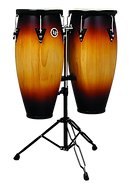
congas
Cuba, Puerto Rico, Colombia, Dominican Republic, British Virgin Islands, São Tomé and Principe tall, narrow single-headed drums played with the hands, used in Afro-Cuban, salsa, and Latin jazz music.
Senegal
akonting
Senegal, Gambia, Guinea-Bissau a three-stringed lute with a skin-headed gourd body and one short drone string, used in rhythmic and melodic accompaniment for Jola folk songs and communal/social relaxation. Ancestor instrument of the American banjo.
balafon
Mali, Guinea, Burkina Faso, Gambia, Côte d'Ivoire, Ghana, Cameroon, Senegal, Chad, Gabon a gourd-resonated xylophone with wooden keys suspended over calabash gourds, used as a central instrument for griots (hereditary storytellers) in traditional West African folk music and ceremonies.
bolon
Mali, Guinea, Gambia a plucked harp-lute with a large calabash gourd resonator and a curved wooden neck, used in hunter’s music, historical storytelling, and Mandinka folk ensembles.
bougarabou
Senegal, Gambia, Guinea-Bissau a set of goblet-shaped drums with a single cowhide head, played with the hands, used in communal dancing, festive celebrations, and healing rituals.
djembe
Guinea, Mali, Senegal, Côte d'Ivoire, Burkina faso, Worldwide (Popular Music), French Guiana a rope-tuned, goblet-shaped drum carved from a single piece of hardwood and topped with a rawhide skin, used in social dances, ceremonies, and communal gatherings, contemporary world fusion genres.
dundunba
Guinea, Mali, Senegal, Ivory Coast, Burkina Faso a large, cylindrical drum made from a hollowed log and covered with cowhide, used as the "king" of the three-drum bass ensemble in traditional West African rhythms and celebratory dances.
fula flute
Guinea, Senegal, Mali, Nigeria, Gambia a transverse overtone flute made from a conical tambin vine, characterized by the player's simultaneous singing and shouting into the instrument, used in traditional folk music and West African "ballet" orchestras.
karignan
Mali, Guinea, Senegal, Ivory Coast a handheld metal scraper with a notched rod and a sliding ring that produces a sharp, rhythmic rasping sound, used in hunters' music and the songs of the Griot (storyteller).
kashaka
Ghana, Senegal, Mali, Burkina Faso two small, hollow gourds filled with seeds or pebbles and connected by a short string, where one gourd is held in the palm while the other is swung around the hand on its string, used in polyrhythmic folk performances and contemporary world music.
kora
Gambia, Senegal, Mali, Guinea, Guinea-Bissau, Ivory Coast a complex twenty-one stringed harp-lute hybrid with a large gourd resonator cut in half and covered with cow skin, wooden handposts for stability, and a high bridge, used in the Jali tradition (hereditary musicians, historians, and praise-singers who maintain the oral records of West African empires), and contemporary world music.
krin
Guinea, Mali, Gambia, Senegal, Ghana a hollowed-out log drum with one or more slits that produces multiple distinct pitches when struck with sticks, used in long-distance communication, West African "ballet" performances, village festivities, secret society rituals, and percussion ensembles.
ngoni
Mali, Burkina Faso, Guinea, Senegal, Gambia, Ivory Coast a harp-lute hybrid made from a hollowed wooden body or a calabash gourd covered in dried animal skin, Jali griots (hereditary historians and praise singers), donso (hunter societies) for ceremonial rituals, and contemporary West African "Wassoulou" music
shekere
Nigeria, Ghana, Cuba, Brazil, Senegal, Mali a percussion instrument made from a dried, hollowed-out gourd covered in a woven net of beads, shells, or seeds functioning as both a shaker and a drum, used in traditional, Afrobeat, and ceremonial music.
talking drum
Nigeria, Ghana, Benin, Senegal, Mali, Burkina Faso, Gambia an hourglass-shaped, double-headed drum with tension cords running between the two heads the player to squeezes with their arm to change the drum's pitch and mimic the tonality of West African languages, used in griot storytelling and traditional ceremonial music.
xalam
Senagal, Gambia, Mali, Mauritania a five-stringed plucked lute with a skin-covered wooden body and a fretted neck, used by griot praise singers, to accompany epic narratives, praise songs, and folk dances.
Seychelles

Moutya

Seychelles a large, shallow frame drum with a circular wooden hoop and a single goatskin head, used in traditional Seychellois dance and music called "Moutya"
Sierra Leone

gome
Ghana, Sierra Leone a large, square-framed drum that the musician sits on while playing with both hands and feet to manipulate the pitch, used in Ghanaian highlife music and celebratory social dances.

kelei
Sierra Leone, Guinea, Liberia a slit-log drum made from a hollowed-out log, cane, or bamboo with lengthwise slits, used for long distance communication, polyrhythmic music and dance, work songs, and royal announcements
Somalia

oud
Iraq, Iran, Palestine, Syria, Lebanon, Egypt, Morocco, Turkey, Armenia, Bahrain, Djibouti a short-necked, pear-shaped lute with a large vaulted back and eleven or thirteen strings, used in classical Arabic music, Ottoman classical music, folk ensembles, and cinematic scores.
Shareero
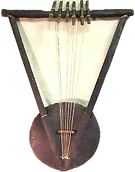
Somalia a lyre with 5 to 8 strings and a shallow wooden resonator covered in animal skin, used in folklore dances, wedding celebrations, and the rhythmic storytelling of the Somali-Bantu community.
South Africa


concertina
Germany, United Kingdom, Ireland, United States, South Africa a portable, bellows-driven free-reed instrument with buttons on both ends, used in folk dance accompaniment, folk ensemble performances, and maritime sea shanties.
hosho
Zimbabwe, Mozambique, South Africa a pair of hollowed-out gourd filled with small seeds or pebble, used in complex polyphonic thumb-piano music, Shona music, and communal healing ceremonies.
ngoma
Democratic Republic of Congo, Uganda, Zambia, Tanzania, South Africa, Zimbabwe, Kenya, Rwanda, Burundi, Gabon, Angola a barrel-shaped drum carved from a single log and covered with a cowhide head, used in communal communication, Sangoma healing rituals, Zulu and Xhosa folk music, and traditional dance accompaniment.
vuvuzela

South Africa, Worldwide a long, plastic, end-blown horn that produces a loud, monotonous, high-pitched monotone sound, used by spectators at sporting events, most notably soccer (football) matches.
South Sudan

Kundi

Democratic Republic of the Congo, Central African Republic, South Sudan an arched or "bow" harp with a skin-covered wooden resonator and a carved neck, used by male singers to provide melodic accompaniment for epic storytelling, praise songs, and courtly entertainment.
likembe
Democratic Republic of the Congo, Uganda, Central Africa Republic a handheld thumb piano with tuned metal tongues fixed to a wooden resonator box, used for storytelling, ritual ceremonies, and communal social gatherings.
Waza

Sudan, Ethiopia, South Sudan a large, trumpet-like aerophone made from a series of nested gourds that produces a deep, resonant drone used to provide the rhythmic and harmonic foundation for communal harvest dances and ceremonial celebrations.
Sudan

algaita
Nigeria, Cameroon, Sudan, Niger, Chad a double-reed wind instrument with a conical bore and flared bell, used for ceremonial events, praise singing in royal courts, and providing the lead melody for traditional dance music.

mizmar
Egypt, Lebanon, Syria, Palestine, Jordan, Iraq, Sudan, Yemen, Saudi Arabia a double-reed wind instrument with a conical bore and a flared bell, used in folk dances, Sa'idi folk music, outdoor festivals, and traditional wedding processions.
sistrum
Egypt (Ancient Egypt), Greece (Ancient Greece), Ethiopia, Sudan a U-shaped metal rattle with movable crossbars and jingling discs that, used in religious ceremonies and temple rituals.
Waza
Sudan, Ethiopia, South Sudan a large, trumpet-like aerophone made from a series of nested gourds that produces a deep, resonant drone used to provide the rhythmic and harmonic foundation for communal harvest dances and ceremonial celebrations.
Tanzania

endingidi
Uganda, Rwanda, Tanzania a one-stringed fiddle with a cylindrical resonator covered in goatskin, used in solo storytelling, social commentary, and traditional folk songs.
kalimba
Zimbabwe, Mozambique, Malawi, Zambia, Democratic Republic of the Congo, Tanzania a handheld thumb piano with metal tines attached to a wooden soundbox, used in folk, acoustic pop, and meditative music.
kayamba
Kenya, Tanzania, Malawi. Mauritius a flat, rectangular shaker made from reed or bamboo tubes filled with seeds that produces a sharp, rhythmic "ocean-wave" sound when tilted or shaken, used in traditional folk songs, spiritual healing ceremonies, and dance ceremonies.
litungu
Kenya, Uganda, Tanzania a large, bowl-shaped lyre with seven or eight strings stretched across a skin-covered resonator, often with loose metal rings or bottle caps near the bridge to add a percussive "sizzle", used by musician-historians (The "Omulitungu") who sings about clan lineage and social events during festivals and weddings.
ngoma
Democratic Republic of Congo, Uganda, Zambia, Tanzania, South Africa, Zimbabwe, Kenya, Rwanda, Burundi, Gabon, Angola a barrel-shaped drum carved from a single log and covered with a cowhide head, used in communal communication, Sangoma healing rituals, Zulu and Xhosa folk music, and traditional dance accompaniment.
orutu
Kenya, Tanzania a single-stringed fiddle with a cylindrical resonator covered in goatskin, used in traditional storytelling, social ceremonies, and Benga music.
The Gambia

akonting
Senegal, Gambia, Guinea-Bissau a three-stringed lute with a skin-headed gourd body and one short drone string, used in rhythmic and melodic accompaniment for Jola folk songs and communal/social relaxation. Ancestor instrument of the American banjo.
balafon
Mali, Guinea, Burkina Faso, Gambia, Côte d'Ivoire, Ghana, Cameroon, Senegal, Chad, Gabon a gourd-resonated xylophone with wooden keys suspended over calabash gourds, used as a central instrument for griots (hereditary storytellers) in traditional West African folk music and ceremonies.
bolon
Mali, Guinea, Gambia a plucked harp-lute with a large calabash gourd resonator and a curved wooden neck, used in hunter’s music, historical storytelling, and Mandinka folk ensembles.
bougarabou
Senegal, Gambia, Guinea-Bissau a set of goblet-shaped drums with a single cowhide head, played with the hands, used in communal dancing, festive celebrations, and healing rituals.
fula flute
Guinea, Senegal, Mali, Nigeria, Gambia a transverse overtone flute made from a conical tambin vine, characterized by the player's simultaneous singing and shouting into the instrument, used in traditional folk music and West African "ballet" orchestras.
kora
Gambia, Senegal, Mali, Guinea, Guinea-Bissau, Ivory Coast a complex twenty-one stringed harp-lute hybrid with a large gourd resonator cut in half and covered with cow skin, wooden handposts for stability, and a high bridge, used in the Jali tradition (hereditary musicians, historians, and praise-singers who maintain the oral records of West African empires), and contemporary world music.
krin
Guinea, Mali, Gambia, Senegal, Ghana a hollowed-out log drum with one or more slits that produces multiple distinct pitches when struck with sticks, used in long-distance communication, West African "ballet" performances, village festivities, secret society rituals, and percussion ensembles.
ngoni
Mali, Burkina Faso, Guinea, Senegal, Gambia, Ivory Coast a harp-lute hybrid made from a hollowed wooden body or a calabash gourd covered in dried animal skin, Jali griots (hereditary historians and praise singers), donso (hunter societies) for ceremonial rituals, and contemporary West African "Wassoulou" music
talking drum
Nigeria, Ghana, Benin, Senegal, Mali, Burkina Faso, Gambia an hourglass-shaped, double-headed drum with tension cords running between the two heads the player to squeezes with their arm to change the drum's pitch and mimic the tonality of West African languages, used in griot storytelling and traditional ceremonial music.
xalam
Senagal, Gambia, Mali, Mauritania a five-stringed plucked lute with a skin-covered wooden body and a fretted neck, used by griot praise singers, to accompany epic narratives, praise songs, and folk dances.
Togo

agogô
Brazil, Nigeria, Benin, Togo a percussion instrument with two or more conical metal bells of different sizes connected by a U-shaped handle, which is struck with a wooden stick, used in samba, capoeira, and Candomblé religious practices.
ashiko
Nigeria, Ghana, Togo, Benin, Haiti a tapered hand drum with a rope-tuned animal skin head, use in dance music, community celebrations, folk music, and as a "talking drum" to mimic speech..
batá
Nigeria, Cuba, Puerto Rico, Togo, Benin a set of three double-headed, hourglass-shaped drums made of carved wood and covered with tensioned hide, used for polyrhythmic patterns essential for calling and communicating with the Orishas (deities) in Yoruba religious ceremonies and associated music.
gankogui
Ghana, Togo, Benin a hand-forged iron double bell played with a wooden stick that serves as the essential rhythmic timekeeper, providing the foundational "timeline" for complex polyrhythmic percussion ensembles and traditional dance.
Uganda

amadinda

Uganda a large, resonant xylophone made of twelve wooden keys suspended over a pit or banana trunks, played by three musicians using complex interlocking rhythmic patterns, used in royal court music, dances, and ceremonies.
endingidi
Uganda, Rwanda, Tanzania a one-stringed fiddle with a cylindrical resonator covered in goatskin, used in solo storytelling, social commentary, and traditional folk songs.
endongo

Uganda a large, eight-stringed bowl lyre with a resonator made of a hollowed wooden bowl covered with lizard skin, used in royal court music and accompanying epic praise songs.
inanga
Burundi, Rwanda, Uganda, Democratic Republic of Congo a large, trough-shaped zither with a single continuous string wound through notches across a hollowed wooden board, used in storytelling and folk singing.
likembe
Democratic Republic of the Congo, Uganda, Central Africa Republic a handheld thumb piano with tuned metal tongues fixed to a wooden resonator box, used for storytelling, ritual ceremonies, and communal social gatherings.
litungu
Kenya, Uganda, Tanzania a large, bowl-shaped lyre with seven or eight strings stretched across a skin-covered resonator, often with loose metal rings or bottle caps near the bridge to add a percussive "sizzle", used by musician-historians (The "Omulitungu") who sings about clan lineage and social events during festivals and weddings.
ngoma
Democratic Republic of Congo, Uganda, Zambia, Tanzania, South Africa, Zimbabwe, Kenya, Rwanda, Burundi, Gabon, Angola a barrel-shaped drum carved from a single log and covered with a cowhide head, used in communal communication, Sangoma healing rituals, Zulu and Xhosa folk music, and traditional dance accompaniment.
Zambia

kalimba
Zimbabwe, Mozambique, Malawi, Zambia, Democratic Republic of the Congo, Tanzania a handheld thumb piano with metal tines attached to a wooden soundbox, used in folk, acoustic pop, and meditative music.
mbira
Zimbabwe, Mozambique, Malawi, Zambia a sophisticated plucked thumb piano with 22 to 28 tuned metal keys fixed to a wooden soundboard, and shells, beads, or bottle caps attached to the soundboard or the "deze", used in Shona spiritual ceremonies (Bira ceremony) and social storytelling.
ngoma
Democratic Republic of Congo, Uganda, Zambia, Tanzania, South Africa, Zimbabwe, Kenya, Rwanda, Burundi, Gabon, Angola a barrel-shaped drum carved from a single log and covered with a cowhide head, used in communal communication, Sangoma healing rituals, Zulu and Xhosa folk music, and traditional dance accompaniment.
Zimbabwe

hosho
Zimbabwe, Mozambique, South Africa a pair of hollowed-out gourd filled with small seeds or pebble, used in complex polyphonic thumb-piano music, Shona music, and communal healing ceremonies.
kalimba
Zimbabwe, Mozambique, Malawi, Zambia, Democratic Republic of the Congo, Tanzania a handheld thumb piano with metal tines attached to a wooden soundbox, used in folk, acoustic pop, and meditative music.
mbira
Zimbabwe, Mozambique, Malawi, Zambia a sophisticated plucked thumb piano with 22 to 28 tuned metal keys fixed to a wooden soundboard, and shells, beads, or bottle caps attached to the soundboard or the "deze", used in Shona spiritual ceremonies (Bira ceremony) and social storytelling.
ngoma
Democratic Republic of Congo, Uganda, Zambia, Tanzania, South Africa, Zimbabwe, Kenya, Rwanda, Burundi, Gabon, Angola a barrel-shaped drum carved from a single log and covered with a cowhide head, used in communal communication, Sangoma healing rituals, Zulu and Xhosa folk music, and traditional dance accompaniment.