


Bangladesh

bansuri

India, Nepal, Pakistan, Bangladesh a transverse (side-blown) bamboo flute with six to seven finger holes, used in Hindustani classical music
dhol

India, Pakistan, Bangladesh a double-headed barrel drum played with two different wooden sticks, used in, Punjabi folk music, Sufi rituals, bhangra music and community celebrations.
ektara

India, Bangladesh, Nepal, Pakistan a one-stringed lute instrument with a skin-covered resonator and a split bamboo neck that is squeezed to vary the string's tension, used in devotional chants, wandering bards, and rhythmic folk songs.

esraj
India, Bangladesh a bowed string instrument with a wooden body, a skin-covered resonator, and a long, fretted neck, used in North Indian classical music, Sikh devotional kirtan, and film scores.
ghunghroo

India, Pakistan, Bangladesh a set of small metallic bells strung together on a cord or velvet pad that is worn around the ankles of dancers to provide audible footwork during classical and folk dance performances.

harmonium
India, Pakistan, Nepal, Bangladesh a free-reed keyboard instrument that produces sound as air from hand- or foot-operated bellows vibrates metal tongues, used in devotional chanting, folk songs, and various classical traditions.
jal tarang

India, Pakistan, Bangladesh a melodic percussion instrument consisting of tuned ceramic or metal bowls filled with different amounts of water to create varying pitches, used in Hindustani classical and devotional music. Translates to "waves in water"

kHartals
India, Pakistan, Bangladesh a pair of handheld wooden clappers or metal cymbals , used by wandering minstrels and saints in the Bhakti and Sufi traditions in street performances, leading communal chanting and spiritual celebrations.

khamak
India, Bangladesh a plucked friction drum with a small wooden body and a long string attached to a handheld tensioner, producing a "talking" or "boing" sound with sliding pitches, used in Bengali Baul music.

khol
India, Bangladesh a terracotta drum with two leather faces of different sizes for producing different tones and timbres, used in devotional Kirtan, Baul music, Harinama Sankirtan (congregational chanting), and traditional folk dances.
pungi

India, Pakistan, Nepal, Bangladesh, Sri Lanka a double-reed wind instrument with a bulbous gourd resonator and two bamboo pipes that produce a continuous, high-pitched melody and drone, used by snake charmers for street performances and folk rituals.

sarinda
India, Pakistan, Afghanistan, Bangladesh a bowed string instrument with a deeply waisted wooden body and a partially open soundbox, used in folk music, Sufi poetry, tribal dance, Baul music, and devotional songs.
sarod

India, Pakistan, Bangladesh a short-necked, fretless lute with a polished metal fingerboard, 17 to 25 strings (including 4-6 sympathetic strings), a skin-covered resonator, and played with a coconut shell plectrum, used in Hindustani classical music.

shruti box
India, Bangladesh, Nepal, Pakistan a small, bellows-operated free-reed instrument, used to produce a sustained harmonic drone as a pitch reference in Indian classical music and devotional singing.

sitar
India, Pakistan, Bangladesh, Nepal a long-necked plucked string instrument with a large gourd resonator and movable frets, used in Hindustani classical music, Bollywood film scores, world fusion music, and psychedelic rock fusion.
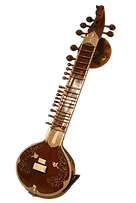
surbahar
India, Pakistan, Bangladesh a large, plucked string instrument of the sitar family with extra gourd resonator and thick strings, used to play the slow, meditative sālāp (non-metric introduction) sections of Hindustani classical music.

tabla
India, Pakistan, Bangladesh, Nepal a pair of small, tunable hand drums, where the smaller drum (dayan) plays the treble and the larger drum (bayan) plays the bass, used in Hindustani classical music, Bollywood film scores, and Indian popular music.

tambura
India, Pakistan Banglidesh, Nepal a long-necked, fretless plucked string instrument with four or five strings, used to produce a continuous, resonant drone, used in Indian classical music.

tar shehnai
India, Pakistan, Bangladesh a bowed string instrument with a short neck, fretboard, and skin soundboard, used in Hindustani classical music.
Bhutan


chiwang
Bhutan, Tibet a two-stringed bowed lute carved from a single piece of wood and topped with a skin soundboard, used in Bhutanese folk music (Zhungdra and Boedra) and to accompany vocalists or dancers during festivals.
damaru

India, Nepal, Tibet, Bhutan a small two-headed drum with two knotted cords that strike the heads when the instrument is twisted, used in religious rituals, meditative practices, and as a symbolic attribute in sacred iconography.

dranyen
Bhutan, Nepal, Tibet a long-necked, six-stringed lute with a double-waisted wooden body and a skin-covered soundbox, used in traditional folk songs, ritual dances, and secular ballad storytelling.
dungchen

Tibet, Nepal, Bhutan, India a long, telescoping metal trumpet, used to signal the start of monastic ceremonies, accompany sacred chants, perform ritual calls from rooftops, and Tantric orchestra.
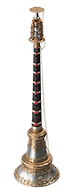
gyaling
Tibet, Bhutan, Nepal, India, Mongolia a double-reed wind instrument with a conical wooden body and a large copper or brass bell, used to "invite deities," accompany ritual chanting, and fanfares during monastic ceremonies.
madal

Nepal, India, Bhutan a cylindrical, double-headed hand drum with a slight outward bulge in the center and worn around the players waist or neck, used in folk genres, seasonal festivals, and traditional social dances.
tibetan singing bowls

Tibet, Nepal, India, Bhutan bowl-shaped, bell-like instruments that produce sustained, harmonic vibrations when struck or rubbed with a mallet, used in sound therapy, meditation, and spiritual ceremonies to promote relaxation and mindfulness.
tingsha

Tibet, Nepal, India, Bhutan a pair of small, thick bronze cymbals connected by a leather strap, used to mark the beginning or end of periods of meditation and Buddhist ritual chanting.

tungna
Tibet, Nepal, India, Bhutan a plucked string instrument with a long, fretless neck and a skin-covered rectangular sound box, used by musicians and monks to accompany folk dances, epic narratives, and sacred monastic chants.
India

bansuri
India, Nepal, Pakistan, Bangladesh a transverse (side-blown) bamboo flute with six to seven finger holes, used in Hindustani classical music
bulbul tarang

India, Pakistan a string instrument with a wooden body and a set of typewriter-like keys that are pressed to fret the strings while they are plucked or strummed, used in folk music, devotional songs (bhajans), and light classical music.
chande

India The chande is a large, double-headed drum played with two wooden sticks, designed to be heard for miles, used in Carnatic and temple music ensembles, yakshagana theater, kathakali dance-drama, and grand temple festivals.
conch shell trumpet

Hawaii, Samoa, Japan, India, Mexico, French Polynesia/ Tahiti, Guam, Kiribati, Marshall Islands, Nauru, New Caledonia, Niue, Palau, Samoa, Tokelau, Tuvalu, Wallis and Futuna a natural aerophone fashioned from a large marine snail's shell that produces a powerful, resonant drone when the player's lips vibrate against a hole in the apex, used in religious rituals, maritime signaling, and ceremonial fanfares.
damaru
India, Nepal, Tibet, Bhutan a small two-headed drum with two knotted cords that strike the heads when the instrument is twisted, used in religious rituals, meditative practices, and as a symbolic attribute in sacred iconography.
dhol
India, Pakistan, Bangladesh a double-headed barrel drum played with two different wooden sticks, used in, Punjabi folk music, Sufi rituals, bhangra music and community celebrations.

dimdi
India a small, single-headed frame drum with a shallow wooden rim that is struck with the fingers and palm, used in folk storytelling, devotional songs, and traditional dance performances.
dungchen
Tibet, Nepal, Bhutan, India a long, telescoping metal trumpet, used to signal the start of monastic ceremonies, accompany sacred chants, perform ritual calls from rooftops, and Tantric orchestra.
ektara
India, Bangladesh, Nepal, Pakistan a one-stringed lute instrument with a skin-covered resonator and a split bamboo neck that is squeezed to vary the string's tension, used in devotional chants, wandering bards, and rhythmic folk songs.
esraj
India, Bangladesh a bowed string instrument with a wooden body, a skin-covered resonator, and a long, fretted neck, used in North Indian classical music, Sikh devotional kirtan, and film scores.

ghumot
India (Goa) a clay pot with a circular opening covered by a skin membrane, used in traditional folk songs, weddings, and harvest festivals.
ghunghroo
India, Pakistan, Bangladesh a set of small metallic bells strung together on a cord or velvet pad that is worn around the ankles of dancers to provide audible footwork during classical and folk dance performances.
gottuvadhyam

India a long-necked fretless zither with twenty-one strings played by sliding a heavy cylinder over the strings with one hand while plucking with the other, used in classical Carnatic music.
gyaling
Tibet, Bhutan, Nepal, India, Mongolia a double-reed wind instrument with a conical wooden body and a large copper or brass bell, used to "invite deities," accompany ritual chanting, and fanfares during monastic ceremonies.
harmonium
India, Pakistan, Nepal, Bangladesh a free-reed keyboard instrument that produces sound as air from hand- or foot-operated bellows vibrates metal tongues, used in devotional chanting, folk songs, and various classical traditions.
idakka

India (Kerala) a small hourglass-shaped drum played with a stick where the player varies the pitch by squeezing the central lacing, used in sacred temple rituals and traditional dance dramas.
jal tarang
India, Pakistan, Bangladesh a melodic percussion instrument consisting of tuned ceramic or metal bowls filled with different amounts of water to create varying pitches, used in Hindustani classical and devotional music. Translates to "waves in water"

kanjira
India a small, high-pitched frame drum with a single pair of metal jingles and a flexible skin head, used in classical South Indian Carnatic percussion ensembles.
kHartals
India, Pakistan, Bangladesh a pair of handheld wooden clappers or metal cymbals , used by wandering minstrels and saints in the Bhakti and Sufi traditions in street performances, leading communal chanting and spiritual celebrations.
khamak
India, Bangladesh a plucked friction drum with a small wooden body and a long string attached to a handheld tensioner, producing a "talking" or "boing" sound with sliding pitches, used in Bengali Baul music.
khol
India, Bangladesh a terracotta drum with two leather faces of different sizes for producing different tones and timbres, used in devotional Kirtan, Baul music, Harinama Sankirtan (congregational chanting), and traditional folk dances.
madal
Nepal, India, Bhutan a cylindrical, double-headed hand drum with a slight outward bulge in the center and worn around the players waist or neck, used in folk genres, seasonal festivals, and traditional social dances.
mashak

India, Pakistan, Nepal a bagpipe made from a complete goatskin, where the legs of the goat serve as the attachment points for the pipes, used for folk melodies, Chholiya dance (a sword dance performed at Himalayan weddings), and rural festivities.
mohan veena

India a highly modified archtop acoustic guitar with nineteen strings (melody, drone, and sympathetic strings) played with a slide, used in classical Indian raga.
nadaswaram
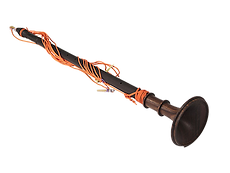
India, Sri Lanka, Malaysia, Singapore a large double-reed wind instrument with a long conical wooden body and a flared metal bell, used for temple rituals, Tamil Hindu cultural and religious ceremonies, Carnatic classical concerts, and traditional wedding processions.
naqareh

Iran, India, Pakistan, Turkey, Azerbaijan, Uzbekistan, Turkmenistan, Afghanistan a pair of kettle-shaped drums made of clay, wood, or metal and covered with hide and played with sticks, used in the "Naqareh-khaneh" to announce the sunrise and sunset, Naubat ensembles, royal processions, military fanfares, and traditional festive music.
pambai

India, Sri Lanka a pair of cylindrical drums tied together and played with sticks, used in temple festivals, folk dances, and rituals dedicated to village deities.
pungi
India, Pakistan, Nepal, Bangladesh, Sri Lanka a double-reed wind instrument with a bulbous gourd resonator and two bamboo pipes that produce a continuous, high-pitched melody and drone, used by snake charmers for street performances and folk rituals.

ransingha
India, Nepal a large, S-shaped natural trumpet made of copper or brass, that produce a powerful, blaring, and triumphant tone used for signaling during traditional ceremonies, battle announcements, religious processions, folk dramas, folk festivals, and Panche Baja musical ensembles.

ravanahatha
India, Sri Lanka a bowed string instrument with a coconut shell resonator covered with goat skin and a long bamboo neck, used in epic storytelling and spiritual folk music.

sarangi
India, Pakistan a short-necked, bowed string instrument carved from a single block of cedar wood with a skin-covered resonator, used to mimic the human voice in Hindustani classical music, Sufi devotional songs, and traditional folk songs.
sarinda
India, Pakistan, Afghanistan, Bangladesh a bowed string instrument with a deeply waisted wooden body and a partially open soundbox, used in folk music, Sufi poetry, tribal dance, Baul music, and devotional songs.
sarod
India, Pakistan, Bangladesh a short-necked, fretless lute with a polished metal fingerboard, 17 to 25 strings (including 4-6 sympathetic strings), a skin-covered resonator, and played with a coconut shell plectrum, used in Hindustani classical music.

satara
India a double-flute with two separate wooden pipes played simultaneously (one drone, one melody pipe), used in pastoral tunes, shepherd music, folk dance accompaniment (Kalbelia), and storytelling.

shahi baaja
India, Pakistan a keyed electric box zither with a solid wooden body, a swarmandal (drone harp), 30 typewriter style keys, and electronic pickups, used for classical, folk, and contemporary fusion music, bhajans, bollywood film scores, psychedelic rock, indie, and ambient techno.
shruti box
India, Bangladesh, Nepal, Pakistan a small, bellows-operated free-reed instrument, used to produce a sustained harmonic drone as a pitch reference in Indian classical music and devotional singing.
sitar
India, Pakistan, Bangladesh, Nepal a long-necked plucked string instrument with a large gourd resonator and movable frets, used in Hindustani classical music, Bollywood film scores, world fusion music, and psychedelic rock fusion.
surbahar
India, Pakistan, Bangladesh a large, plucked string instrument of the sitar family with extra gourd resonator and thick strings, used to play the slow, meditative sālāp (non-metric introduction) sections of Hindustani classical music.
tabla
India, Pakistan, Bangladesh, Nepal a pair of small, tunable hand drums, where the smaller drum (dayan) plays the treble and the larger drum (bayan) plays the bass, used in Hindustani classical music, Bollywood film scores, and Indian popular music.
tambura
India, Pakistan Banglidesh, Nepal a long-necked, fretless plucked string instrument with four or five strings, used to produce a continuous, resonant drone, used in Indian classical music.
tar shehnai
India, Pakistan, Bangladesh a bowed string instrument with a short neck, fretboard, and skin soundboard, used in Hindustani classical music.
thavil

India, Sri Lanka a large, double-sided barrel drum with an extremely tight-fitting membrane, one side is played with a wooden stick and the other is played with the fingers (often wearing thimbles), used in South Indian Hindu temple festivals and accompanying the nagaswaram (a large double-reed instrument).

thimila
India an hourglass-shaped, double-headed hand drum, used in Hindu temple music and accompanying traditional ritual arts in Kerala.
tibetan singing bowls
Tibet, Nepal, India, Bhutan bowl-shaped, bell-like instruments that produce sustained, harmonic vibrations when struck or rubbed with a mallet, used in sound therapy, meditation, and spiritual ceremonies to promote relaxation and mindfulness.
tingsha
Tibet, Nepal, India, Bhutan a pair of small, thick bronze cymbals connected by a leather strap, used to mark the beginning or end of periods of meditation and Buddhist ritual chanting.
tungna
Tibet, Nepal, India, Bhutan a plucked string instrument with a long, fretless neck and a skin-covered rectangular sound box, used by musicians and monks to accompany folk dances, epic narratives, and sacred monastic chants.
tutari
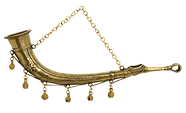
India a short, curved, or S-shaped natural brass horn, used as a signaling instrument and for ceremonial fanfares in religious processions and palace rituals.
veena
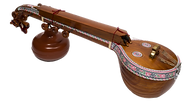
India, Sri Lanka a large plucked string instrument, with a long fretted fingerboard and two large resonant gourds (one at each end), used in Carnatic (South Indian) classical music.
Maldives

Boduberu

Maldives a large, double-headed barrel drum made from the wood of coconut trees and covered with manta ray or goatskin, used in boduberu music, traditional Maldivian "shows" for tourists, weddings, and community festivals.
bulbul tarang
India, Pakistan a string instrument with a wooden body and a set of typewriter-like keys that are pressed to fret the strings while they are plucked or strummed, used in folk music, devotional songs (bhajans), and light classical music.
bansuri
India, Nepal, Pakistan, Bangladesh a transverse (side-blown) bamboo flute with six to seven finger holes, used in Hindustani classical music
Nepal

damaru
India, Nepal, Tibet, Bhutan a small two-headed drum with two knotted cords that strike the heads when the instrument is twisted, used in religious rituals, meditative practices, and as a symbolic attribute in sacred iconography.
dranyen
Bhutan, Nepal, Tibet a long-necked, six-stringed lute with a double-waisted wooden body and a skin-covered soundbox, used in traditional folk songs, ritual dances, and secular ballad storytelling.
dungchen
Tibet, Nepal, Bhutan, India a long, telescoping metal trumpet, used to signal the start of monastic ceremonies, accompany sacred chants, perform ritual calls from rooftops, and Tantric orchestra.
ektara
India, Bangladesh, Nepal, Pakistan a one-stringed lute instrument with a skin-covered resonator and a split bamboo neck that is squeezed to vary the string's tension, used in devotional chants, wandering bards, and rhythmic folk songs.
gyaling
Tibet, Bhutan, Nepal, India, Mongolia a double-reed wind instrument with a conical wooden body and a large copper or brass bell, used to "invite deities," accompany ritual chanting, and fanfares during monastic ceremonies.
harmonium
India, Pakistan, Nepal, Bangladesh a free-reed keyboard instrument that produces sound as air from hand- or foot-operated bellows vibrates metal tongues, used in devotional chanting, folk songs, and various classical traditions.
madal
Nepal, India, Bhutan a cylindrical, double-headed hand drum with a slight outward bulge in the center and worn around the players waist or neck, used in folk genres, seasonal festivals, and traditional social dances.
mashak
India, Pakistan, Nepal a bagpipe made from a complete goatskin, where the legs of the goat serve as the attachment points for the pipes, used for folk melodies, Chholiya dance (a sword dance performed at Himalayan weddings), and rural festivities.
pungi
India, Pakistan, Nepal, Bangladesh, Sri Lanka a double-reed wind instrument with a bulbous gourd resonator and two bamboo pipes that produce a continuous, high-pitched melody and drone, used by snake charmers for street performances and folk rituals.
ransingha
India, Nepal a large, S-shaped natural trumpet made of copper or brass, that produce a powerful, blaring, and triumphant tone used for signaling during traditional ceremonies, battle announcements, religious processions, folk dramas, folk festivals, and Panche Baja musical ensembles.
shruti box
India, Bangladesh, Nepal, Pakistan a small, bellows-operated free-reed instrument, used to produce a sustained harmonic drone as a pitch reference in Indian classical music and devotional singing.
sitar
India, Pakistan, Bangladesh, Nepal a long-necked plucked string instrument with a large gourd resonator and movable frets, used in Hindustani classical music, Bollywood film scores, world fusion music, and psychedelic rock fusion.
tabla
India, Pakistan, Bangladesh, Nepal a pair of small, tunable hand drums, where the smaller drum (dayan) plays the treble and the larger drum (bayan) plays the bass, used in Hindustani classical music, Bollywood film scores, and Indian popular music.
tambura
India, Pakistan Banglidesh, Nepal a long-necked, fretless plucked string instrument with four or five strings, used to produce a continuous, resonant drone, used in Indian classical music.
tibetan singing bowls
Tibet, Nepal, India, Bhutan bowl-shaped, bell-like instruments that produce sustained, harmonic vibrations when struck or rubbed with a mallet, used in sound therapy, meditation, and spiritual ceremonies to promote relaxation and mindfulness.
tingsha
Tibet, Nepal, India, Bhutan a pair of small, thick bronze cymbals connected by a leather strap, used to mark the beginning or end of periods of meditation and Buddhist ritual chanting.
tungna
Tibet, Nepal, India, Bhutan a plucked string instrument with a long, fretless neck and a skin-covered rectangular sound box, used by musicians and monks to accompany folk dances, epic narratives, and sacred monastic chants.
pakistan

bansuri
India, Nepal, Pakistan, Bangladesh a transverse (side-blown) bamboo flute with six to seven finger holes, used in Hindustani classical music
bulbul tarang
India, Pakistan a string instrument with a wooden body and a set of typewriter-like keys that are pressed to fret the strings while they are plucked or strummed, used in folk music, devotional songs (bhajans), and light classical music.
dhol
India, Pakistan, Bangladesh a double-headed barrel drum played with two different wooden sticks, used in, Punjabi folk music, Sufi rituals, bhangra music and community celebrations.
ektara
India, Bangladesh, Nepal, Pakistan a one-stringed lute instrument with a skin-covered resonator and a split bamboo neck that is squeezed to vary the string's tension, used in devotional chants, wandering bards, and rhythmic folk songs.
ghaychak

Iran, Afghanistan, Pakistan a bowed string instrument with a double-chambered, skin-covered body, short neck, and metal or gut strings, used in traditional folk music, classical ensembles, and spiritual rituals.
ghunghroo
India, Pakistan, Bangladesh a set of small metallic bells strung together on a cord or velvet pad that is worn around the ankles of dancers to provide audible footwork during classical and folk dance performances.
harmonium
India, Pakistan, Nepal, Bangladesh a free-reed keyboard instrument that produces sound as air from hand- or foot-operated bellows vibrates metal tongues, used in devotional chanting, folk songs, and various classical traditions.
jal tarang
India, Pakistan, Bangladesh a melodic percussion instrument consisting of tuned ceramic or metal bowls filled with different amounts of water to create varying pitches, used in Hindustani classical and devotional music. Translates to "waves in water"
kHartals
India, Pakistan, Bangladesh a pair of handheld wooden clappers or metal cymbals , used by wandering minstrels and saints in the Bhakti and Sufi traditions in street performances, leading communal chanting and spiritual celebrations.
mashak
India, Pakistan, Nepal a bagpipe made from a complete goatskin, where the legs of the goat serve as the attachment points for the pipes, used for folk melodies, Chholiya dance (a sword dance performed at Himalayan weddings), and rural festivities.
naqareh
Iran, India, Pakistan, Turkey, Azerbaijan, Uzbekistan, Turkmenistan, Afghanistan a pair of kettle-shaped drums made of clay, wood, or metal and covered with hide and played with sticks, used in the "Naqareh-khaneh" to announce the sunrise and sunset, Naubat ensembles, royal processions, military fanfares, and traditional festive music.
pungi
India, Pakistan, Nepal, Bangladesh, Sri Lanka a double-reed wind instrument with a bulbous gourd resonator and two bamboo pipes that produce a continuous, high-pitched melody and drone, used by snake charmers for street performances and folk rituals.

rubab
Afghanistan, Pakistan, Tajikistan a short-necked, plucked lute with a "waisted" body carved from a single piece of wood and a goat skin-covered resonator, used in classical art music, Pashtun music traditions, and traditional folk suites.
sarangi
India, Pakistan a short-necked, bowed string instrument carved from a single block of cedar wood with a skin-covered resonator, used to mimic the human voice in Hindustani classical music, Sufi devotional songs, and traditional folk songs.
sarinda
India, Pakistan, Afghanistan, Bangladesh a bowed string instrument with a deeply waisted wooden body and a partially open soundbox, used in folk music, Sufi poetry, tribal dance, Baul music, and devotional songs.
sarod
India, Pakistan, Bangladesh a short-necked, fretless lute with a polished metal fingerboard, 17 to 25 strings (including 4-6 sympathetic strings), a skin-covered resonator, and played with a coconut shell plectrum, used in Hindustani classical music.
shahi baaja
India, Pakistan a keyed electric box zither with a solid wooden body, a swarmandal (drone harp), 30 typewriter style keys, and electronic pickups, used for classical, folk, and contemporary fusion music, bhajans, bollywood film scores, psychedelic rock, indie, and ambient techno.
shruti box
India, Bangladesh, Nepal, Pakistan a small, bellows-operated free-reed instrument, used to produce a sustained harmonic drone as a pitch reference in Indian classical music and devotional singing.
sitar
India, Pakistan, Bangladesh, Nepal a long-necked plucked string instrument with a large gourd resonator and movable frets, used in Hindustani classical music, Bollywood film scores, world fusion music, and psychedelic rock fusion.
surbahar
India, Pakistan, Bangladesh a large, plucked string instrument of the sitar family with extra gourd resonator and thick strings, used to play the slow, meditative sālāp (non-metric introduction) sections of Hindustani classical music.
tabla
India, Pakistan, Bangladesh, Nepal a pair of small, tunable hand drums, where the smaller drum (dayan) plays the treble and the larger drum (bayan) plays the bass, used in Hindustani classical music, Bollywood film scores, and Indian popular music.
tambura
India, Pakistan Banglidesh, Nepal a long-necked, fretless plucked string instrument with four or five strings, used to produce a continuous, resonant drone, used in Indian classical music.
tar shehnai
India, Pakistan, Bangladesh a bowed string instrument with a short neck, fretboard, and skin soundboard, used in Hindustani classical music.
sri lanka

nadaswaram
India, Sri Lanka, Malaysia, Singapore a large double-reed wind instrument with a long conical wooden body and a flared metal bell, used for temple rituals, Tamil Hindu cultural and religious ceremonies, Carnatic classical concerts, and traditional wedding processions.
pambai
India, Sri Lanka a pair of cylindrical drums tied together and played with sticks, used in temple festivals, folk dances, and rituals dedicated to village deities.
pungi
India, Pakistan, Nepal, Bangladesh, Sri Lanka a double-reed wind instrument with a bulbous gourd resonator and two bamboo pipes that produce a continuous, high-pitched melody and drone, used by snake charmers for street performances and folk rituals.
ravanahatha
India, Sri Lanka a bowed string instrument with a coconut shell resonator covered with goat skin and a long bamboo neck, used in epic storytelling and spiritual folk music.
thavil
India, Sri Lanka a large, double-sided barrel drum with an extremely tight-fitting membrane, one side is played with a wooden stick and the other is played with the fingers (often wearing thimbles), used in South Indian Hindu temple festivals and accompanying the nagaswaram (a large double-reed instrument).
veena
India, Sri Lanka a large plucked string instrument, with a long fretted fingerboard and two large resonant gourds (one at each end), used in Carnatic (South Indian) classical music.