


China

banhu

China a bowed string instrument with a small, coconut-shell body covered by a thin wooden soundboard, used in northern Chinese opera (especially Peking Opera) and folk ensembles.

bawu
China a side-blown free-reed bamboo wind instrument with a small brass or cane reed near the mouthpiece, used in the folk music of the Dai and Yi ethnic groups, Chinese folk music and classical music.
bianqing

China a set of L-shaped, tuned stone chimes suspended in a wooden frame and struck with a mallet, used in ancient ritual music, court ceremonies, and religious services.
bianzhong

China a set of tuned bronze bells suspended in a wooden frame and struck with a mallet, used in ritualistic court music, state ceremonies, and large-scale cultural performances.
bolang gu

China, Taiwan, Hong Kong a small double-headed pellet drum with two beads attached by strings that strike the drumheads when the handle is rotated used as traditional children's toy, by street vendors to signal their presence, and in ritualistic folk ceremonies
crystal singing bowls

United States, China, Germany, United Kingdom, Australia, Japan modern friction-based percussion instruments made from high-purity quartz silica that produce powerful, sustained harmonic tones when struck or rubbed with a mallet, used in sound healing, meditation, and New Age ambient music.
diyingehu

China, Taiwan, Singapore a large, four-stringed bowed instrument that serves as the bass voice in a modern Chinese orchestra, similar to a Western double bass but with the resonance of a snakeskin-covered soundbox.

dizi
China, Taiwan, Singapore The dizi is a transverse bamboo flute with a unique vibrating membrane called a mo-kong, used in folk music, Chinese opera, and modern orchestral performances.
dutar

Uzbekistan, Turkmenistan, Afghanistan, Iran, Tajikistan, China (Uygher) a long-necked, two-stringed lute with a large pear-shaped resonator, used in epic narrative poetry, classical maqams, and intimate folk songs.
duxianqin

China a one-stringed zither with a flexible handle used to vary tension and a bamboo or wooden body, used in folk melodies and atmospheric solo performances.

erhu
China, Taiwan, Singapore, Macau a two-stringed vertical fiddle with a small hexagonal or octagonal resonator covered in python skin, used as the "violin" of the Chinese orchestra, in traditional and contemporary music, solo performances, ensembles, and film scores.
ghijek

Uzbekistan, Tajikistan, China (Uyghur), Turkmenistan, Afghanistan a bowed string instrument with a small, round soundbox covered with a skin membrane and a long neck, used in folk songs, classical Maqam suites, and instrumental storytelling.
guanzi

China, Taiwan a small double-reed pipe, used in folk ensembles, Buddhist and Daoist ritual music, and traditional operatic performances.
guqin

China a seven-stringed, bridgeless zither , used in solo art music, scholarly traditions, and contemplative performance.
guzheng

China, Taiwan, Singapore, Malaysia, Macau a large plucked zither with a long, arched soundboard and movable bridges, used in traditional folk music, operatic accompaniment, and modern orchestral compositions.

hulusi
China, Myanmar, Vietnam a free-reed wind instrument with three bamboo pipes attached to a dried gourd windchest, used in traditional and contemporary music ensembles.

jinghu
China, Taiwan a small, two-stringed bowed lute, used in traditional Beijing/Peking opera ensembles.

koudi
China a tiny, open-ended horizontal flute made of bamboo, used in virtuosic solo performances, vocal and animal mimicry, and traditional Chinese orchestral music.
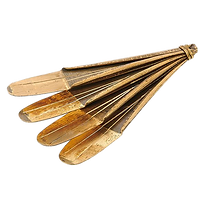
kouxian
China a small instrument made of multiple thin bamboo or metal strips arranged like a fan, used for personal communication, courtship, and mimicking the sounds of nature.
leiqin

China a bowed string instrument with a small, skin-covered resonator and a long, fingerboard-free neck, used to mimic human speech and animal sounds in theatrical and solo folk performances.

liuqin
China a small, high-pitched plucked lute with a pear-shaped body and four strings, used in traditional Chinese orchestras and Chinese opera.
lusheng

China, Laos, Vietnam a free-reed mouth organ with 5 or 6 bamboo pipes each containing a small, vibrating bronze reed at its base inside a wooden windchest, and a long, protruding wooden pipe used as a mouthpiece, used for courtship rituals, circle dances, and harvest celebration.
paiban

China, Taiwan a wooden clapper with several flat slats tied together at one end that makes a cracking sound, used in Chinese opera, story-singing, and chamber orchestras.

paixiao
China, Macau a panpipe-style flute with a series of bamboo pipes of graduated lengths bundled together in a wing-shaped or straight frame, used in traditional court music, ritual ceremonies, and modern orchestral compositions.
pipa

China, Macau a four-stringed, pear-shaped instrument with a shallow wooden body, used in ancient court music, modern avant-garde compositions, and film scores
rawap

China (Uyghur), Afghanistan, Tajikistan, Uzbekistan a long-necked plucked lute with a small, skin-covered round body and lateral horns at the base of the neck, used in virtuosic solo performances and folk dance music.

Roland Aerophone
Japan, China, United States a digital wind instrument with traditional saxophone fingering and advanced breath-sensitive sensors that allows musicians to play a vast library of acoustic and synthesizer sounds, used in jazz, classical, pop, experimental, and electronic music.

sanxian
China a long-necked, three-stringed lute with a fretless fingerboard and a rounded rectangular body covered in python skin, used in traditional ensemble music, opera accompaniment, Suzhou pingtan and northern shushuo, ballad singing, and solo folk performance.

sheng
China a mouth-blown polyphonic free-reed instrument made of vertical bamboo pipes of varying lengths set into a wind chest, used in ritual and court music, Chinese orchestras(Minzu Yuetuan), and huida (wind and percussion) ensembles used for weddings and funerals

suona
China, Taiwan a double-reed wind instrument with a conical bore and a large, detachable metal bell, used in Chinese folk music, military music, and outdoor ceremonial music.
tam tam

China, Worldwide (western classical) a large, untuned, heavy-rimmed gong made of bronze, used in folk music, orchestral classical music, opera, and film scores.
tānggu

China, Taiwan, Singapore, Malaysia, Macau a medium-sized, barrel-shaped percussion drum played with two sticks and mounted on a stand, used in Chinese traditional operas, folk music, and temple rituals.
xiāo

China, Taiwan a long, vertical, end-blown bamboo flute with six to eight fingerholes, used in meditative solos, chamber music, Chinese classical operas, and romantic folk melodies.
xun

China an oval or egg-shaped globular flute made from baked clay or ceramic with a small mouthpiece and five to ten fingerholes, used in Chinese court music and ceremonial ensembles.

yangqin
China, Taiwan a trapezoidal hammered dulcimer played by striking its strings with small bamboo hammers, used in solo performance, Chinese orchestral music and opera.
yueqin

China, Taiwan a round-bodied, plucked string instrument with a short fretted neck and four strings tuned in pairs, used in Beijing opera, folk ensembles, and chamber music.
zhongruan

China, Taiwan a plucked string instrument with a round body, four strings, and a fretted neck, used in Chinese orchestra, Chinese folk music, and contemporary orchestral pieces.
Japan

atarigane

Japan a small hand-held brass gong struck with a mallet, used to mark rhythmic accents and cues in theatrical music, traditional Japanese music (min'yō), and festival music (Edo Bayashi).
binzasara

Japan a set of wooden slats connected by cords and handles that are moved in a wave-like motion to produce a clattering sound, used primarily in folk music, Shinto ritual dances, and kabuki theater.

biwa
Japan a short-necked, plucked lute with a pear-shaped body and 4-5 strings, used in narrative storytelling, court music, and Buddhist chanting.
conch shell trumpet

Hawaii, Samoa, Japan, India, Mexico, French Polynesia/ Tahiti, Guam, Kiribati, Marshall Islands, Nauru, New Caledonia, Niue, Palau, Samoa, Tokelau, Tuvalu, Wallis and Futuna a natural aerophone fashioned from a large marine snail's shell that produces a powerful, resonant drone when the player's lips vibrate against a hole in the apex, used in religious rituals, maritime signaling, and ceremonial fanfares.
crystal singing bowls
United States, China, Germany, United Kingdom, Australia, Japan modern friction-based percussion instruments made from high-purity quartz silica that produce powerful, sustained harmonic tones when struck or rubbed with a mallet, used in sound healing, meditation, and New Age ambient music.

euphonium
United States, United Kingdom, Japan, Germany, France, Canada a conical-bore brass instrument, similar to a concert tuba but smaller and pitched one octave higher, used in wind bands and as the "cello" of the brass world.
finger drum pad
%20t.png)
United States, Japan, Germany, United Kingdom, South Korea an electronic touchpad percussion controller that allows users to trigger drum sounds and samples with their fingertips, used in electronic, hip-hop, and live beat-making performances.
handbells

United Kingdom, United States, Germany, Japan, Canada tuned metal bells rung by hand, each bell sounding a different specific pitch, used in ensemble performances for classical, holiday, and church music.

hawaiian steel guitar
Hawaii, United States, Japan, Australia a type of guitar played with a metal slide and on the lap or on a horizontal stand, used in traditional Hawaiian island melodies, country-western, and blues music.

hichiriki
Japan a short, bamboo double-reed instrument, used in ancient court music and Shinto rituals.

Kaossilator
Japan, Worldwide (Popular Music), United States a touchpad-based synthesizer that allows for dynamic looping and real-time sound manipulation, used in electronic, experimental, and live performance music.

kokyū
Japan a small, bowed spike fiddle with a skin-covered body and a long neck, used in Sankyoku (three-instrument) chamber music, folk songs, and traditional dance accompaniment.
koto

Japan a long, plucked zither with thirteen strings stretched over movable bridges, used in classical court music, traditional chamber ensembles, and contemporary solo compositions.
marimba

Guatemala, Mexico, El Salvador, Angola, United States, Japan a pitched percussion instrument with a chromatic arrangement of wooden bars suspended over tuned resonators, used in Guatemalan festivals and holidays, Mexican "Parque de la Marimba" performances, classical concertos, contemporary percussion ensembles, contemporary solo performances, pop/rock music, jazz ensembles, and traditional folk music.
melodica

Japan, United Kingdom, United States a portable, free-reed wind instrument with a piano-style keyboard and a mouthpiece, used in music education, reggae, dub, and various pop genres.
minimoog

United States United Kingdom, Germany, Japan an analog monophonic synthesizer with three oscillators and a "ladder" filter to produce a powerful, warm sound, used in progressive rock, jazz fusion, funk, and electronic music.

nohkan
Japan a high-pitched, transverse bamboo flute with an internal "throat" and a seven-hole design, and in traditional Japanese theater.
omnichord

Japan, United States, United Kingdom an electronic accompaniment instrument with a touch-sensitive strumplate and chord buttons that allow users to trigger synthetic arpeggios and rhythmic backing tracks, used in indie pop, lo-fi, and experimental music.
otomatone

Japan, United States, South Korea, Worldwide an eighth note-shaped electronic synthesizer with a touch-sensitive ribbon controller and a squeezeable "mouth" that produces a sliding vocal-like tone, used in novelty performances, comedic internet covers, and experimental J-pop.
pocket synthesizer
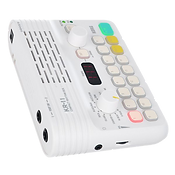%20t.png)
Japan, United States a compact, battery-powered rhythm machine with velocity-sensitive pads and a library of drum patterns, used in portable practice, as a songwriting tool, and backing track generator for instrumentalists.
recorder

Germany, Netherlands, France, Italy, United Kingdom, United States, Japan a woodwind instrument with a whistle-like mouthpiece (fipple flute) and seven finger holes , used in early music ensembles, Baroque chamber works, and as a foundational tool for primary music education.
Roland Aerophone
Japan, China, United States a digital wind instrument with traditional saxophone fingering and advanced breath-sensitive sensors that allows musicians to play a vast library of acoustic and synthesizer sounds, used in jazz, classical, pop, experimental, and electronic music.

ryuteki
Japan a transverse bamboo flute with seven finger holes and a lead-weighted interior, used to represent "dragons" ascending the sky in traditional gagaku imperial court music, and in Shinto rituals.

shakuhachi
Japan an end-blown bamboo flute carved from the root end of a madake bamboo stalk, commonly used in meditative music and "blowing Zen" (suizen) by Komusō wandering monks, classical, and traditional folk music. Also historically used by former samurai as a weapon.

shinobue
Japan a bamboo transverse flute where the interior is often coated with red urushi lacquer and the exterior is wrapped tightly with strips of rattan or cherry bark, known as "voice of the people," used in the imperial court, local festivals (matsuri), and Kabuki theater.

shō
Japan a free-reed mouth organ consisting of multiple bamboo pipes, used to play sustained chord clusters in gagaku (court music).
stylophone

United Kingdom, United States, Germany, Japan, Australia a miniature analog synthesizer that uses a battery-powered stylus to complete a circuit by touching a metal keyboard to sound specific pitches, used in novelty popular music, pop, and electronic music.
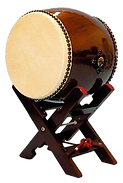
taiko
Japan large, barrel-shaped percussion drums with heads secured by tacks and played with large mallets, used in ceremonial music, festival performances, and modern kumi-daiko (ensemble drumming).
taishōgoto

Japan a small, elongated rectangular zither with typewriter-like keys that press against the strings, used in folk songs and popular music due to its ease of learning.
Macau


Guitarra portuguesa
Portugal, Brazil, Macau a pear-shaped, twelve-stringed lute with fan-shaped tuners and paired steel strings, used in Fado music.
erhu
China, Taiwan, Singapore, Macau a two-stringed vertical fiddle with a small hexagonal or octagonal resonator covered in python skin, used as the "violin" of the Chinese orchestra, in traditional and contemporary music, solo performances, ensembles, and film scores.
pipa
China, Macau a four-stringed, pear-shaped instrument with a shallow wooden body, used in ancient court music, modern avant-garde compositions, and film scores
guzheng
China, Taiwan, Singapore, Malaysia, Macau a large plucked zither with a long, arched soundboard and movable bridges, used in traditional folk music, operatic accompaniment, and modern orchestral compositions.
pipe organ

Germany, France, Italy, United Kingdom, United States, Netherlands, Canada, Belgium, Macau a massive, complex keyboard wind instrument that makes sound by driving pressurized air through thousands of individual pipes, controlled by multiple keyboards and foot pedals. It is often called the "King of Instruments", used in sacred music, classical orchestral performances, and solo classical music
tānggu
China, Taiwan, Singapore, Malaysia, Macau a medium-sized, barrel-shaped percussion drum played with two sticks and mounted on a stand, used in Chinese traditional operas, folk music, and temple rituals.
Mongolia

byzaanchy

Tuva (Russian Federation), Mongolia a four-stringed vertical fiddle with a wooden soundbox covered in goat or calf skin most famous for its "through-the-strings" playing style, where the bow hair is threaded between the four strings, allowing the player to produce a polyphonic drone and melody simultaneously, used in accompanying throat singing (khoomei), nomadic folk songs, and ritualistic performances.
dombra

Kazakhstan, Uzbekistan, Afghanistan, Mongolia, Kyrgyzstan, Russia, Tajikistan a long-necked lute with two strings, featuring a pear-shaped body and a slender neck, used in perform "kuys" (epic instrumental poems) that capture the spirit and history of the Central Asian grasslands.
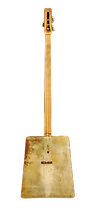
doshpuluur
Tuva (Southern Siberia), Mongolia a long-necked lute with a trapezoidal or kidney-shaped body, two or three strings and a skin-covered soundbox that gives it a percussive, banjo-like "thump" (often called the "Tuvan banjo"), used to accompany Tuvan throat singing (xöömei).
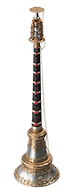
gyaling
Tibet, Bhutan, Nepal, India, Mongolia a double-reed wind instrument with a conical wooden body and a large copper or brass bell, used to "invite deities," accompany ritual chanting, and fanfares during monastic ceremonies.
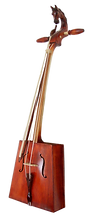
morin khuur
Mongolia, Russia (Buryatia, Kalmykia) a two-stringed bowed lute with a carved horse-head scroll and a trapezoidal body, used in traditional nomadic songs, storytelling, and spiritual rituals.

tovshuur
Mongolia, Russia (Republic of Kalmykia) a two-stringed, long-necked lute with a skin-covered trapezoidal sound box and a carved horse head at the top, used in epic singing (often throat singing) and folk melodies among nomadic peoples.
tsuur

Mongolia, Russia (Tuva Republic) a vertical, end-blown wooden flute with three fingerholes, played by simultaneously blowing into the pipe and performing a specialized vocal technique (khöömei or throat singing) to produce a clear whistle and a continuous drone, used in storytelling and mimicking the sounds of nature.
yatga

Mongolia a long, rectangular, plucked zither with moveable bridges and 13 to 21 strings, used in Mongolian court music and folk songs.
North Korea

ajaeng

South Korea, North Korea a large seven-stringed bowed zither, used in meditative melodies, accompany vocal or court music.
buk

South Korea, North Korea a double-headed barrel drum with a wooden body and leather heads, used in folk music, masked dances, and shamanic rituals.
daegeum

South Korea, North Korea a large transverse bamboo flute with a buzzing membrane, used in traditional court music, aristocratic chamber ensembles, and contemporary soundtracks.

gayageum
South Korea, North Korea a long plucked zither with twelve or more silk strings supported by individual movable bridges, used in court music and virtuosic folk styles like sanjo.
geomungo

South Korea, North Korea a long, six-stringed zither with movable bridges and fixed frets that are struck and plucked with a thin bamboo plectrum, used for scholarly meditation, court music, and expressive folk suites.

haegeum
South Korea, North Korea a vertical two-stringed fiddle with a hollow wooden soundbox and silk-strings played by sliding a horsehair bow between the strings, used in traditional court music and modern Korean pop.

janggu
South Korea, North Korea a double-headed, hourglass-shaped drum with two "dual-tone heads" (meant to represent the "masculine" and "feminine" or Yin/Yang) , used in folk dance, shamanic rituals, and traditional percussion ensembles.
piri
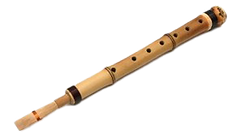
South Korea, North Korea a bamboo double-reed instrument, used in court rituals and folk music traditions.

pyeongyeong
South Korea, North Korea a percussion instrument with 16 L-shaped stone chimes suspended in a wooden frame played with a mallet, used in formal court music (Aak) and ancestral rituals.
sogeum

South Korea, North Korea a small transverse flute made from bamboo with a buzzing membrane near the blowing hole, used in Korean court music and folk music.

taepyeongso
South Korea, North Korea a conical wooden double-reed instrument with a large, cup-shaped metal bell, used in Korean folk music, nongak (farmer's music) and, daechwita (military processional music).
tungso

South Korea, North Korea a large, notched, end-blown bamboo flute with six fingerholes, used in Korean court music, traditional folk music, and Buddhist ritual ensembles.
South Korea

ajaeng
South Korea, North Korea a large seven-stringed bowed zither, used in meditative melodies, accompany vocal or court music.
buk
South Korea, North Korea a double-headed barrel drum with a wooden body and leather heads, used in folk music, masked dances, and shamanic rituals.
daegeum
South Korea, North Korea a large transverse bamboo flute with a buzzing membrane, used in traditional court music, aristocratic chamber ensembles, and contemporary soundtracks.
finger drum pad
United States, Japan, Germany, United Kingdom, South Korea an electronic touchpad percussion controller that allows users to trigger drum sounds and samples with their fingertips, used in electronic, hip-hop, and live beat-making performances.
gayageum
South Korea, North Korea a long plucked zither with twelve or more silk strings supported by individual movable bridges, used in court music and virtuosic folk styles like sanjo.
geomungo
South Korea, North Korea a long, six-stringed zither with movable bridges and fixed frets that are struck and plucked with a thin bamboo plectrum, used for scholarly meditation, court music, and expressive folk suites.
haegeum
South Korea, North Korea a vertical two-stringed fiddle with a hollow wooden soundbox and silk-strings played by sliding a horsehair bow between the strings, used in traditional court music and modern Korean pop.
janggu
South Korea, North Korea a double-headed, hourglass-shaped drum with two "dual-tone heads" (meant to represent the "masculine" and "feminine" or Yin/Yang) , used in folk dance, shamanic rituals, and traditional percussion ensembles.
otomatone
Japan, United States, South Korea, Worldwide an eighth note-shaped electronic synthesizer with a touch-sensitive ribbon controller and a squeezeable "mouth" that produces a sliding vocal-like tone, used in novelty performances, comedic internet covers, and experimental J-pop.
piri
South Korea, North Korea a bamboo double-reed instrument, used in court rituals and folk music traditions.
pyeongyeong
South Korea, North Korea a percussion instrument with 16 L-shaped stone chimes suspended in a wooden frame played with a mallet, used in formal court music (Aak) and ancestral rituals.
sogeum
South Korea, North Korea a small transverse flute made from bamboo with a buzzing membrane near the blowing hole, used in Korean court music and folk music.
taepyeongso
South Korea, North Korea a conical wooden double-reed instrument with a large, cup-shaped metal bell, used in Korean folk music, nongak (farmer's music) and, daechwita (military processional music).
tungso
South Korea, North Korea a large, notched, end-blown bamboo flute with six fingerholes, used in Korean court music, traditional folk music, and Buddhist ritual ensembles.
Taiwan

bolang gu
China, Taiwan, Hong Kong a small double-headed pellet drum with two beads attached by strings that strike the drumheads when the handle is rotated used as traditional children's toy, by street vendors to signal their presence, and in ritualistic folk ceremonies
diyingehu
China, Taiwan, Singapore a large, four-stringed bowed instrument that serves as the bass voice in a modern Chinese orchestra, similar to a Western double bass but with the resonance of a snakeskin-covered soundbox.
dizi
China, Taiwan, Singapore The dizi is a transverse bamboo flute with a unique vibrating membrane called a mo-kong, used in folk music, Chinese opera, and modern orchestral performances.
erhu
China, Taiwan, Singapore, Macau a two-stringed vertical fiddle with a small hexagonal or octagonal resonator covered in python skin, used as the "violin" of the Chinese orchestra, in traditional and contemporary music, solo performances, ensembles, and film scores.
guanzi
China, Taiwan a small double-reed pipe, used in folk ensembles, Buddhist and Daoist ritual music, and traditional operatic performances.
guzheng
China, Taiwan, Singapore, Malaysia, Macau a large plucked zither with a long, arched soundboard and movable bridges, used in traditional folk music, operatic accompaniment, and modern orchestral compositions.
jinghu
China, Taiwan a small, two-stringed bowed lute, used in traditional Beijing/Peking opera ensembles.
paiban
China, Taiwan a wooden clapper with several flat slats tied together at one end that makes a cracking sound, used in Chinese opera, story-singing, and chamber orchestras.
suona
China, Taiwan a double-reed wind instrument with a conical bore and a large, detachable metal bell, used in Chinese folk music, military music, and outdoor ceremonial music.
tānggu
China, Taiwan, Singapore, Malaysia, Macau a medium-sized, barrel-shaped percussion drum played with two sticks and mounted on a stand, used in Chinese traditional operas, folk music, and temple rituals.
xiāo
China, Taiwan a long, vertical, end-blown bamboo flute with six to eight fingerholes, used in meditative solos, chamber music, Chinese classical operas, and romantic folk melodies.
yangqin
China, Taiwan a trapezoidal hammered dulcimer played by striking its strings with small bamboo hammers, used in solo performance, Chinese orchestral music and opera.
yueqin
China, Taiwan a round-bodied, plucked string instrument with a short fretted neck and four strings tuned in pairs, used in Beijing opera, folk ensembles, and chamber music.
zhongruan
China, Taiwan a plucked string instrument with a round body, four strings, and a fretted neck, used in Chinese orchestra, Chinese folk music, and contemporary orchestral pieces.
Tibet


chiwang
Bhutan, Tibet a two-stringed bowed lute carved from a single piece of wood and topped with a skin soundboard, used in Bhutanese folk music (Zhungdra and Boedra) and to accompany vocalists or dancers during festivals.
damaru

India, Nepal, Tibet, Bhutan a small two-headed drum with two knotted cords that strike the heads when the instrument is twisted, used in religious rituals, meditative practices, and as a symbolic attribute in sacred iconography.

dranyen
Bhutan, Nepal, Tibet a long-necked, six-stringed lute with a double-waisted wooden body and a skin-covered soundbox, used in traditional folk songs, ritual dances, and secular ballad storytelling.
dungchen

Tibet, Nepal, Bhutan, India, a long, telescoping metal trumpet, used to signal the start of monastic ceremonies, accompany sacred chants, perform ritual calls from rooftops, and Tantric orchestra.
gyaling
Tibet, Bhutan, Nepal, India, Mongolia a double-reed wind instrument with a conical wooden body and a large copper or brass bell, used to "invite deities," accompany ritual chanting, and fanfares during monastic ceremonies.
tibetan singing bowls

Tibet, Nepal, India, Bhutan bowl-shaped, bell-like instruments that produce sustained, harmonic vibrations when struck or rubbed with a mallet, used in sound therapy, meditation, and spiritual ceremonies to promote relaxation and mindfulness.
tingsha

Tibet, Nepal, India, Bhutan a pair of small, thick bronze cymbals connected by a leather strap, used to mark the beginning or end of periods of meditation and Buddhist ritual chanting.

tungna
Tibet, Nepal, India, Bhutan a plucked string instrument with a long, fretless neck and a skin-covered rectangular sound box, used by musicians and monks to accompany folk dances, epic narratives, and sacred monastic chants.