


Andorra

alboka

Spain (Basque Country), Andorra a single-reed wind instrument with a wooden double pipe and a bell traditionally made from animal horn, used traditional Basque folk dances like fandango and jota.
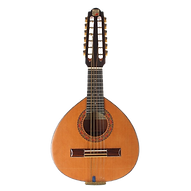
bandurria
Spain, Philippines, Bolivia, Peru, Andorra, Gibraltar a plucked string instrument with a pear-shaped body and twelve strings in six double courses, played with a plectrum, used in Spanish folk music, Zarzuela, and rondalla ensembles.
castanets

Spain, Andorra, Gibraltar, Wordwide (Western Classical) a pair of concave shells made of hardwood joined by a string that produces a sharp, rhythmic clicking when struck together, used in flamenco, classical Spanish ballet (Escuela Bolera), and orchestral "Spanish-style" compositions.
Gralla

Andorra A small double reed instrument in the shawm family with a conical body carved from a single block of wood, used during the construction and dismantling of human towers or castells and other traditional festivities.
sac de gemecs
Andorra, Spain, France a bagpipe with a unique appearance, with a bag shaped like an entire goat skin and three drones that hang together from a common ornamental block at the front, Cercavila (street parades) and accompanies the famous Castells (human towers) and traditional dances like the Sardana.

Austria

akkordolia

Germany, Austria a keyed zither with strings that are fretted by a row of buttons, similar to a typewriter, used as chordal accompaniment for folk-style performances in a home setting.

alphorn
Switzerland, Germany, Austria a long, conical, wooden natural horn, used for communication between mountain villages and shepherds, traditional Alpine folk music, and ceremonial events.
alpine zither

Austria, Germany, Switzerland a flat stringed instrument with a fretted neck for melodic strings and sympathetic drone strings, plucked with the fingers and a plectrum, use in traditional Central European folk music (Stubenmusik) and notable film scores.
clavichord

Germany, Austria, Spain, Portugal, Italy, Sweden a rectangular keyboard instrument with metal tangents that strike and remain in contact with the strings to allow for expressive vibrato, used in private practice, composition, and intimate parlor performances of Baroque and Classical music.
crystal glasses
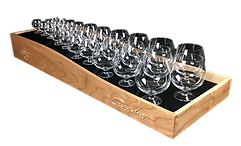
Germany, United Kingdom, Ireland, Austria, United States a friction-based musical instrument where the rims of crystal glasses are rubbed with moistened fingers to produce pure, shimmering tones through high-frequency vibrations, used in solo recitals, experimental soundtracks, and delicate arrangements of classical melodies.

csakan
Austria, Hungary, Germany a duct flute (recorder-style) fashioned in the shape of a walking stick, used in salon music, virtuosic solo performances during the Biedermeier period, chamber music, and folk-inspired classical compositions.
dudy
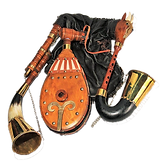
Czech Republic, Poland, Slovakia, Germany, Austria a bellows-blown or mouth-blown bagpipe with a melodic chanter and a single long drone pipe with a carved wooden goat’s head, used for wedding dances, carnivals, and folk festivals.

flugelhorn
Germany, Austria, United Kingdom, United States, Netherlands, Belgium a brass instrument in the western trumpet family with a wider, conical bore and deep funnel-shaped mouthpiece, used in jazz ballads, brass bands, and lyrical orchestral solos.
gemshorn

Germany, Austria, Italy, United Kingdom a vessel flute made from the hollowed-out horn of a goat or ox, used in early music ensembles and folk melodies.
glass armonica

United States, United Kingdom, Germany, Austria, France a series of nesting glass bowls rotating on a horizontal spindle that produces ringing tones through friction when touched by the player's wet fingers, used in classical chamber music, opera, and film scores. Invented by Benjamin Franklin in 1761.

glockenkranz
Germany, Austria, Switzerland a set of small, handheld tuned bells mounted in a circular frame and played by striking or shaking, used in folk, ceremonial, and choral music.
hackbrett

Switzerland, Austria, Germany, Slovenia a trapezoidal hammered dulcimer dozens of metal strings, used in Alpine folk music, dance accompaniment, and contemporary chamber music.
heckelphone

Germany, Austria, United States, France, United Kingdom a low-pitched double-reed woodwind instrument with a large globular bell, used in large-scale late-Romantic orchestral works and modern film scores.
hirtenschalmei

Germany, Austria, Switzerland, France a hooked, double-reed instrument with a "windcap" (the double reed is enclosed inside a wooden cap, used in medieval-style folk music and historical reconstructions of shepherd melodies.
maultrommel

Germany, Austria, Switzerland a small jaw harp with a flexible metal tongue attached to a frame, used widely in Alpine and Bavarian folk music.
ratchet

Germany, France, United Kingdom, United States, Austria, Italy, Worldwide (Western Classical) a percussion instrument with a toothed wheel that strikes one or more flexible wooden tongues as it is rotated, used in orchestral compositions, comedic sound effects, film scores, "town signalling", religious processions, historically connected to British night watchment and football culture, and Alpine folk celebrations.
regal

United Kingdom, Italy, Germany, France, Austria, Spain a small, portable pipe organ with one or more ranks of short, metallic reed pipes, used for accompanying vocal music, and in Renaissance and early Baroque ensembles.
schäferpfeife

Germany, Austria, Belgium, Netherlands a bagpipe with two forward-facing drones and a conical chanter, used in Renaissance dance music and modern folk revival.
scheitholt

Germany, Austria a fretted zither (direct ancestor of the Appalachian dulcimer) with a slender wooden soundbox and several melodic and drone strings, use in domestic home entertainment, hymns, dance music, and rural gatherings.
waldzither

Germany, Austria a plucked zither with a guitar-like body with five courses (nine strings total, with two doubled) and a "heart-shaped" sound hole, used in German folk songs and hiking music in the early 20th century.
Belgium

carillon

Belgium, Netherlands, France, Germany, United States, United Kingdom, Australia, Canada a massive keyboard instrument housed in a church tower or belfry, with at least 23 bronze bells that are fixed in place, with internal clappers connected to a wooden keyboard (baton console) by a system of wires and levers, used to play intricate melodies, complex harmonies, and public outdoor concerts.

claviharp
France, Germany, Belgium, United Kingdom a vertical keyboard instrument featuring a harp-like frame where the strings are plucked via a mechanical action that produces a harp-like sound when its keys are pressed, used in solo parlor music and romantic-era compositions that require harp-like textures.
flugelhorn
Germany, Austria, United Kingdom, United States, Netherlands, Belgium a brass instrument in the western trumpet family with a wider, conical bore and deep funnel-shaped mouthpiece, used in jazz ballads, brass bands, and lyrical orchestral solos.
pipe organ

Germany, France, Italy, United Kingdom, United States, Netherlands, Canada, Belgium, Macau a massive, complex keyboard wind instrument that makes sound by driving pressurized air through thousands of individual pipes, controlled by multiple keyboards and foot pedals. It is often called the "King of Instruments", used in sacred music, classical orchestral performances, and solo classical music

rommelpot
Belgium, Netherlands a friction drum made of an earthenware jar covered with a bladder or skin that makes a rhythmic, grunting sound when a resin-coated stick or cord attached to the membrane is rubbed, used during carnival, Shrove Tuesday, and St. Martin's Day celebrations, other regional festivals, and caroling.
schäferpfeife
Germany, Austria, Belgium, Netherlands a bagpipe with two forward-facing drones and a conical chanter, used in Renaissance dance music and modern folk revival.
trompe de chasse

France, Belgium, Luxembourg a coiled, valveless brass instrument, similar to a natural horn, used in signaling during mounted hunts and playing an established repertoire of ceremonial music (known as fanfares) unique to the hunt tradition.
Denmark

lur

Denmark, Norway, Sweden a loud, long, natural trumpet with a curved or S-shaped tube, used for ancient ritual signals, military fanfares, and herding livestock.
psalmodicon

Sweden, Norway, Denmark a single-stringed, bowed or plucked fretboard zither with a wooden box body and printed letter or number notation, used to lead Congregational church singing, and in musical education in religious settings.
Finland


durspel
Sweden, Norway, Finland a small, diatonic button accordion, used in traditional folk tunes, social dances, and communal tavern singing.
jouhikko

Finland a two or three-stringed bowed lyre with horsehair strings and a hand-hole (or "breach", open space behind the strings) for players to press strings, used for accompanying Runosong (the ancient oral poetry found in the Kalevala).
kantele

Finland, Karelia region (Finland/Russia) a plucked box zither with a trapezoidal wooden body and varying numbers of strings, used for ancient epic storytelling, traditional folk dances, and modern experimental music.
Saami ritual drum

Norway (Lule Saami), Sweden (Ume Saami), Finland, Russia(Kola Peninsula/Sápmi region) (or meavrresgárri) a sacred frame drum with a reindeer-skin membrane decorated with cosmological symbols, used by Noaidi (shamans) to enter a trance, predict the future, and communicate with the spirit world.
France

accordina

France a portable, mouth-blown free-reed instrument with a chromatic button keyboard, used in jazz, French chanson, and contemporary classical music.
biniou kozh

France (Brittany) a small, high-pitched bagpipe with a single drone and a short chanter, typically used to play fast, used in folk dancing, traditional festivals, and acoustic duos.
bugle

United States, United Kingdom, Germany, France a conical bore horn with no valves or slides, used to play fanfares, military signals, and ceremonial calls.
cabrette

France (Auvergne and Limousin regions) a bagpipe with a single chanter and bellows, used in fast-paced dance music, traditional bal-musette, and communal celebrations..
carillon
Belgium, Netherlands, France, Germany, United States, United Kingdom, Australia, Canada a massive keyboard instrument housed in a church tower or belfry, with at least 23 bronze bells that are fixed in place, with internal clappers connected to a wooden keyboard (baton console) by a system of wires and levers, used to play intricate melodies, complex harmonies, and public outdoor concerts.

clavicymbalum
Italy, France, Germany, United Kingdom, The Netherland a portable, wing-shaped keyboard instrument with a plucking mechanism, used in performing late Medieval and early Renaissance courtly music and liturgical melodies.
claviharp
France, Germany, Belgium, United Kingdom a vertical keyboard instrument featuring a harp-like frame where the strings are plucked via a mechanical action that produces a harp-like sound when its keys are pressed, used in solo parlor music and romantic-era compositions that require harp-like textures.

euphonium
United States, United Kingdom, Japan, Germany, France, Canada a conical-bore brass instrument, similar to a concert tuba but smaller and pitched one octave higher, used in wind bands and as the "cello" of the brass world.

flabiol
Spain (Catalonia), France a small fipple flute played with one hand while the other plays a small drum, used in traditional obla ensemble for dancing the Sardana, and other traditional folk music performances.

galoubet
France a three-holed fipple flute often played alongside a small drum, used in folk music for dances and pastoral tunes.
glass armonica
United States, United Kingdom, Germany, Austria, France a series of nesting glass bowls rotating on a horizontal spindle that produces ringing tones through friction when touched by the player's wet fingers, used in classical chamber music, opera, and film scores. Invented by Benjamin Franklin in 1761.
hand pan

Switzerland, United States, Germany, France, Worldwide a convex steel percussion instrument played with the hands, used in ambient, world, and meditative music.
handbells

United Kingdom, United States, Germany, Japan, Canada tuned metal bells rung by hand, each bell sounding a different specific pitch, used in ensemble performances for classical, holiday, and church music.

harmonetta
Germany, France, United States, Bulgaria a mouth-blown free-reed instrument with a grid of 32 hexagonal buttons, used in jazz, folk, and classical music.
harpsichord

Italy, France, Germany, Netherlands, United Kingdom, United States a piano-like keyboard instrument in which strings are plucked when keys are pressed, used in Baroque and early Classical music.
heckelphone
Germany, Austria, United States, France, United Kingdom a low-pitched double-reed woodwind instrument with a large globular bell, used in large-scale late-Romantic orchestral works and modern film scores.
hirtenschalmei
Germany, Austria, Switzerland, France a hooked, double-reed instrument with a "windcap" (the double reed is enclosed inside a wooden cap, used in medieval-style folk music and historical reconstructions of shepherd melodies.
hurdy-gurdy

France, Hungary, Spain, Germany a stringed instrument played by turning a crank that rubs a wheel against the strings, functioning like a "mechanical violin", used in folk, neo-medieval, film scores, and experimental music.
musette de cour

France a bagpipe with a velvet-covered bag, a complex bellows-blown system, and a cylindrical shuttle drone, used to create pastoral sounds for French courtly music and aristocratic ballets.
musical saw

United States, United Kingdom, Germany, France, Russia a hand-bent metal blade played with a bow, used in folk, experimental, and atmospheric film music.

ophicleide
France, Germany, Italy, United Kingdom a conical-bore, keyed brass instrument, used in Romantic-era orchestras, military bands, and early 19th-century operatic scores.
pipe organ
Germany, France, Italy, United Kingdom, United States, Netherlands, Canada, Belgium, Macau a massive, complex keyboard wind instrument that makes sound by driving pressurized air through thousands of individual pipes, controlled by multiple keyboards and foot pedals. It is often called the "King of Instruments", used in sacred music, classical orchestral performances, and solo classical music
portative organ

Italy, France, Germany, United Kingdom, United States a small, portable pipe organ with a single keyboard and a hand-operated bellows, used in solo melodic performance, vocal accompaniment, and processional music in medieval and Renaissance settings.

pump organ
United States, Germany, France, United Kingdom The pump organ is a piano-style keyboard instrument that uses foot-operated bellows to pump through metal reeds to make sound, used in folk, gospel, and early popular music (Victorian-era parlor music).
ratchet
Germany, France, United Kingdom, United States, Austria, Italy, Worldwide (Western Classical) a percussion instrument with a toothed wheel that strikes one or more flexible wooden tongues as it is rotated, used in orchestral compositions, comedic sound effects, film scores, "town signalling", religious processions, historically connected to British night watchment and football culture, and Alpine folk celebrations.

rebec
France, Spain, Italy, United Kingdom (England), Germany a small, pear-shaped bowed string instrument carved from a single block of wood with a narrow neck and three strings, used in medieval court music, Sephardic traditions, early renaissance ensembles, french minstrel performers (travelling musicians), and secular dance music.
recorder

Germany, Netherlands, France, Italy, United Kingdom, United States, Japan a woodwind instrument with a whistle-like mouthpiece (fipple flute) and seven finger holes , used in early music ensembles, Baroque chamber works, and as a foundational tool for primary music education.
regal
United Kingdom, Italy, Germany, France, Austria, Spain a small, portable pipe organ with one or more ranks of short, metallic reed pipes, used for accompanying vocal music, and in Renaissance and early Baroque ensembles.
tabor pipe

France, United Kingdom a three-hole fipple flute played with one hand and always performed alongside a small drum (the tabor) played by the same musician in the other hand, used in historical folk music performances and medieval dance music.

tabor
France, United Kingdom a shallow, cylindrical drum struck with one stick while the same performers plays a three-hole pipe in the other hand, used in historical folk music and medieval dance performances

theorbo
Italy, France, United Kingdom, Germany, Spain a large, long-necked lute with two sets of strings: a fretted neck for playing the melody and a separate, unfretted extension for long bass strings, used for harmonic accompaniment (basso continuo) in Baroque vocal music, operas, and chamber ensembles.
trompe de chasse
France, Belgium, Luxembourg a coiled, valveless brass instrument, similar to a natural horn, used in signaling during mounted hunts and playing an established repertoire of ceremonial music (known as fanfares) unique to the hunt tradition.

txalaparta
Spain (Basque Country), France (Northern Basque Country) a set of horizontal wooden boards or planks supported on trestles or baskets (often resting on husks of corn or dried leaves), played by two performers who strike the boards rhythmically with thick wooden sticks, used in Basque folk music and festive gatherings.
txistu

Spain (Basque Country), France (Northern Basque Country) a small, six-holed pipe or flute held and played with one hand, while the same musician plays the ttun-ttun (a percussion instrument) with the other hand, used in Basque folk music.
sac de gemecs
Andorra, Spain, France a bagpipe with a unique appearance, with a bag shaped like an entire goat skin and three drones that hang together from a common ornamental block at the front, Cercavila (street parades) and accompanies the famous Castells (human towers) and traditional dances like the Sardana.
Germany

aeolian harp

Germany, Italy, United States, United Kingdom a stringed instrument with a wooden resonating box and multiple strings tuned in unison, played only by the wind, used in Romantic poetry and meditative soundscapes.
akkordolia
Germany, Austria a keyed zither with strings that are fretted by a row of buttons, similar to a typewriter, used as chordal accompaniment for folk-style performances in a home setting.
alphorn
Switzerland, Germany, Austria a long, conical, wooden natural horn, used for communication between mountain villages and shepherds, traditional Alpine folk music, and ceremonial events.
alpine zither
Austria, Germany, Switzerland a flat stringed instrument with a fretted neck for melodic strings and sympathetic drone strings, plucked with the fingers and a plectrum, use in traditional Central European folk music (Stubenmusik) and notable film scores.

autoharp
United States, Germany a fretted zither instrument with chord bars that mute specific strings when pressed, used for easy self-accompaniment in Appalachian folk, "old-time music", country, and bluegrass music
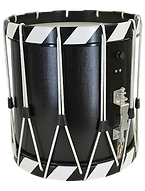
basler trommel
Switzerland, Germany a rope-tensioned, two-headed cylindrical marching snare drum, used in Basler Fasnacht (Basel Carnival) and by fife and drum corps.
bugle
United States, United Kingdom, Germany, France a conical bore horn with no valves or slides, used to play fanfares, military signals, and ceremonial calls.
carillon
Belgium, Netherlands, France, Germany, United States, United Kingdom, Australia, Canada a massive keyboard instrument housed in a church tower or belfry, with at least 23 bronze bells that are fixed in place, with internal clappers connected to a wooden keyboard (baton console) by a system of wires and levers, used to play intricate melodies, complex harmonies, and public outdoor concerts.
clavichord
Germany, Austria, Spain, Portugal, Italy, Sweden a rectangular keyboard instrument with metal tangents that strike and remain in contact with the strings to allow for expressive vibrato, used in private practice, composition, and intimate parlor performances of Baroque and Classical music.
clavicymbalum
Italy, France, Germany, United Kingdom, The Netherland a portable, wing-shaped keyboard instrument with a plucking mechanism, used in performing late Medieval and early Renaissance courtly music and liturgical melodies.
claviharp
France, Germany, Belgium, United Kingdom a vertical keyboard instrument featuring a harp-like frame where the strings are plucked via a mechanical action that produces a harp-like sound when its keys are pressed, used in solo parlor music and romantic-era compositions that require harp-like textures.
claviola

Germany, Italy, United States, United Kingdom a handheld, wind-blown free-reed keyboard instrument, used in folk music, modern jazz, avant-garde ensembles, experimental, and chamber music.

cloud-chamber bowls
United States, Germany, Netherlands a microtonal percussion instrument with large, suspended glass resonators made from salvaged carboys that produce a bell tone when struck with mallets, used in avant-garde and experimental musical compositions.
concertina
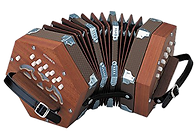
Germany, United Kingdom, Ireland, United States, South Africa a portable, bellows-driven free-reed instrument with buttons on both ends, used in folk dance accompaniment, folk ensemble performances, and maritime sea shanties.
crystal glasses
Germany, United Kingdom, Ireland, Austria, United States a friction-based musical instrument where the rims of crystal glasses are rubbed with moistened fingers to produce pure, shimmering tones through high-frequency vibrations, used in solo recitals, experimental soundtracks, and delicate arrangements of classical melodies.
crystal singing bowls

United States, China, Germany, United Kingdom, Australia, Japan modern friction-based percussion instruments made from high-purity quartz silica that produce powerful, sustained harmonic tones when struck or rubbed with a mallet, used in sound healing, meditation, and New Age ambient music.
csakan
Austria, Hungary, Germany a duct flute (recorder-style) fashioned in the shape of a walking stick, used in salon music, virtuosic solo performances during the Biedermeier period, chamber music, and folk-inspired classical compositions.
dudy
Czech Republic, Poland, Slovakia, Germany, Austria a bellows-blown or mouth-blown bagpipe with a melodic chanter and a single long drone pipe with a carved wooden goat’s head, used for wedding dances, carnivals, and folk festivals.
euphonium
United States, United Kingdom, Japan, Germany, France, Canada a conical-bore brass instrument, similar to a concert tuba but smaller and pitched one octave higher, used in wind bands and as the "cello" of the brass world.
finger drum pad
%20t.png)
United States, Japan, Germany, United Kingdom, South Korea an electronic touchpad percussion controller that allows users to trigger drum sounds and samples with their fingertips, used in electronic, hip-hop, and live beat-making performances.
flugelhorn
Germany, Austria, United Kingdom, United States, Netherlands, Belgium a brass instrument in the western trumpet family with a wider, conical bore and deep funnel-shaped mouthpiece, used in jazz ballads, brass bands, and lyrical orchestral solos.
gemshorn
Germany, Austria, Italy, United Kingdom a vessel flute made from the hollowed-out horn of a goat or ox, used in early music ensembles and folk melodies.
glass armonica
United States, United Kingdom, Germany, Austria, France a series of nesting glass bowls rotating on a horizontal spindle that produces ringing tones through friction when touched by the player's wet fingers, used in classical chamber music, opera, and film scores. Invented by Benjamin Franklin in 1761.
glockenkranz
Germany, Austria, Switzerland a set of small, handheld tuned bells mounted in a circular frame and played by striking or shaking, used in folk, ceremonial, and choral music.
hackbrett
Switzerland, Austria, Germany, Slovenia a trapezoidal hammered dulcimer dozens of metal strings, used in Alpine folk music, dance accompaniment, and contemporary chamber music.
hand pan
Switzerland, United States, Germany, France, Worldwide a convex steel percussion instrument played with the hands, used in ambient, world, and meditative music.
handbells
United Kingdom, United States, Germany, Japan, Canada tuned metal bells rung by hand, each bell sounding a different specific pitch, used in ensemble performances for classical, holiday, and church music.
harmonetta
Germany, France, United States, Bulgaria a mouth-blown free-reed instrument with a grid of 32 hexagonal buttons, used in jazz, folk, and classical music.
harpsichord
Italy, France, Germany, Netherlands, United Kingdom, United States a piano-like keyboard instrument in which strings are plucked when keys are pressed, used in Baroque and early Classical music.
heckelphone
Germany, Austria, United States, France, United Kingdom a low-pitched double-reed woodwind instrument with a large globular bell, used in large-scale late-Romantic orchestral works and modern film scores.
hirtenschalmei
Germany, Austria, Switzerland, France a hooked, double-reed instrument with a "windcap" (the double reed is enclosed inside a wooden cap, used in medieval-style folk music and historical reconstructions of shepherd melodies.
hurdy-gurdy
France, Hungary, Spain, Germany a stringed instrument played by turning a crank that rubs a wheel against the strings, functioning like a "mechanical violin", used in folk, neo-medieval, film scores, and experimental music.
kuhlohorn

Germany a wide-bore, circular-shaped brass instrument (a variant of the flügelhorn), used in German Protestant "Posaunenchor" (trombone choir) ensembles.
lautenwerck
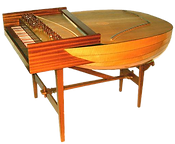
Germany a rare Baroque-era keyboard instrument designed to perfectly imitate the sound of a lute using a harpsichord-like plucking mechanism and gut strings, used in Baroque western classical repertoire specifically the compositions of J.S. Bach.
maultrommel
Germany, Austria, Switzerland a small jaw harp with a flexible metal tongue attached to a frame, used widely in Alpine and Bavarian folk music.
middewinterhoorn

Netherlands, Germany a long, curved natural wooden trumpet, used to mark the period from Advent to Epiphany.
minimoog

United States United Kingdom, Germany, Japan an analog monophonic synthesizer with three oscillators and a "ladder" filter to produce a powerful, warm sound, used in progressive rock, jazz fusion, funk, and electronic music.
musical saw
United States, United Kingdom, Germany, France, Russia a hand-bent metal blade played with a bow, used in folk, experimental, and atmospheric film music.
ophicleide
France, Germany, Italy, United Kingdom a conical-bore, keyed brass instrument, used in Romantic-era orchestras, military bands, and early 19th-century operatic scores.
pipe organ
Germany, France, Italy, United Kingdom, United States, Netherlands, Canada, Belgium, Macau a massive, complex keyboard wind instrument that makes sound by driving pressurized air through thousands of individual pipes, controlled by multiple keyboards and foot pedals. It is often called the "King of Instruments", used in sacred music, classical orchestral performances, and solo classical music
portative organ
Italy, France, Germany, United Kingdom, United States a small, portable pipe organ with a single keyboard and a hand-operated bellows, used in solo melodic performance, vocal accompaniment, and processional music in medieval and Renaissance settings.
pump organ
United States, Germany, France, United Kingdom The pump organ is a piano-style keyboard instrument that uses foot-operated bellows to pump through metal reeds to make sound, used in folk, gospel, and early popular music (Victorian-era parlor music).
ratchet
Germany, France, United Kingdom, United States, Austria, Italy, Worldwide (Western Classical) a percussion instrument with a toothed wheel that strikes one or more flexible wooden tongues as it is rotated, used in orchestral compositions, comedic sound effects, film scores, "town signalling", religious processions, historically connected to British night watchment and football culture, and Alpine folk celebrations.
rebec
France, Spain, Italy, United Kingdom (England), Germany a small, pear-shaped bowed string instrument carved from a single block of wood with a narrow neck and three strings, used in medieval court music, Sephardic traditions, early renaissance ensembles, french minstrel performers (travelling musicians), and secular dance music.
recorder
Germany, Netherlands, France, Italy, United Kingdom, United States, Japan a woodwind instrument with a whistle-like mouthpiece (fipple flute) and seven finger holes , used in early music ensembles, Baroque chamber works, and as a foundational tool for primary music education.
regal
United Kingdom, Italy, Germany, France, Austria, Spain a small, portable pipe organ with one or more ranks of short, metallic reed pipes, used for accompanying vocal music, and in Renaissance and early Baroque ensembles.
schäferpfeife
Germany, Austria, Belgium, Netherlands a bagpipe with two forward-facing drones and a conical chanter, used in Renaissance dance music and modern folk revival.
scheitholt
Germany, Austria a fretted zither (direct ancestor of the Appalachian dulcimer) with a slender wooden soundbox and several melodic and drone strings, use in domestic home entertainment, hymns, dance music, and rural gatherings.
stylophone

United Kingdom, United States, Germany, Japan, Australia a miniature analog synthesizer that uses a battery-powered stylus to complete a circuit by touching a metal keyboard to sound specific pitches, used in novelty popular music, pop, and electronic music.
theorbo
Italy, France, United Kingdom, Germany, Spain a large, long-necked lute with two sets of strings: a fretted neck for playing the melody and a separate, unfretted extension for long bass strings, used for harmonic accompaniment (basso continuo) in Baroque vocal music, operas, and chamber ensembles.

wagner tuba
Germany, Worldwide a brass instrument created by Richard Wagner, with a conical bore (like a horn), a vertical bell, and valves (like a tuba or euphonium), used in orchestral classical music, especially in Wagner's Ring cycle.
waldteufel forest devil

Germany (German for "forest devil"), a simple, handheld wooden percussion instrument where a stick is turned and swung to vibrate an attached nylon cord, producing a buzzing, sustained sound like a croaking frog, used for sound effects and in children's music education.
waldzither
Germany, Austria a plucked zither with a guitar-like body with five courses (nine strings total, with two doubled) and a "heart-shaped" sound hole, used in German folk songs and hiking music in the early 20th century.
Gibraltar

great highland bagpipes
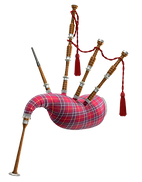
Scotland, United Kingdom, Gibraltar a bagpipe with a central air reservoir, three constant-tone drones, and a finger-holed melodic pipe, the most recognizable version of the bagpipe family, known for their extreme volume and outdoor projection, used in military ceremonies, funerals, and folk competitions.
castanets
Spain, Andorra, Gibraltar, Wordwide (Western Classical) a pair of concave shells made of hardwood joined by a string that produces a sharp, rhythmic clicking when struck together, used in flamenco, classical Spanish ballet (Escuela Bolera), and orchestral "Spanish-style" compositions.

mandolin
Italy, Ireland, Brazil, Gibraltar a small, plucked string instrument with eight strings tuned in four courses, used in western classical music, mandolin orchestras, and various folk traditions.
bandurria
Spain, Philippines, Bolivia, Peru, Andorra, Gibraltar a plucked string instrument with a pear-shaped body and twelve strings in six double courses, played with a plectrum, used in Spanish folk music, Zarzuela, and rondalla ensembles.
Greece


bouzouki
Greece, Cyprus a long-necked, pear-shaped lute with a round bowl back and metal strings, used in greek urban folk music (rebetiko).
daouli

Greece, Cyprus a large, two-headed cylindrical drum played with two different sticks, used in outdoor folk dances and village festivals.
floyera

Greece, Cyprus, North Macedonia a shepherd's end-blown flute made from a single piece of wood, cane, or bone, used in folk and pastoral music for melodic and ceremonial purposes.
gaida

Bulgaria, North Macedonia, Greece a bagpipe made from a goat or sheep skin with a single-reed drone and a melodic pipe, used for outdoor festivals, weddings, and energetic circle dances.
kaval

Bulgaria, North Macedonia, Turkey, Albania, Romania, Serbia, Greece a rim-blown chromatic flute with a long wooden body and eight finger holes, used in virtuosic dance tunes, mountain shepherd music,

kemenche
Turkey, Greece, Armenia, Iran a small, bottle-shaped bowed string instrument with a wooden body and a skin-covered or thin wooden resonato, used in fast-paced Horon dances of the Black Sea coast, and traditional vocal accompaniment.
laouto

Greece, Cyprus a long-necked lute with double-coursed metal strings and a large pear-shaped body, used in traditional Cretan ensemble music.
santouri

Greece a trapezoidal hammered dulcimer with approximately 100 to 110 metal strings that are struck with two thin, cotton-tipped wooden sticks, used in folk dances and traditional island music.

saz
Turkey, Azerbaijan, Iran, Armenia, Bosnia, Albania Greece a long-necked, plucked lute with a deep, pear-shaped body and movable frets, used in folk storytelling, Ashiq minstrels to accompany epic poems, troubadour music, and Sufi poetry.
sistrum

Egypt (Ancient Egypt), Greece (Ancient Greece), Ethiopia, Sudan a U-shaped metal rattle with movable crossbars and jingling discs that, used in religious ceremonies and temple rituals.

tzouras
Greece, Turkey, Cyprus a plucked string instrument (a smaller version of the Greek bouzouki) with a pear-shaped body, a long neck, and three or four pairs of metal strings, used in Greek folk music (especially the Rebetiko genre).

zurna
Turkey, Azerbaijan, Armenia, Greece, Iran double-reed woodwind instrument with a broad conical bore and a wide bell, used in Turkish folk dances, weddings, and public celebrations.
Greenland

inuit bird-bone flute
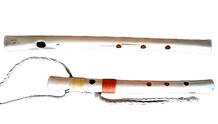
Canada, Greenland, Alaska (United States), Russia (Siberia/Chukotka) a small, whistle-like instrument made from the hollow wing bones of large birds, used for personal entertainment, mimicking animal calls, and spiritual communication during long winter months.

qilaut
Canada, Greenland, Alaska, Russia (Chukotka Peninsula) a large, circular frame drum made of caribou skin or synthetic materials stretched over a wooden hoop, of the Inuit, Iñupiat, Yup'ik, and Indigenous peoples of the Chukotka Peninsula, used to accompany storytelling, ceremonial songs, and "drum dances (Kalaallit drum dancing)"
Guernsey

hurdy-gurdy
France, Hungary, Spain, Germany a stringed instrument played by turning a crank that rubs a wheel against the strings, functioning like a "mechanical violin", used in folk, neo-medieval, film scores, and experimental music.
concertina
Germany, United Kingdom, Ireland, United States, South Africa a portable, bellows-driven free-reed instrument with buttons on both ends, used in folk dance accompaniment, folk ensemble performances, and maritime sea shanties.
tabor pipe
France, United Kingdom a three-hole fipple flute played with one hand and always performed alongside a small drum (the tabor) played by the same musician in the other hand, used in historical folk music performances and medieval dance music.
tabor
France, United Kingdom a shallow, cylindrical drum struck with one stick while the same performers plays a three-hole pipe in the other hand, used in historical folk music and medieval dance performances
Iceland


langspil
Iceland a drone zither with a long, narrow soundbox and one to six strings that are plucked or bowed, used to lead family singing during the kvöldvaka (evening wake), folk songs, communal storytelling, and hymns in rural communities.
fiðla

Iceland a bowed string instrument with two to six metal strings stretched over a long, narrow wooden resonator, used in traditional folk melodies and epic poetry.
Ireland

banjo

United States, Canada, Ireland, Anguilla, British Virgin Islands, US Virgin Islands a plucked string instrument with a thin membrane like a drumhead stretched over a circular rim to form a resonator, used in bluegrass, country, old-time music, ragtime, and traditional jazz.

bodhrán
Ireland, Canada (Newfoundland), Falkland Islands a circular frame drum played with the hands or a double-headed wooden mallet called a tipper, used in folk, traditional ensemble music, and lively dance tunes.
celtic harp

Ireland, Scotland, Wales a small, triangular frame harp that serves as a symbol of Gaelic heritage, used in traditional folk performance sessions, folk-rock, and cultural ceremonies.
concertina
Germany, United Kingdom, Ireland, United States, South Africa a portable, bellows-driven free-reed instrument with buttons on both ends, used in folk dance accompaniment, folk ensemble performances, and maritime sea shanties.
cornish bagpipes

United Kingdom (Cornwall), Ireland a double-chantered bagpipe variant with two melody pipes that allow for polyphonic playing and harmony, used in traditional Celtic dance music and the revival of historic Cornish folk ceremonies.
crystal glasses
irish tin whistle

Ireland, United Kingdom, United States, Falkland Islands a simple six-holed fipple flute with a plastic or metal mouthpiece and a cylindrical tube, used in fast-paced melodies in traditional folk music, jigs, reels, contemporary folk, and film music. Often called the "penny whistle".

mandocello
Italy, United States, Ireland a large, deep-bodied plucked string instrument with eight strings tuned in four courses, used in mandolin orchestras, Italian folk music, modern Celtic and contemporary folk ensembles, solo classical music performances, and bluegrass.

mandola
Italy, United States, Ireland a medium-sized plucked string instrument with eight strings tuned in four courses, used in mandolin orchestras and traditional folk music. The "viola of mandolins."

mandolin
Italy, Ireland, Brazil, Gibraltar a small, plucked string instrument with eight strings tuned in four courses, used in western classical music, mandolin orchestras, and various folk traditions.
spoons

United States, Ireland, Canada, United Kingdom, Falkland Islands a simple percussion instrument consisting of two ordinary spoons clapped together, used in folk music and jug bands.
uillean pipes

Ireland, United Kingdom a sophisticated set of bellows-blown bagpipes with a two-octave chromatic scale chanter and "regulators" that allow the player to provide their own rhythmic chordal accompaniment, used in traditional Irish folk music.
Isle of Man

bodhrán
Ireland, Canada (Newfoundland), Falkland Islands a circular frame drum played with the hands or a double-headed wooden mallet called a tipper, used in folk, traditional ensemble music, and lively dance tunes.
celtic harp
Ireland, Scotland, Wales a small, triangular frame harp that serves as a symbol of Gaelic heritage, used in traditional folk performance sessions, folk-rock, and cultural ceremonies.
irish tin whistle
Ireland, United Kingdom, United States, Falkland Islands a simple six-holed fipple flute with a plastic or metal mouthpiece and a cylindrical tube, used in fast-paced melodies in traditional folk music, jigs, reels, contemporary folk, and film music. Often called the "penny whistle".
Italy

aeolian harp
Germany, Italy, United States, United Kingdom a stringed instrument with a wooden resonating box and multiple strings tuned in unison, played only by the wind, used in Romantic poetry and meditative soundscapes.
ciaramella

Italy a double-reed woodwind instrument similar to an oboe or a bagpipe chanter, used in central and southern Italian folk music, particularly during the Christmas season.

cimbasso
Italy a low brass instrument with a long, forward-pointing bell and a set of rotary or piston valves, used to reinforce bass lines in orchestral, operatic (specifically the operas of Giuseppe Verdi and Giacomo Puccini), and cinematic music.
clavichord
Germany, Austria, Spain, Portugal, Italy, Sweden a rectangular keyboard instrument with metal tangents that strike and remain in contact with the strings to allow for expressive vibrato, used in private practice, composition, and intimate parlor performances of Baroque and Classical music.
clavicymbalum
Italy, France, Germany, United Kingdom, The Netherland a portable, wing-shaped keyboard instrument with a plucking mechanism, used in performing late Medieval and early Renaissance courtly music and liturgical melodies.
carillon
Belgium, Netherlands, France, Germany, United States, United Kingdom, Australia, Canada a massive keyboard instrument housed in a church tower or belfry, with at least 23 bronze bells that are fixed in place, with internal clappers connected to a wooden keyboard (baton console) by a system of wires and levers, used to play intricate melodies, complex harmonies, and public outdoor concerts.

dulcitone
Scotland, United Kingdom, Italy a rare keyboard instrument that produces a soft, bell-like chime by striking a series of graduated steel tuning forks with felt hammers, used in intimate parlor music and specialized orchestral performances, chamber music, practice, and home music-making.

friscalettu
Italy (Sicily) a small fipple flute made from Arundo donax reed, which grows abundantly along Sicilian riverbanks, used in folk melodies and traditional dance music like the tarantella.
gemshorn
Germany, Austria, Italy, United Kingdom a vessel flute made from the hollowed-out horn of a goat or ox, used in early music ensembles and folk melodies.
harpsichord
Italy, France, Germany, Netherlands, United Kingdom, United States a piano-like keyboard instrument in which strings are plucked when keys are pressed, used in Baroque and early Classical music.

launeddas
Italy (Sardinia) an ancient polyphonic triple-pipe woodwind instrument made of cane a with vibrating "idioglottal" reed (a slit cut directly into the cane) at the top, used in religious processions, village festivals, and for the Ballo Sardo (Sardinian dance)
mandocello
Italy, United States, Ireland a large, deep-bodied plucked string instrument with eight strings tuned in four courses, used in mandolin orchestras, Italian folk music, modern Celtic and contemporary folk ensembles, solo classical music performances, and bluegrass.
mandola
Italy, United States, Ireland a medium-sized plucked string instrument with eight strings tuned in four courses, used in mandolin orchestras and traditional folk music. The "viola of mandolins."
mandolin
Italy, Ireland, Brazil, Gibraltar a small, plucked string instrument with eight strings tuned in four courses, used in western classical music, mandolin orchestras, and various folk traditions.
ophicleide
France, Germany, Italy, United Kingdom a conical-bore, keyed brass instrument, used in Romantic-era orchestras, military bands, and early 19th-century operatic scores.
pipe organ
Germany, France, Italy, United Kingdom, United States, Netherlands, Canada, Belgium, Macau a massive, complex keyboard wind instrument that makes sound by driving pressurized air through thousands of individual pipes, controlled by multiple keyboards and foot pedals. It is often called the "King of Instruments", used in sacred music, classical orchestral performances, and solo classical music
portative organ
Italy, France, Germany, United Kingdom, United States a small, portable pipe organ with a single keyboard and a hand-operated bellows, used in solo melodic performance, vocal accompaniment, and processional music in medieval and Renaissance settings.
ratchet
Germany, France, United Kingdom, United States, Austria, Italy, Worldwide (Western Classical) a percussion instrument with a toothed wheel that strikes one or more flexible wooden tongues as it is rotated, used in orchestral compositions, comedic sound effects, film scores, "town signalling", religious processions, historically connected to British night watchment and football culture, and Alpine folk celebrations.
rebec
France, Spain, Italy, United Kingdom (England), Germany a small, pear-shaped bowed string instrument carved from a single block of wood with a narrow neck and three strings, used in medieval court music, Sephardic traditions, early renaissance ensembles, french minstrel performers (travelling musicians), and secular dance music.
recorder
Germany, Netherlands, France, Italy, United Kingdom, United States, Japan a woodwind instrument with a whistle-like mouthpiece (fipple flute) and seven finger holes , used in early music ensembles, Baroque chamber works, and as a foundational tool for primary music education.
regal
United Kingdom, Italy, Germany, France, Austria, Spain a small, portable pipe organ with one or more ranks of short, metallic reed pipes, used for accompanying vocal music, and in Renaissance and early Baroque ensembles.
theorbo
Italy, France, United Kingdom, Germany, Spain a large, long-necked lute with two sets of strings: a fretted neck for playing the melody and a separate, unfretted extension for long bass strings, used for harmonic accompaniment (basso continuo) in Baroque vocal music, operas, and chamber ensembles.
zampogna

Italy a bagpipe with a large double chanter and two or more large bass drones, used by shepherds and folk musicians, in music for seasonal festivities, Christmas celebrations, and folk dances.
organetto

Italy a compact, bisonoric instrument that differs from other accordions by its limited diatonic scale, a reduced number of bass buttons (often only two to four), and a "tremolo" tuning that produces a sharp, rhythmic pulse specifically designed for fast-paced, traditional village dances like the Saltarello and the Tarantella.
Liechtenstein

flugelhorn
Germany, Austria, United Kingdom, United States, Netherlands, Belgium a brass instrument in the western trumpet family with a wider, conical bore and deep funnel-shaped mouthpiece, used in jazz ballads, brass bands, and lyrical orchestral solos.
alphorn
Switzerland, Germany, Austria a long, conical, wooden natural horn, used for communication between mountain villages and shepherds, traditional Alpine folk music, and ceremonial events.
hackbrett
Switzerland, Austria, Germany, Slovenia a trapezoidal hammered dulcimer dozens of metal strings, used in Alpine folk music, dance accompaniment, and contemporary chamber music.

schwyzerörgeli
Switzerland a diatonic button accordion with an ornate wooden casing and unique internal reed setup ("bisonoric," meaning a single button produces a different note depending on whether you are pushing or pulling the bellows), used in Swiss folk music (Ländlermusik) and considered a pillar of Swiss national identity.
pipe organ
Germany, France, Italy, United Kingdom, United States, Netherlands, Canada, Belgium, Macau a massive, complex keyboard wind instrument that makes sound by driving pressurized air through thousands of individual pipes, controlled by multiple keyboards and foot pedals. It is often called the "King of Instruments", used in sacred music, classical orchestral performances, and solo classical music
Luxembourg

trompe de chasse
France, Belgium, Luxembourg a coiled, valveless brass instrument, similar to a natural horn, used in signaling during mounted hunts and playing an established repertoire of ceremonial music (known as fanfares) unique to the hunt tradition.
Malta

żaqq

Malta a double-chanter bagpipe, droneless, instead the harmony and melody are produced by two parallel pipes played simultaneously, used in Għana (traditional improvised folk singing), and Imnarja festival (the Feast of St. Peter and St. Paul).
Monaco

pipe organ
Germany, France, Italy, United Kingdom, United States, Netherlands, Canada, Belgium, Macau a massive, complex keyboard wind instrument that makes sound by driving pressurized air through thousands of individual pipes, controlled by multiple keyboards and foot pedals. It is often called the "King of Instruments", used in sacred music, classical orchestral performances, and solo classical music
mandolin
Italy, Ireland, Brazil, Gibraltar a small, plucked string instrument with eight strings tuned in four courses, used in western classical music, mandolin orchestras, and various folk traditions.
Norway

durspel
Sweden, Norway, Finland a small, diatonic button accordion, used in traditional folk tunes, social dances, and communal tavern singing.
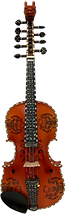
hardanger fiddle
Norway a bowed string instrument with sympathetic strings beneath the fingerboard, used in traditional folk dance music, wedding processions, and ceremonial performances.
langeleik

Norway a plucked drone zither with a long, box-shaped body, one melody string and several drone strings, used in folk dances and domestic music.
lur
Denmark, Norway, Sweden a loud, long, natural trumpet with a curved or S-shaped tube, used for ancient ritual signals, military fanfares, and herding livestock.
psalmodicon
Sweden, Norway, Denmark a single-stringed, bowed or plucked fretboard zither with a wooden box body and printed letter or number notation, used to lead Congregational church singing, and in musical education in religious settings.
Saami ritual drum
Norway (Lule Saami), Sweden (Ume Saami), Finland, Russia(Kola Peninsula/Sápmi region) (or meavrresgárri) a sacred frame drum with a reindeer-skin membrane decorated with cosmological symbols, used by Noaidi (shamans) to enter a trance, predict the future, and communicate with the spirit world.
Portugal


adufe
Portugal a square or rectangular frame drum with jingles or seeds inside, struck by the palm and fingers, used in folk music and processional dances.

cavaquinho
Portugal, Brazil, Cape Verde a small four-stringed plucked lute and direct ancestor of the ukulele, used in samba, choro, and various Portuguese folk traditions.
clavichord
Germany, Austria, Spain, Portugal, Italy, Sweden a rectangular keyboard instrument with metal tangents that strike and remain in contact with the strings to allow for expressive vibrato, used in private practice, composition, and intimate parlor performances of Baroque and Classical music.
gaita

Spain, Portugal a bagpipe with a leather or synthetic bag, a melodic chanter, and at least one drone, used in folk dances, weddings, and regional processions.
rabeca

Brazil, Portugal a bowed string instrument with a flat bridge and a deep body, used in rhythmic dance tunes, folk festivals, and regional styles like forró and fandango.

Guitarra portuguesa
Portugal, Brazil, Macau a pear-shaped, twelve-stringed lute with fan-shaped tuners and paired steel strings, used in Fado music.
Scotland

celtic harp
Ireland, Scotland, Wales a small, triangular frame harp that serves as a symbol of Gaelic heritage, used in traditional folk performance sessions, folk-rock, and cultural ceremonies.
dulcitone
Scotland, United Kingdom, Italy a rare keyboard instrument that produces a soft, bell-like chime by striking a series of graduated steel tuning forks with felt hammers, used in intimate parlor music and specialized orchestral performances, chamber music, practice, and home music-making.
great highland bagpipes
Scotland, United Kingdom, Gibraltar a bagpipe with a central air reservoir, three constant-tone drones, and a finger-holed melodic pipe, the most recognizable version of the bagpipe family, known for their extreme volume and outdoor projection, used in military ceremonies, funerals, and folk competitions.
scottish small pipes

Scotland a small, bellows-blown bagpipe with a cylindrical bore chanter and three drones, designed for indoor use, used in folk music sessions in pubs or homes, and fiddle and smallpipe duets.
Spain

alboka
Spain (Basque Country), Andorra a single-reed wind instrument with a wooden double pipe and a bell traditionally made from animal horn, used traditional Basque folk dances like fandango and jota.
bandurria
Spain, Philippines, Bolivia, Peru, Andorra, Gibraltar a plucked string instrument with a pear-shaped body and twelve strings in six double courses, played with a plectrum, used in Spanish folk music, Zarzuela, and rondalla ensembles.
castanets
Spain, Andorra, Gibraltar, Wordwide (Western Classical) a pair of concave shells made of hardwood joined by a string that produces a sharp, rhythmic clicking when struck together, used in flamenco, classical Spanish ballet (Escuela Bolera), and orchestral "Spanish-style" compositions.
clavichord
Germany, Austria, Spain, Portugal, Italy, Sweden a rectangular keyboard instrument with metal tangents that strike and remain in contact with the strings to allow for expressive vibrato, used in private practice, composition, and intimate parlor performances of Baroque and Classical music.

dulzaina
Spain a loud, double-reed woodwind instrument with a conical bore and a flared bell, used in folk dances, religious processions, and street celebrations.
flabiol
Spain (Catalonia), France a small fipple flute played with one hand while the other plays a small drum, used in traditional obla ensemble for dancing the Sardana, and other traditional folk music performances.
gaita
Spain, Portugal a bagpipe with a leather or synthetic bag, a melodic chanter, and at least one drone, used in folk dances, weddings, and regional processions.
hurdy-gurdy
France, Hungary, Spain, Germany a stringed instrument played by turning a crank that rubs a wheel against the strings, functioning like a "mechanical violin", used in folk, neo-medieval, film scores, and experimental music.

laúd
Spain, Cuba, Philippines a pear-shaped, multi-stringed plucked lute with a deep resonant body and paired string courses, used in "Tuna" university group, Plectrum Orchestras, Rondalla ensembles, and Punto Guajiro music.

pandero cuadrado
Spain a square frame drum with a wooden frame covered on both sides with animal skin, often filled with seeds or pebbles to make a rattling sound, used in folk songs and communal dances.
pandero

Brazil, Puerto Rico, Spain, Dominican Republic a frame drum with a tunable head and sometimes has cupped metal jingles that rattle, used in plena music, folk dances, martial arts accompaniment, and street festivals.
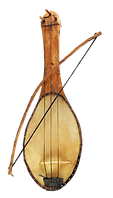
rabel
Spain, Mexico, Panama a bowed string instrument with one to three strings, a carved wooden body, a skin or wood soundboard, used in folk songs, shepherd dances, and satirical oral poetry, and in modern genres like cumbia and punto.
rebec
France, Spain, Italy, United Kingdom (England), Germany a small, pear-shaped bowed string instrument carved from a single block of wood with a narrow neck and three strings, used in medieval court music, Sephardic traditions, early renaissance ensembles, french minstrel performers (travelling musicians), and secular dance music.
regal
United Kingdom, Italy, Germany, France, Austria, Spain a small, portable pipe organ with one or more ranks of short, metallic reed pipes, used for accompanying vocal music, and in Renaissance and early Baroque ensembles.

requinto
Mexico, Spain, Puerto Rico, Colombia, Ecuador a small, guitar-like stringed instrument, used in Bolero, "Trío Romántico" style, Jíbaro music, tuna ensembles, Bambuco and Guabina music, and Pasillo music.
theorbo
Italy, France, United Kingdom, Germany, Spain a large, long-necked lute with two sets of strings: a fretted neck for playing the melody and a separate, unfretted extension for long bass strings, used for harmonic accompaniment (basso continuo) in Baroque vocal music, operas, and chamber ensembles.
ttun-ttun

Spain a large, wooden percussion instrument with six strings that run over a soundboard, which is typically played by striking the strings with a drumstick while they are tuned to a rhythmic drone, used in traditional dances and folk music.
txalaparta
Spain (Basque Country), France (Northern Basque Country) a set of horizontal wooden boards or planks supported on trestles or baskets (often resting on husks of corn or dried leaves), played by two performers who strike the boards rhythmically with thick wooden sticks, used in Basque folk music and festive gatherings.
txistu

Spain (Basque Country), France (Northern Basque Country) a small, six-holed pipe or flute held and played with one hand, while the same musician plays the ttun-ttun (a percussion instrument) with the other hand, used in Basque folk music.
sac de gemecs
Andorra, Spain, France a bagpipe with a unique appearance, with a bag shaped like an entire goat skin and three drones that hang together from a common ornamental block at the front, Cercavila (street parades) and accompanies the famous Castells (human towers) and traditional dances like the Sardana.
Sweden

clavichord
Germany, Austria, Spain, Portugal, Italy, Sweden a rectangular keyboard instrument with metal tangents that strike and remain in contact with the strings to allow for expressive vibrato, used in private practice, composition, and intimate parlor performances of Baroque and Classical music.
durspel
Sweden, Norway, Finland a small, diatonic button accordion, used in traditional folk tunes, social dances, and communal tavern singing.
lur
Denmark, Norway, Sweden a loud, long, natural trumpet with a curved or S-shaped tube, used for ancient ritual signals, military fanfares, and herding livestock.

moraharpa
Sweden an early version of the bowed keyed fiddle with a rectangular, box-like body and a small number of keys, used in traditional folk dances and medieval music revival.
nyckelharpa

Sweden a bowed, keyed fiddle with sympathetic strings , typically used for Scandinavian folk music and traditional dance tunes.
psalmodicon
Sweden, Norway, Denmark a single-stringed, bowed or plucked fretboard zither with a wooden box body and printed letter or number notation, used to lead Congregational church singing, and in musical education in religious settings.
Saami ritual drum
Norway (Lule Saami), Sweden (Ume Saami), Finland, Russia(Kola Peninsula/Sápmi region) (or meavrresgárri) a sacred frame drum with a reindeer-skin membrane decorated with cosmological symbols, used by Noaidi (shamans) to enter a trance, predict the future, and communicate with the spirit world.
säckpipa

Sweden a bagpipe with a single chanter and one or two drones, used in folk dance music and traditional modal melodies.

talharpa
Estonia, Sweden a bowed lyre with a rectangular wooden frame and three or four strings, used in Scandinavian folk music.

träskofiol
Sweden a folk fiddle made from a hollowed-out wooden clog as the resonator body, used in traditional dance music, polskas, and waltzes at rural festivals and gatherings.
Switzerland

alphorn
Switzerland, Germany, Austria a long, conical, wooden natural horn, used for communication between mountain villages and shepherds, traditional Alpine folk music, and ceremonial events.
alpine zither
Austria, Germany, Switzerland a flat stringed instrument with a fretted neck for melodic strings and sympathetic drone strings, plucked with the fingers and a plectrum, use in traditional Central European folk music (Stubenmusik) and notable film scores.
basler trommel
Switzerland, Germany a rope-tensioned, two-headed cylindrical marching snare drum, used in Basler Fasnacht (Basel Carnival) and by fife and drum corps.
fife

United States, United Kingdom, Switzerland, Anguilla, US Virgin Islands a small, high-pitched, transverse flute made of wood or metal, used in drum and fife corps to signal troop movements, military march music, patriotic folk melodies, and traditional outdoor performances.
glockenkranz
Germany, Austria, Switzerland a set of small, handheld tuned bells mounted in a circular frame and played by striking or shaking, used in folk, ceremonial, and choral music.
hackbrett
Switzerland, Austria, Germany, Slovenia a trapezoidal hammered dulcimer dozens of metal strings, used in Alpine folk music, dance accompaniment, and contemporary chamber music.
hand pan
Switzerland, United States, Germany, France, Worldwide a convex steel percussion instrument played with the hands, used in ambient, world, and meditative music.
hirtenschalmei
Germany, Austria, Switzerland, France a hooked, double-reed instrument with a "windcap" (the double reed is enclosed inside a wooden cap, used in medieval-style folk music and historical reconstructions of shepherd melodies.
maultrommel
Germany, Austria, Switzerland a small jaw harp with a flexible metal tongue attached to a frame, used widely in Alpine and Bavarian folk music.
schwyzerörgeli
Switzerland a diatonic button accordion with an ornate wooden casing and unique internal reed setup ("bisonoric," meaning a single button produces a different note depending on whether you are pushing or pulling the bellows), used in Swiss folk music (Ländlermusik) and considered a pillar of Swiss national identity.
the Netherlands

carillon
Belgium, Netherlands, France, Germany, United States, United Kingdom, Australia, Canada a massive keyboard instrument housed in a church tower or belfry, with at least 23 bronze bells that are fixed in place, with internal clappers connected to a wooden keyboard (baton console) by a system of wires and levers, used to play intricate melodies, complex harmonies, and public outdoor concerts.
clavicymbalum
Italy, France, Germany, United Kingdom, The Netherland a portable, wing-shaped keyboard instrument with a plucking mechanism, used in performing late Medieval and early Renaissance courtly music and liturgical melodies.
cloud-chamber bowls
United States, Germany, Netherlands a microtonal percussion instrument with large, suspended glass resonators made from salvaged carboys that produce a bell tone when struck with mallets, used in avant-garde and experimental musical compositions.
flugelhorn
Germany, Austria, United Kingdom, United States, Netherlands, Belgium a brass instrument in the western trumpet family with a wider, conical bore and deep funnel-shaped mouthpiece, used in jazz ballads, brass bands, and lyrical orchestral solos.
harpsichord
Italy, France, Germany, Netherlands, United Kingdom, United States a piano-like keyboard instrument in which strings are plucked when keys are pressed, used in Baroque and early Classical music.
middewinterhoorn
Netherlands, Germany a long, curved natural wooden trumpet, used to mark the period from Advent to Epiphany.
pipe organ
Germany, France, Italy, United Kingdom, United States, Netherlands, Canada, Belgium, Macau a massive, complex keyboard wind instrument that makes sound by driving pressurized air through thousands of individual pipes, controlled by multiple keyboards and foot pedals. It is often called the "King of Instruments", used in sacred music, classical orchestral performances, and solo classical music
recorder
Germany, Netherlands, France, Italy, United Kingdom, United States, Japan a woodwind instrument with a whistle-like mouthpiece (fipple flute) and seven finger holes , used in early music ensembles, Baroque chamber works, and as a foundational tool for primary music education.
rommelpot
Belgium, Netherlands a friction drum made of an earthenware jar covered with a bladder or skin that makes a rhythmic, grunting sound when a resin-coated stick or cord attached to the membrane is rubbed, used during carnival, Shrove Tuesday, and St. Martin's Day celebrations, other regional festivals, and caroling.
schäferpfeife
Germany, Austria, Belgium, Netherlands a bagpipe with two forward-facing drones and a conical chanter, used in Renaissance dance music and modern folk revival.
United Kingdom

aeolian harp
Germany, Italy, United States, United Kingdom a stringed instrument with a wooden resonating box and multiple strings tuned in unison, played only by the wind, used in Romantic poetry and meditative soundscapes.
bugle
United States, United Kingdom, Germany, France a conical bore horn with no valves or slides, used to play fanfares, military signals, and ceremonial calls.

calliope
United States, Canada, United Kingdom a steam- or air-powered keyboard instrument that produces sound by sending pressurized gas through a series of large whistles, designed to be heard for miles and used for outdoor entertainment, riverboats, circus parades, circus music, and fairground performances.
carillon
Belgium, Netherlands, France, Germany, United States, United Kingdom, Australia, Canada a massive keyboard instrument housed in a church tower or belfry, with at least 23 bronze bells that are fixed in place, with internal clappers connected to a wooden keyboard (baton console) by a system of wires and levers, used to play intricate melodies, complex harmonies, and public outdoor concerts.
clavicymbalum
Italy, France, Germany, United Kingdom, The Netherland a portable, wing-shaped keyboard instrument with a plucking mechanism, used in performing late Medieval and early Renaissance courtly music and liturgical melodies.
claviharp
France, Germany, Belgium, United Kingdom a vertical keyboard instrument featuring a harp-like frame where the strings are plucked via a mechanical action that produces a harp-like sound when its keys are pressed, used in solo parlor music and romantic-era compositions that require harp-like textures.
claviola
Germany, Italy, United States, United Kingdom a handheld, wind-blown free-reed keyboard instrument, used in folk music, modern jazz, avant-garde ensembles, experimental, and chamber music.
concertina
Germany, United Kingdom, Ireland, United States, South Africa a portable, bellows-driven free-reed instrument with buttons on both ends, used in folk dance accompaniment, folk ensemble performances, and maritime sea shanties.
cornish bagpipes
United Kingdom (Cornwall), Ireland a double-chantered bagpipe variant with two melody pipes that allow for polyphonic playing and harmony, used in traditional Celtic dance music and the revival of historic Cornish folk ceremonies.
crystal glasses
Germany, United Kingdom, Ireland, Austria, United States a friction-based musical instrument where the rims of crystal glasses are rubbed with moistened fingers to produce pure, shimmering tones through high-frequency vibrations, used in solo recitals, experimental soundtracks, and delicate arrangements of classical melodies.
crystal singing bowls
United States, China, Germany, United Kingdom, Australia, Japan modern friction-based percussion instruments made from high-purity quartz silica that produce powerful, sustained harmonic tones when struck or rubbed with a mallet, used in sound healing, meditation, and New Age ambient music.
dulcitone
Scotland, United Kingdom, Italy a rare keyboard instrument that produces a soft, bell-like chime by striking a series of graduated steel tuning forks with felt hammers, used in intimate parlor music and specialized orchestral performances, chamber music, practice, and home music-making.
euphonium
United States, United Kingdom, Japan, Germany, France, Canada a conical-bore brass instrument, similar to a concert tuba but smaller and pitched one octave higher, used in wind bands and as the "cello" of the brass world.
fife
United States, United Kingdom, Switzerland, Anguilla, US Virgin Islands a small, high-pitched, transverse flute made of wood or metal, used in drum and fife corps to signal troop movements, military march music, patriotic folk melodies, and traditional outdoor performances.
finger drum pad
United States, Japan, Germany, United Kingdom, South Korea an electronic touchpad percussion controller that allows users to trigger drum sounds and samples with their fingertips, used in electronic, hip-hop, and live beat-making performances.
flexatone

United Kingdom, United States, Worldwide (Western Classical) a small percussion instrument with a flexible metal blade and beaters, used for eerie, comical, or supernatural sound effects in orchestral, jazz, and film music.
flugelhorn
Germany, Austria, United Kingdom, United States, Netherlands, Belgium a brass instrument in the western trumpet family with a wider, conical bore and deep funnel-shaped mouthpiece, used in jazz ballads, brass bands, and lyrical orchestral solos.
gemshorn
Germany, Austria, Italy, United Kingdom a vessel flute made from the hollowed-out horn of a goat or ox, used in early music ensembles and folk melodies.
glass armonica
United States, United Kingdom, Germany, Austria, France a series of nesting glass bowls rotating on a horizontal spindle that produces ringing tones through friction when touched by the player's wet fingers, used in classical chamber music, opera, and film scores. Invented by Benjamin Franklin in 1761.
great highland bagpipes
Scotland, United Kingdom, Gibraltar a bagpipe with a central air reservoir, three constant-tone drones, and a finger-holed melodic pipe, the most recognizable version of the bagpipe family, known for their extreme volume and outdoor projection, used in military ceremonies, funerals, and folk competitions.

hammond organ
United States, United Kingdom an electric keyboard instrument with rotating tonewheels to generate electromagnetic signals, used in jazz, blues, gospel, and rock music.
harpsichord
Italy, France, Germany, Netherlands, United Kingdom, United States a piano-like keyboard instrument in which strings are plucked when keys are pressed, used in Baroque and early Classical music.
heckelphone
Germany, Austria, United States, France, United Kingdom a low-pitched double-reed woodwind instrument with a large globular bell, used in large-scale late-Romantic orchestral works and modern film scores.
irish tin whistle
Ireland, United Kingdom, United States, Falkland Islands a simple six-holed fipple flute with a plastic or metal mouthpiece and a cylindrical tube, used in fast-paced melodies in traditional folk music, jigs, reels, contemporary folk, and film music. Often called the "penny whistle".
mellotron

United Kingdom, United States, Worldwide (Popular Music) an early electro-mechanical, polyphonic tape-replay keyboard that produces grainy, and "orchestral" sound. The precursor to the digital sampler, used in1960s and 70s progressive rock and psychedelic rock, orchestral, and experimental music.
melodica

Japan, United Kingdom, United States a portable, free-reed wind instrument with a piano-style keyboard and a mouthpiece, used in music education, reggae, dub, and various pop genres.
minimoog
United States United Kingdom, Germany, Japan an analog monophonic synthesizer with three oscillators and a "ladder" filter to produce a powerful, warm sound, used in progressive rock, jazz fusion, funk, and electronic music.
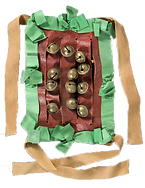
morris bells
United Kingdom, Australia, Canada small, tuned metal bells attached to leather pads or garters that are worn around a dancer’s shins, used to accentuates footwork in traditional seasonal folk dancing.
musical saw
United States, United Kingdom, Germany, France, Russia a hand-bent metal blade played with a bow, used in folk, experimental, and atmospheric film music.
northumbrian smallpipes

United Kingdom (England) a bellows-blown bagpipe featuring a closed-end chanter and multiple keyed drones, used in folk melodies and traditional North Eastern English dance tunes.
omnichord

Japan, United States, United Kingdom an electronic accompaniment instrument with a touch-sensitive strumplate and chord buttons that allow users to trigger synthetic arpeggios and rhythmic backing tracks, used in indie pop, lo-fi, and experimental music.
ophicleide
France, Germany, Italy, United Kingdom a conical-bore, keyed brass instrument, used in Romantic-era orchestras, military bands, and early 19th-century operatic scores.
pibau cyrn

United Kingdom (Wales) a mouthblown bagpipe with a single reed chanter, a horn to amplify the sound, a bass drone, and a separate horn covering the reed, used in folk dances and the revival of historic Welsh and Celtic music.
pipe organ
Germany, France, Italy, United Kingdom, United States, Netherlands, Canada, Belgium, Macau a massive, complex keyboard wind instrument that makes sound by driving pressurized air through thousands of individual pipes, controlled by multiple keyboards and foot pedals. It is often called the "King of Instruments", used in sacred music, classical orchestral performances, and solo classical music
portative organ
Italy, France, Germany, United Kingdom, United States a small, portable pipe organ with a single keyboard and a hand-operated bellows, used in solo melodic performance, vocal accompaniment, and processional music in medieval and Renaissance settings.
pump organ
United States, Germany, France, United Kingdom The pump organ is a piano-style keyboard instrument that uses foot-operated bellows to pump through metal reeds to make sound, used in folk, gospel, and early popular music (Victorian-era parlor music).
ratchet
Germany, France, United Kingdom, United States, Austria, Italy, Worldwide (Western Classical) a percussion instrument with a toothed wheel that strikes one or more flexible wooden tongues as it is rotated, used in orchestral compositions, comedic sound effects, film scores, "town signalling", religious processions, historically connected to British night watchment and football culture, and Alpine folk celebrations.
rebec
France, Spain, Italy, United Kingdom (England), Germany a small, pear-shaped bowed string instrument carved from a single block of wood with a narrow neck and three strings, used in medieval court music, Sephardic traditions, early renaissance ensembles, french minstrel performers (travelling musicians), and secular dance music.
recorder
Germany, Netherlands, France, Italy, United Kingdom, United States, Japan a woodwind instrument with a whistle-like mouthpiece (fipple flute) and seven finger holes , used in early music ensembles, Baroque chamber works, and as a foundational tool for primary music education.
regal
United Kingdom, Italy, Germany, France, Austria, Spain a small, portable pipe organ with one or more ranks of short, metallic reed pipes, used for accompanying vocal music, and in Renaissance and early Baroque ensembles.
Seaboard

United Kingdom, United States a MIDI controller and piano-keyboard style synthesizer interface with a continuous, pressure-sensitive surface made of silicone, allowing musicians to "shape" sound through touch, used in electronic, pop, and experimental music for expressive performances.

sleigh bells
United States, United Kingdom a percussion instrument with multiple small metal pellet bells attached to a handle or leather strap, used in classical music and holiday-themed popular music.
spoons
United States, Ireland, Canada, United Kingdom, Falkland Islands a simple percussion instrument consisting of two ordinary spoons clapped together, used in folk music and jug bands.
stylophone
United Kingdom, United States, Germany, Japan, Australia a miniature analog synthesizer that uses a battery-powered stylus to complete a circuit by touching a metal keyboard to sound specific pitches, used in novelty popular music, pop, and electronic music.
tabor pipe
France, United Kingdom a three-hole fipple flute played with one hand and always performed alongside a small drum (the tabor) played by the same musician in the other hand, used in historical folk music performances and medieval dance music.
tabor
France, United Kingdom a shallow, cylindrical drum struck with one stick while the same performers plays a three-hole pipe in the other hand, used in historical folk music and medieval dance performances

tenor horn
United Kingdom, United States, Australia, Canada a medium-sized brass instrument, with a conical bore and a forward-facing bell, used in British-style brass bands and wind ensembles.
theorbo
Italy, France, United Kingdom, Germany, Spain a large, long-necked lute with two sets of strings: a fretted neck for playing the melody and a separate, unfretted extension for long bass strings, used for harmonic accompaniment (basso continuo) in Baroque vocal music, operas, and chamber ensembles.
uillean pipes
Ireland, United Kingdom a sophisticated set of bellows-blown bagpipes with a two-octave chromatic scale chanter and "regulators" that allow the player to provide their own rhythmic chordal accompaniment, used in traditional Irish folk music.
Vatican City

Il campanone

Vatican City ("The Great Bell") a massive, tuned bronze bell, used as the bell signal for the Vatican, rung only for major ceremonies, deaths of significant leaders, or the election of a new Pope.
pipe organ
Germany, France, Italy, United Kingdom, United States, Netherlands, Canada, Belgium, Macau a massive, complex keyboard wind instrument that makes sound by driving pressurized air through thousands of individual pipes, controlled by multiple keyboards and foot pedals. It is often called the "King of Instruments", used in sacred music, classical orchestral performances, and solo classical music
Wales

celtic harp
Ireland, Scotland, Wales a small, triangular frame harp that serves as a symbol of Gaelic heritage, used in traditional folk performance sessions, folk-rock, and cultural ceremonies.
crwth

Wales an ancient bowed lyre with a rectangular frame and a bridge that passes through a soundhole to act as a soundpost, used in traditional folk songs and bardic storytelling.
pibau cyrn
United Kingdom (Wales) a mouthblown bagpipe with a single reed chanter, a horn to amplify the sound, a bass drone, and a separate horn covering the reed, used in folk dances and the revival of historic Welsh and Celtic music.