


_3x.png)
aeolian harp

Germany, Italy, United States, United Kingdom a stringed instrument with a wooden resonating box and multiple strings tuned in unison, played only by the wind, used in Romantic poetry and meditative soundscapes.
arpa jarocha

Mexico a large, standing wooden harp with 32 to 36 strings, used in son jarocho folk ensembles and traditional fandango dance celebrations.

begena
Ethiopia a large, ten-stringed lyre, used in spiritual meditation, prayer, and religious hymns.

bolon
Mali, Guinea, Gambia a plucked harp-lute with a large calabash gourd resonator and a curved wooden neck, used in hunter’s music, historical storytelling, and Mandinka folk ensembles.
celtic harp

Ireland, Scotland, Wales a small, triangular frame harp that serves as a symbol of Gaelic heritage, used in traditional folk performance sessions, folk-rock, and cultural ceremonies.
Çeng

Turkey, Azerbaijan a small, angular harp with long, horizontal soundbox and a vertical neck, used in sultan's courts, sufi ceremonies, and historical turkish art music.

claviharp
France, Germany, Belgium, United Kingdom a vertical keyboard instrument featuring a harp-like frame where the strings are plucked via a mechanical action that produces a harp-like sound when its keys are pressed, used in solo parlor music and romantic-era compositions that require harp-like textures.
crwth

United Kingdom (Wales) an ancient bowed lyre with a rectangular frame and a bridge that passes through a soundhole to act as a soundpost, used in traditional folk songs and bardic storytelling.
endongo

Uganda a large, eight-stringed bowl lyre with a resonator made of a hollowed wooden bowl covered with lizard skin, used in royal court music and accompanying epic praise songs.
jouhikko

Finland a two or three-stringed bowed lyre with horsehair strings and a hand-hole (or "breach", open space behind the strings) for players to press strings, used for accompanying Runosong (the ancient oral poetry found in the Kalevala).
kirar

Ethiopia, Eritrea, Djibouti a five- or six-stringed bowl-shaped lyre with a with a triangular string frame, and wooden resonator covered with a stretched animal hide, used in traditional songs, epic storytelling, and contemporary East African pop and jazz.

kologo
Ghana, Burkina Faso a two-stringed lute with a gourd resonator and a skin-covered face, used by bards for storytelling, social commentary, and genres like afro-pop and Kolongo Power.

kora
Gambia, Senegal, Mali, Guinea, Guinea-Bissau, Ivory Coast a complex twenty-one stringed harp-lute hybrid with a large gourd resonator cut in half and covered with cow skin, wooden handposts for stability, and a high bridge, used in the Jali tradition (hereditary musicians, historians, and praise-singers who maintain the oral records of West African empires), and contemporary world music.
Kundi

Democratic Republic of the Congo, Central African Republic, South Sudan an arched or "bow" harp with a skin-covered wooden resonator and a carved neck, used by male singers to provide melodic accompaniment for epic storytelling, praise songs, and courtly entertainment.

litungu
Kenya, Uganda, Tanzania a large, bowl-shaped lyre with seven or eight strings stretched across a skin-covered resonator, often with loose metal rings or bottle caps near the bridge to add a percussive "sizzle", used by musician-historians (The "Omulitungu") who sings about clan lineage and social events during festivals and weddings.
ngoni

Mali, Burkina Faso, Guinea, Senegal, Gambia, Ivory Coast a harp-lute hybrid made from a hollowed wooden body or a calabash gourd covered in dried animal skin, Jali griots (hereditary historians and praise singers), donso (hunter societies) for ceremonial rituals, and contemporary West African "Wassoulou" music
obokano

Kenya a large eight-stringed bass bowl lyre with a skin-covered resonator, used in traditional storytelling, epic songs, and communal celebrations.
Paraguayan harp
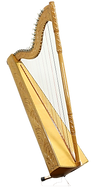
Paraguay, Argentina, Brazil a lightweight, diatonic harp with 32 to 46 nylon strings and a centrally-strung neck that is played with the fingernails, used in folk music such as the polca paraguaya and guarania.

pedal harp
Worldwide (Western Classical) a large, technologically advanced stringed instrument with a complex mechanical system of seven foot-operated pedals that allow the player to change the pitch of the strings mid-performance, used in orchestral and solo music.

saung-gauk
Myanmar an arched harp with a boat-shaped resonator and a long, curved neck, the "national instrument" of Myanmar and the only surviving harp tradition in mainland Asia, used in royal court music, Maha Gita (great songs), and Burmese classical poetry.
Shareero
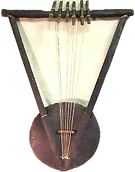
Somalia a lyre with 5 to 8 strings and a shallow wooden resonator covered in animal skin, used in folklore dances, wedding celebrations, and the rhythmic storytelling of the Somali-Bantu community.
taishōgoto

Japan a small, elongated rectangular zither with typewriter-like keys that press against the strings, used in folk songs and popular music due to its ease of learning.

talharpa
Estonia, Sweden a bowed lyre with a rectangular wooden frame and three or four strings, used in Scandinavian folk music.

wheelharp
United States a modern musical instrument, conceptually based on the Renaissance-era hurdy-gurdy made of a semicircular array of strings arranged above a foot-pedal-powered rotating wheel, where the strings are brought into contact with the wheel with keys, used in ambient music and sound design.