


_3x.png)

alphorn
Switzerland, Germany, Austria a long, conical, wooden natural horn, used for communication between mountain villages and shepherds, traditional Alpine folk music, and ceremonial events.
b flat trumpet

Worldwide (Western Classical, Jazz, popular music) a cylindrical bore horn with three piston valves, used in classical music, fanfares, jazz, popular music genres, and marching band music.
bass trombone

Worldwide (Western Classical, Jazz) a straight-bore brass horn with a telescopic slide to change pitch and a wide bell, used in orchestras, wind ensembles, and jazz big bands.

bucium
Romania, Moldova a long, natural horn made of wood or metal, reaching lengths of up to 3 meters (10 feet), signaling between mountain peaks, guiding livestock, and ceremonial rituals such as funerals and weddings.
bugle

United States, United Kingdom, Germany, France a conical bore horn with no valves or slides, used to play fanfares, military signals, and ceremonial calls.

cimbasso
Italy a low brass instrument with a long, forward-pointing bell and a set of rotary or piston valves, used to reinforce bass lines in orchestral, operatic (specifically the operas of Giuseppe Verdi and Giacomo Puccini), and cinematic music.
conch shell trumpet

Hawaii, Samoa, Japan, India, Mexico, French Polynesia/ Tahiti, Guam a natural aerophone fashioned from a large marine snail's shell that produces a powerful, resonant drone when the player's lips vibrate against a hole in the apex, used in religious rituals, maritime signaling, and ceremonial fanfares.

didgeridoo
Australia a long wooden wind instrument traditionally played by Aboriginal people that requires the use of circular breathing to produce a continuous, deep drone, used in ceremonial dance accompaniment, meditation, and contemporary world fusion music, storytelling, ritual music, contemporary world and ambient music.
dungchen

Tibet, Nepal, Bhutan, India, a long, telescoping metal trumpet, used to signal the start of monastic ceremonies, accompany sacred chants, perform ritual calls from rooftops, and Tantric orchestra.

erke
Argentina, Bolivia, Chile a large, side-blown trumpet made of a long cane tube ending in a large horn or brass bell, used in ritual signaling and traditional festivities in the high Andes mountain region.

euphonium
United States, United Kingdom, Japan, Germany, France, Canada a conical-bore brass instrument, similar to a concert tuba but smaller and pitched one octave higher, used in wind bands and as the "cello" of the brass world.

flugelhorn
Germany, Austria, United Kingdom, United States, Netherlands, Belgium a brass instrument in the western trumpet family with a wider, conical bore and deep funnel-shaped mouthpiece, used in jazz ballads, brass bands, and lyrical orchestral solos.
french horn

Worldwide (Western Classical) a brass instrument with a complex, circular shape and a wide, conical bore, used for heroic fanfares, orchestral solos, and as a bridge between the woodwind and brass sections.

kakaki
Nigeria, Niger, Chad, Benin, Ghana, Burkina Faso a long metal trumpet, often reaching up to four meters in length, used in often reaching up to four meters in length, royal fanfares, ceremonial processions, and signaling the presence of traditional rulers.

karnay
Uzbekistan, Tajikistan, Kazakhstan, Iran a long, straight brass or copper trumpet with a flared bell, used in outdoor ceremonial fanfares, royal processions, and signaling the start of public festivities.

kuhlohorn
Germany a wide-bore, circular-shaped brass instrument (a variant of the flügelhorn), used in German Protestant "Posaunenchor" (trombone choir) ensembles.
lur

Denmark, Norway, Sweden a loud, long, natural trumpet with a curved or S-shaped tube, used for ancient ritual signals, military fanfares, and herding livestock.
middewinterhoorn

Netherlands, Germany a long, curved natural wooden trumpet, used to mark the period from Advent to Epiphany.

ophicleide
France, Germany, Italy, United Kingdom a conical-bore, keyed brass instrument, used in Romantic-era orchestras, military bands, and early 19th-century operatic scores.
piccolo trumpet
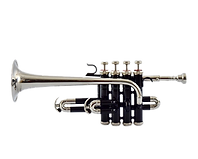
Worldwide (Western Classical) the smallest member of the trumpet family, pitched one octave higher than the standard B\flat trumpet, used in Baroque-era high-register parts and virtuosic solo performances.

pututu
Peru, Bolivia, Ecuador, Argentina a natural trumpet made from a conch shell or an animal horn with a carved mouthpiece, used for signaling, community gathering, Quechua community rituals, Inti Raymi festival, and sacred Andean rituals.

ransingha
India, Nepal a large, S-shaped natural trumpet made of copper or brass, that produce a powerful, blaring, and triumphant tone used for signaling during traditional ceremonies, battle announcements, religious processions, folk dramas, folk festivals, and Panche Baja musical ensembles.
shofar

Israel, Yemen, United States, Europe Diaspora an natural horn instrument made from a ram's horn, used to sound specific calls during Jewish religious ceremonies and holidays like Rosh Hashanah and Yom Kippur.
soprano cornet

Worldwide (Western Classical) the smallest and highest-pitched brass instrument of the cornet family, typically tuned in E-flat, used in orchestral music, film scores, wind bands, and brass bands.

sousaphone
United States, Mexico a conical brass instrument of the tuba family, coiled to fit around the player's body with a large, forward-facing bell, used in marching bands, New Orleans brass bands, and Mexican Banda Sinaloense music

tenor horn
United Kingdom, United States, Australia, Canada a medium-sized brass instrument, with a conical bore and a forward-facing bell, used in British-style brass bands and wind ensembles.

tenor trombone
Worldwide (Western Classical, Popular Music, Jazz) a brass instrument with a slide mechanism (instead of valves), which allows the player to continuously change the tube length to play chromatically, used in orchestral classical music, jazz ensembles, and marching bands.
trembita

Ukraine, Poland, Slovakia, Romania an extremely long, conical natural wooden horn, used to transmit signals, perform ceremonial music, and accompany shepherds across long distances in the Carpathian Mountains.
trompe de chasse

France, Belgium, Luxembourg a coiled, valveless brass instrument, similar to a natural horn, used in signaling during mounted hunts and playing an established repertoire of ceremonial music (known as fanfares) unique to the hunt tradition.

tuba
Worldwide (Western Classical, Jazz, Folk) the largest and lowest-pitched brass instrument with a deep, conical bore, large bell, and three or more valves, used in orchestras, wind bands, marching bands, polka and folk ensembles, and sometimes jazz ensembles.
tutari

India a short, curved, or S-shaped natural brass horn, used as a signaling instrument and for ceremonial fanfares in religious processions and palace rituals.
vuvuzela

South Africa, Worldwide a long, plastic, end-blown horn that produces a loud, monotonous, high-pitched monotone sound, used by spectators at sporting events, most notably soccer (football) matches.

wagner tuba
Germany, Worldwide a brass instrument created by Richard Wagner, with a conical bore (like a horn), a vertical bell, and valves (like a tuba or euphonium), used in orchestral classical music, especially in Wagner's Ring cycle.
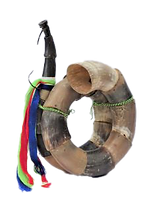
waqra phuku
Peru, Bolivia, Ecuador a natural trumpet made from several pieces of cattle horn joined together in a spiral shape, played in pairs by indigenous peoples in the Andes, used in annual fertility rituals and traditional stock-branding ceremonies.
Waza

Sudan, Ethiopia, South Sudan a large, trumpet-like aerophone made from a series of nested gourds that produces a deep, resonant drone used to provide the rhythmic and harmonic foundation for communal harvest dances and ceremonial celebrations.