


_3x.png)

alto flute
Worldwide (Western Classical Music/Jazz) a large transverse (side-blown) woodwind instrument, pitched a perfect fourth lower than the concert flute, used for adding unique color in orchestral music, film scores, flute choirs, and jazz.
anasazi flute

Ancestral Puebloans/United States (Pueblo, Hopi, Zuni, Acoma, Taos Pueblo) an ancient, six-hole, end-blown wooden flute, historically crafted from box elder wood, used in traditional Native American music, meditative soundscapes, and ceremonial settings

bansuri
India, Nepal, Pakistan, Bangladesh a transverse (side-blown) bamboo flute with six to seven finger holes, used in Hindustani classical music
bass flute

Worldwide (Western Classical, Jazz, Experimental) a large transverse (side-blown) woodwind instrument, the second largest of the common flute family, use for adding unique color in orchestral music, film scores, flute choirs, jazz, chamber music, and contemporary classical compositions.
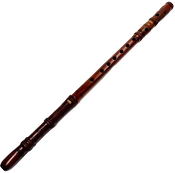
blul
Armenia an end‑blown wooden flute, used in pastoral melodies, folk dances, and lyrical storytelling.
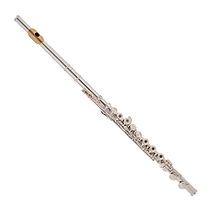
c flute
Worldwide (Western Classical, Jazz, Popular Music) a transverse (side-blown) woodwind instrument that serves as the standard member of the flute family, used in in classical and orchestral music, jazz ensembles, marching bands, and popular music genres.

calliope
United States, Canada, United Kingdom a steam- or air-powered keyboard instrument that produces sound by sending pressurized gas through a series of large whistles, designed to be heard for miles and used for outdoor entertainment, riverboats, circus parades, circus music, and fairground performances.
chopo choor

Kyrgyzstan an ocarina-style clay vessel flute used in Kyrgyz pastoral music and nomadic folk ensembles.
contrabass flute

Worldwide (Western Classical) a large, low-pitched member of the flute family used to add deep tonal layers in flute choirs, contemporary classical ensembles, film scores, ambient, and experimental music.

csakan
Austria, Hungary, Germany a duct flute (recorder-style) fashioned in the shape of a walking stick, used in salon music, virtuosic solo performances during the Biedermeier period, chamber music, and folk-inspired classical compositions.

daegeum
South Korea, North Korea a large transverse bamboo flute with a buzzing membrane, used in traditional court music, aristocratic chamber ensembles, and contemporary soundtracks.

Ditlhaka
Botswana a traditional ensemble of tuned panpipes made from varying lengths of river reed, played in a circular, hocketing style where each performer contributes a single note to a complex polyphonic melody, used for celebratory communal dances and royal ceremonies.

dizi
China, Taiwan, Singapore The dizi is a transverse bamboo flute with a unique vibrating membrane called a mo-kong, used in folk music, Chinese opera, and modern orchestral performances.

dvoyanka
Bulgaria, North Macedonia, Serbia a double-channeled wooden flute carved from a single piece of wood that allows a soloist to play a melody and a drone simultaneously, used in shepherd calls and folk dances.
fangufangu

Tonga a bamboo nose flute, historically used to gently wake royalty (such as the King of Tonga) or accompany intimate moments of reflection.
fife

United States, United Kingdom, Switzerland, Anguilla, US Virgin Islands a small, high-pitched, transverse flute made of wood or metal, used in drum and fife corps to signal troop movements, military march music, patriotic folk melodies, and traditional outdoor performances.

flabiol
Spain (Catalonia), France a small fipple flute played with one hand while the other plays a small drum, used in traditional obla ensemble for dancing the Sardana, and other traditional folk music performances.
floyera

Greece, Cyprus, North Macedonia a shepherd's end-blown flute made from a single piece of wood, cane, or bone, used in folk and pastoral music for melodic and ceremonial purposes.

friscalettu
Italy (Sicily) a small fipple flute made from Arundo donax reed, which grows abundantly along Sicilian riverbanks, used in folk melodies and traditional dance music like the tarantella.
frula

Serbia, Croatia, Bosnia and Herzegovina, Montenegro, North macedonia a small wooden end-blown flute with finger holes, used by shepherds for pastoral improvisations and to lead the fast-paced kolo circle dances.

fujara
Slovakia an very large, deep-timbered overtone flute with a "side-pipe" construction, one of the tallest flutes in the world, between 5 to 7 feet tall, used in solitary shepherd's music and traditional Slovak folk songs.
fujarka

Poland a small, wooden fipple flute, used in folk melodies, pastoral signaling, bird-call imitations, small folk ensembles during weddings, and seasonal festivals.
fula flute
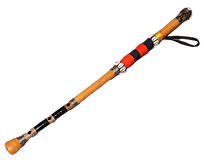
Guinea, Senegal, Mali, Nigeria, Gambia a transverse overtone flute made from a conical tambin vine, characterized by the player's simultaneous singing and shouting into the instrument, used in traditional folk music and West African "ballet" orchestras.
fyell

Albania, Kosovo, North Macedonia, Montenegro an end-blown flute carved from wood or cane, used for shepherd melodies, epic folk songs, and communal circle dances.

galoubet
France a three-holed fipple flute often played alongside a small drum, used in folk music for dances and pastoral tunes.

gasba
Morocco, Algeria, Tunisia, Libya a long, end-blown reed flute, used in folk genres like bedouin music and the early roots of rai.
gemshorn

Germany, Austria, Italy, United Kingdom a vessel flute made from the hollowed-out horn of a goat or ox, used in early music ensembles and folk melodies.
inuit bird-bone flute
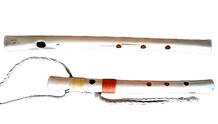
Canada, Greenland, Alaska (United States), Russia (Siberia/Chukotka) a small, whistle-like instrument made from the hollow wing bones of large birds, used for personal entertainment, mimicking animal calls, and spiritual communication during long winter months.
irish tin whistle

Ireland, United Kingdom, United States, Falkland Islands a simple six-holed fipple flute with a plastic or metal mouthpiece and a cylindrical tube, used in fast-paced melodies in traditional folk music, jigs, reels, contemporary folk, and film music. Often called the "penny whistle".

Kanak flute
New Caledonia a long, curved transverse flute made from a slender hollow branch or reed, used in intimate storytelling, personal meditation, and the preservation of ancestral clan histories.
kaval

Bulgaria, North Macedonia, Turkey, Albania, Romania, Serbia, Greece a rim-blown chromatic flute with a long wooden body and eight finger holes, used in virtuosic dance tunes, mountain shepherd music,

kawala
Egypt an end-blown bamboo flute with six finger holes and a hollow, open-ended body, used in classical Middle Eastern music, and rhythmic accompaniment in weddings, festivals, and rural gatherings.

khlui
Thailand, Laos a vertical fipple flute flute made of bamboo or hardwood, used in lead melodic instrument in classical ensembles, folk music, and pop ballads.

koauau
New Zealand (Māori) a small, open-ended end-blown flute made of wood or bone that produces microtonal sound, used in personal meditation, courting, and to "voice" traditional poems or laments.
kōauau ponga ihu

New Zealand (Māori) a small, gourd-based nose flute with several finger holes, used for personal entertainment, courting, traditional storytelling, associated with the breath of life (te hanu) and was historically used to soothe infants or in rituals for the sick.

konkovka
Slovakia, Czech Republic a long, end-blown overtone flute without finger holes that produces sound by varying breath pressure and opening or closing the bottom end, used in folk melodies and pastoral music of Shepherds in the Carpathian mountains.

koudi
China a tiny, open-ended horizontal flute made of bamboo, used in virtuosic solo performances, vocal and animal mimicry, and traditional Chinese orchestral music.

moceno
Bolivia, Peru a large, wooden duct flute with a secondary tube that acts as a resonator, used in communal ensemble performances during agricultural festivals and rainy-season rituals, and Andean folk, and ceremonial music.
native american courting flute

United States (Great Plains, Southwest, Woodland, Southeastern tribes), Canada a front-held, two-chambered duct flute made of wood or cane, used to express affection during courtship or for personal spiritual reflection.

ney
Turkey, Iran, Egypt, Iraq, Syria an end-blown flute made of a hollow cane with five or six finger holes, used in ottoman classical art music, Sufi spiritual ceremonies, Takht ensemble, Arabic classical music and traditional folk ensembles.
nguru

New Zealand (Māori) a small, curved nose flute made from stone, wood, or a whale’s tooth, said to evoke the voice of Hineraukatauri, the goddess of flute music, used during tangihanga (funerals), healing rituals, courtship, and to soothe infants

nohkan
Japan a high-pitched, transverse bamboo flute with an internal "throat" and a seven-hole design, and in traditional Japanese theater.

ocarina
Worldwide a small, vessel flute used in folk, classical, and contemporary music, often featured in solo or ensemble performances.
ohe hano ihu

Hawaii a transverse flute made from a single section of bamboo with two or three finger holes, used for personal expression, secret communication between lovers, and hula accompaniment.

paixiao
China a panpipe-style flute with a series of bamboo pipes of graduated lengths bundled together in a wing-shaped or straight frame, used in traditional court music, ritual ceremonies, and modern orchestral compositions.
piccolo

Worldwide (Western Classical) a small, high-pitched woodwind instrument in the flute family, used in orchestral, concert band, and marching band music.

pinkillu
Peru, Bolivia, Chile, Ecuador, Argentina, an Andean fipple flute with a recorder-like mouthpiece and a cylindrical body, used to celebrate agricultural fertility and mark the arrival of the rainy season.
portative organ

Italy, France, Germany, United Kingdom, United States a small, portable pipe organ with a single keyboard and a hand-operated bellows, used in solo melodic performance, vocal accompaniment, and processional music in medieval and Renaissance settings.
pūtōrino

New Zealand (Māori) a Māori wooden bugle-flute, shaped like a case moth's cocoon and representing the goddess Hineraukatauri, known for its dual "male" (trumpet) and "female" (flute) voices produced by playing it as either an end-blown or side-blown instrument, used for signaling, storytelling, and sacred ceremonies.

pyzhatka
Russia, Ukraine a small wooden fipple flute with a waxed thread wound around the whistle mouthpiece to give it a distinctive hissing sound, used in shephard song and signaling, rural celebrations, and folk dances

quena
Peru, Bolivia, Ecuador, Chile, Argentina an end-blown vertical notched flute made of cane or wood with six finger holes, used in rhythmic Andean folk songs.

quenacho
Peru, Bolivia, Ecuador, Chile, Argentina a larger, lower-pitched version of the traditional Andean quena flute, a vertical end-blown flute with a notched mouthpiece, used in Andean folk music and contemporary Andean fusion.
recorder

Germany, Netherlands, France, Italy, United Kingdom, United States, Japan a woodwind instrument with a whistle-like mouthpiece (fipple flute) and seven finger holes , used in early music ensembles, Baroque chamber works, and as a foundational tool for primary music education.
rondador

Equador, Colombia a set of chorded panpipes made from cane or condor feathers where adjacent tubes are tuned to different intervals, allowing the player to perform the melody and harmony simultaneously, used in Sanjuanito music, festivals, and indigenous celebrations.

ryuteki
Japan a transverse bamboo flute with seven finger holes and a lead-weighted interior, used to represent "dragons" ascending the sky in traditional gagaku imperial court music, and in Shinto rituals.

salamuri
Georgia an end-blown fipple flute made of wood or cane, used in celebratory village music, traditional dance, folk melodies, and shepherd songs.

saluang
Indonesia an end-blown flute made of thin bamboo requiring circular breathing to be played, used in folk ceremonies and accompaniment for traditional singers (tukang dendang), where the flute mimics the nuances and "crying" qualities of the human voice in a style known as Saluang Jo Dendang.
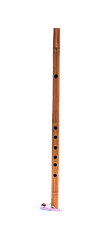
sáo trúc
Vietnam a transverse flute made from a single piece of bamboo, used in Chèo (popular theatre), Cải lương (reformed opera), lyrical folk melodies, traditional folk ensembles (Nhạc ngũ âm), and classical chamber music.

satara
India a double-flute with two separate wooden pipes played simultaneously (one drone, one melody pipe), used in pastoral tunes, shepherd music, folk dance accompaniment (Kalbelia), and storytelling.

shakuhachi
Japan an end-blown bamboo flute carved from the root end of a madake bamboo stalk, commonly used in meditative music and "blowing Zen" (suizen) by Komusō wandering monks, classical, and traditional folk music. Also historically used by former samurai as a weapon.

shinobue
Japan a bamboo transverse flute where the interior is often coated with red urushi lacquer and the exterior is wrapped tightly with strips of rattan or cherry bark, known as "voice of the people," used in the imperial court, local festivals (matsuri), and Kabuki theater.

shvi
Armenia, Georgia, Turkey a small, end-blown flute with seven finger holes and one thumb hole, used in traditional folk music and contemporary Middle Eastern classical music.

siku
Peru, Bolivia, Ecuador, Chile, Argentina a set of reed or bamboo tubes of varying lengths bound together, played by blowing across the top, used in Andean folk music and traditional ceremonial music.
sogeum

South Korea, North Korea a small transverse flute made from bamboo with a buzzing membrane near the blowing hole, used in Korean court music and folk music.

sopilka
Ukraine, Belarus, Poland, Slovakia a wooden or plastic fipple flute with six to ten tone holes, used in folk music and dance ensembles.
suling

Indonesia, Malaysia, Philippines, Brunei an end-blown, bamboo ring flute with a thin rattan or cloth band wrapped around the mouthpiece, used in Indonesian and Malaysian traditional music.
sybyzgy

Kazakhstan, Kyrgyzstan, Uzbekistan, Russia a side-blown flute made from cane or wood, which produces a distinctive, often two-voiced melody (incorporating the musician's throat sound or "singing and playing"), used by nomadic herders for solitary entertainment and lyrical folk kyuis (instrumental pieces).
tabor pipe

France, United Kingdom a three-hole fipple flute played with one hand and always performed alongside a small drum (the tabor) played by the same musician in the other hand, used in historical folk music performances and medieval dance music.

tarka
Bolivia, Peru, Chile, Argentina a square or rectangular wooden duct flute made of bamboo or cane with six finger holes, used in Andean folk music and during festivals.

tongali
Philippines a nose flute made of bamboo with three to four finger holes, used in courtship rituals and personal entertainment.
tsuur

Mongolia, Russia (Tuva Republic) a vertical, end-blown wooden flute with three fingerholes, played by simultaneously blowing into the pipe and performing a specialized vocal technique (khöömei or throat singing) to produce a clear whistle and a continuous drone, used in storytelling and mimicking the sounds of nature.
tungso

South Korea, North Korea a large, notched, end-blown bamboo flute with six fingerholes, used in Korean court music, traditional folk music, and Buddhist ritual ensembles.
txistu

Spain (Basque Country), France (Northern Basque Country) a small, six-holed pipe or flute held and played with one hand, while the same musician plays the ttun-ttun (a percussion instrument) with the other hand, used in Basque folk music.
whistling jars

Peru, Mexico, Ecuador ceramic vessels crafted in the shape of humans or animals and connected by an internal chamber, which make a bird-like or human-like whistling sound when water is poured into them or when air is quickly forced out by rapid tilting, used in sound effect design, pre-Columbian rituals and ceremonies.

wot panpipe
Ethiopia a simple, five-note, single-row flute made from bamboo, used in folk dances and music of the Cushitic people.
xiāo

China, Taiwan a long, vertical, end-blown bamboo flute with six to eight fingerholes, used in meditative solos, chamber music, Chinese classical operas, and romantic folk melodies.
xun

China an oval or egg-shaped globular flute made from baked clay or ceramic with a small mouthpiece and five to ten fingerholes, used in Chinese court music and ceremonial ensembles.
Zampoña

Bolivia, Peru, Ecuador, Chile, Argentina an Andean panpipe with two separate rows of bamboo tubes that are tied together and played using a hocketing technique, used in communal folk music, highland festivals, and Latin American "Nueva Canción."